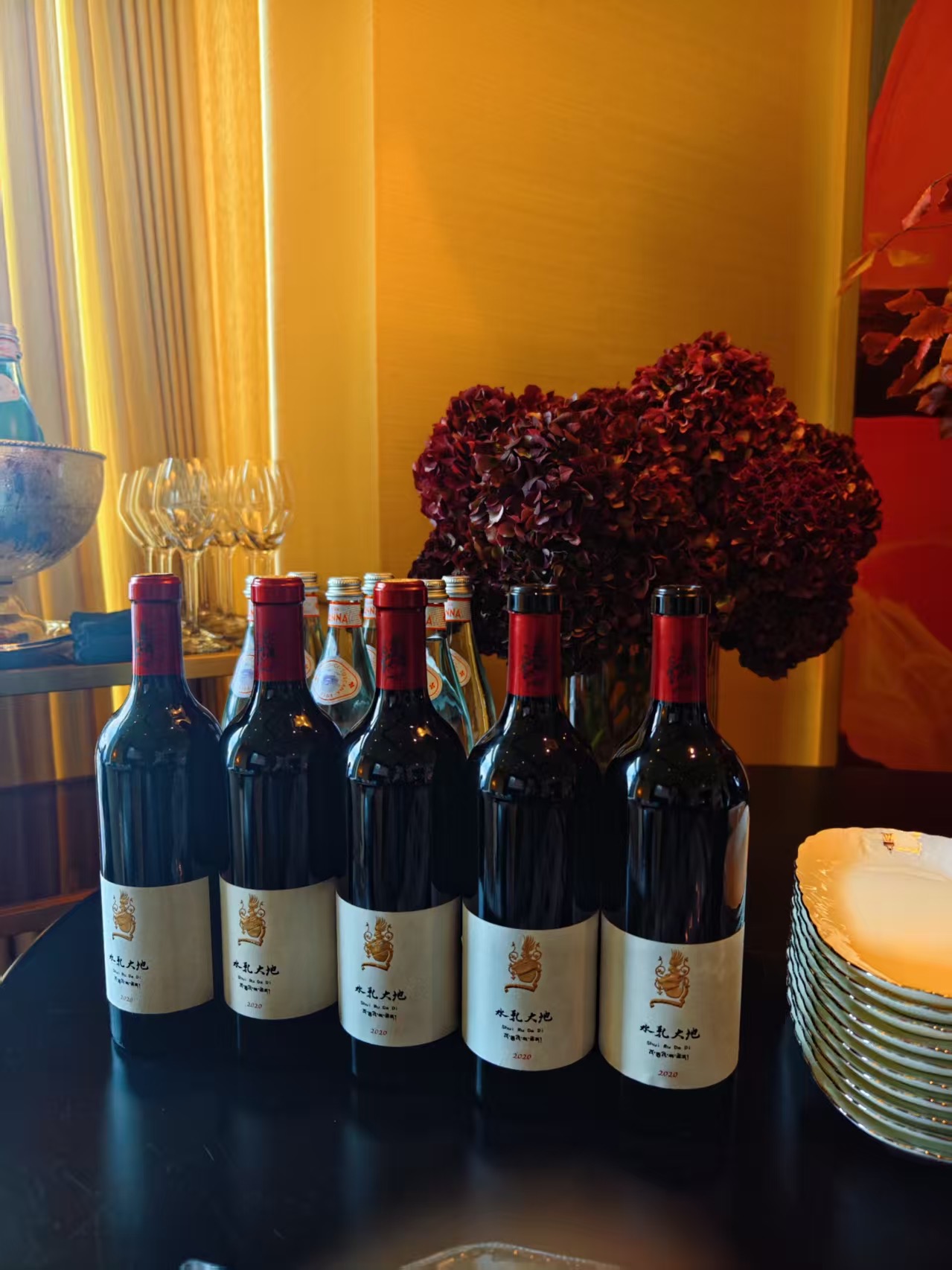
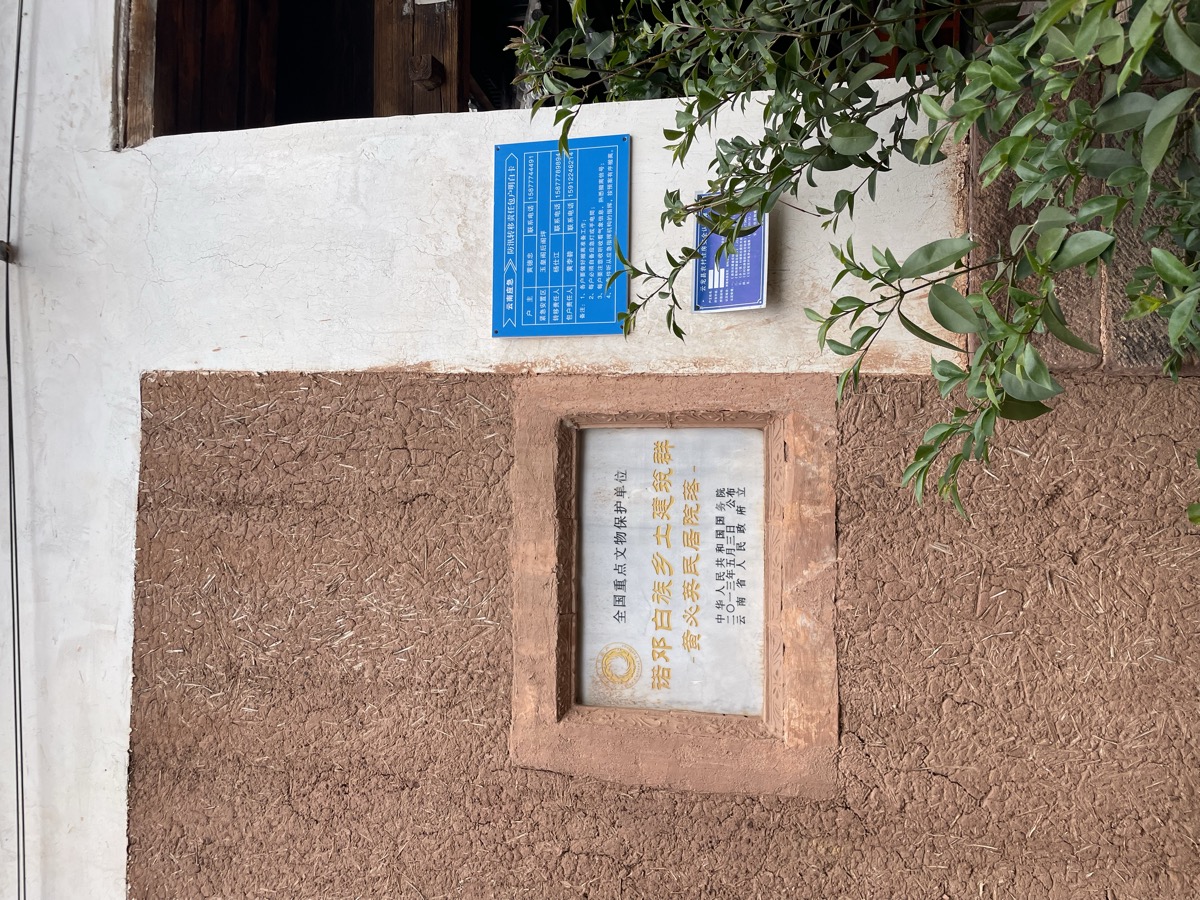
In a valley in Yunnan’s Dali region, surrounded by limestone mountains and terraced rice paddies, there is a village that has been producing the same thing for over a thousand years.
Nuodeng (諾鄧). Population: a few hundred. Heritage: immeasurable.
This is where 諾鄧火腿 comes from — a ham that has no marketing team, no international distribution network, and no celebrity endorsement. What it has instead is time: the slow, unhurried accumulation of technique, flavour, and tradition that makes it, in the opinion of food historians and discerning chefs, one of the world’s truly great cured meats.
What Is 諾鄧火腿?
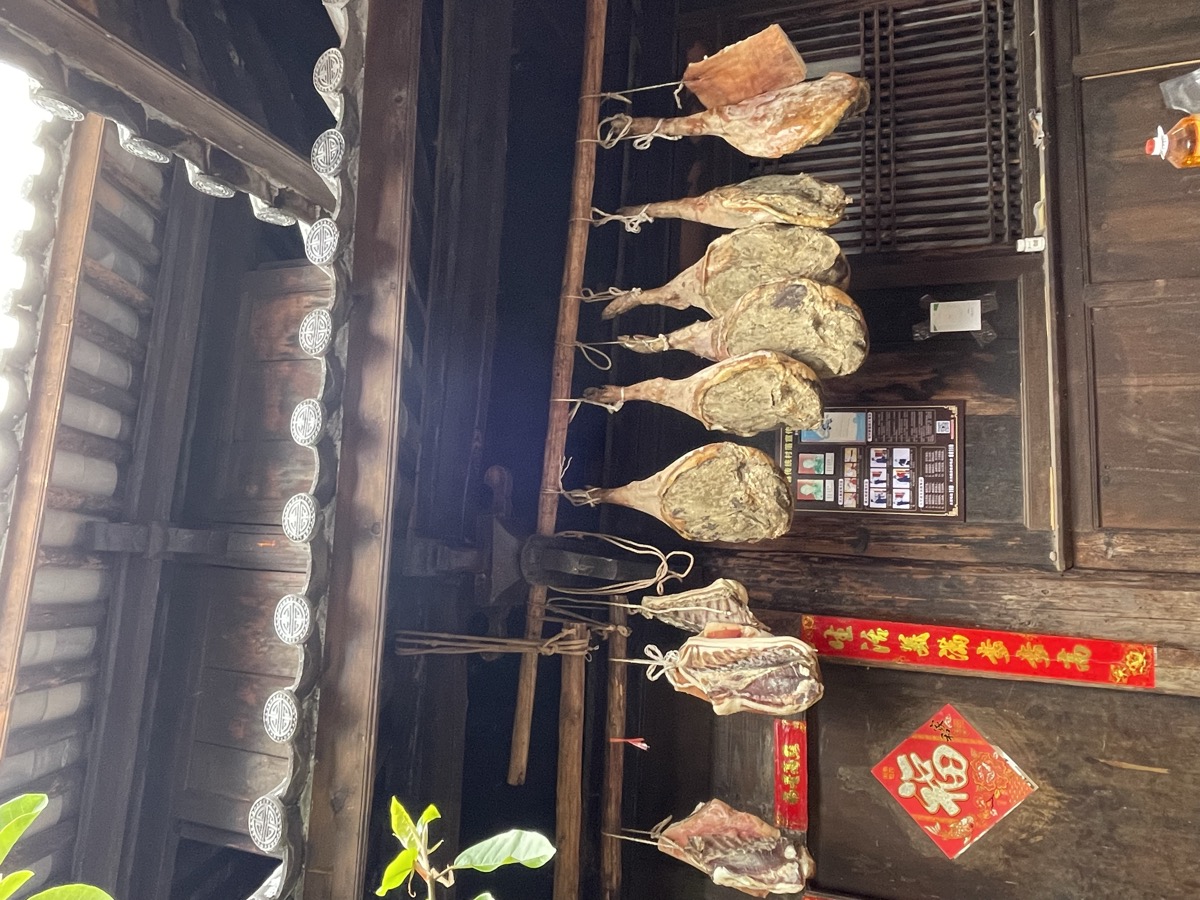
諾鄧火腿 (Nuodeng Huotui) is a dry-cured ham produced exclusively in Nuodeng village using a process that has remained essentially unchanged since the Tang Dynasty (618–907 AD).
The ham is made from local black-footed pigs — a smaller, leaner breed than the industrial pigs used in commercial Chinese ham production. These pigs are raised on mixed grain and root vegetables, producing meat with a distinctive fat distribution that creates the nutty, complex flavour for which Nuodeng ham is prized.
The curing agent is the critical differentiator: Nuodeng well salt (諾鄧井鹽), drawn from underground brine springs that have been in use for over a millennium. This is not ordinary salt. The water that rises from the Nuodeng aquifer passes through ancient limestone formations, absorbing a distinct mineral profile — calcium, magnesium, trace elements — that imprints itself on every ham it touches.
No nitrates. No preservatives. No chemical accelerants. Just salt, time, and mountain air.
Nuodeng Village: A Tang Dynasty Salt Town
To understand 諾鄧火腿, you must understand the village that makes it.
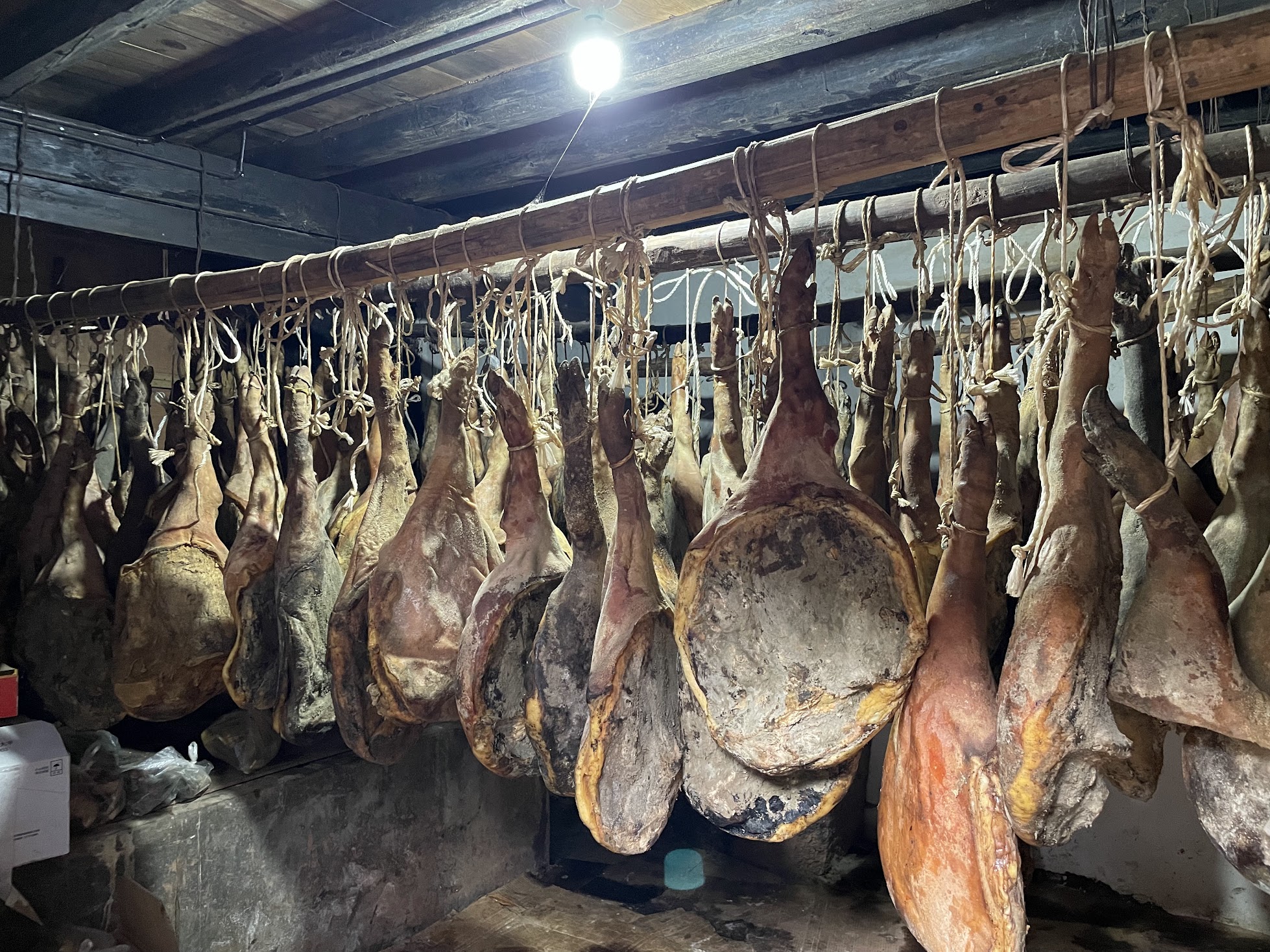
Nuodeng sits in a remote valley in Yunnan’s Yunlong County, accessible by a winding mountain road that was, until recently, unpaved. The village’s salt wells are documented in texts from the Tang Dynasty — the earliest written records confirm that Nuodeng salt was being traded across Yunnan, into Myanmar (then the Pagan Kingdom), and along the southern Silk Road trade routes into Tibet.
For centuries, Nuodeng was prosperous precisely because of its salt. The ornate Bai-style courtyard houses that still stand in the village centre were built by salt merchants wealthy enough to commission the finest craftsmen. The Confucian temple at the top of the hill — unusually grand for a village this size — is evidence of a community that, at its peak, considered itself a centre of civilisation.
The salt trade collapsed in the twentieth century, replaced by industrial iodised salt. Nuodeng’s economy contracted. Many families left. But the ones who stayed kept producing their ham, using the same wells, the same techniques, the same patience.
The Three-Step Process
What distinguishes 諾鄧火腿 from other Chinese hams — and from European counterparts like Jinhua or Jamón Ibérico — is the simplicity and integrity of its process.
Step 1: Hand-Salting
Each ham leg is rubbed by hand with Nuodeng well salt — a process that takes considerable skill and time. The artisan must apply the right pressure to different muscle groups, ensuring the salt penetrates evenly without over-saturating any area. There is no machine that can replicate this. The technique is passed from parent to child over years of apprenticeship.
Step 2: Natural Curing
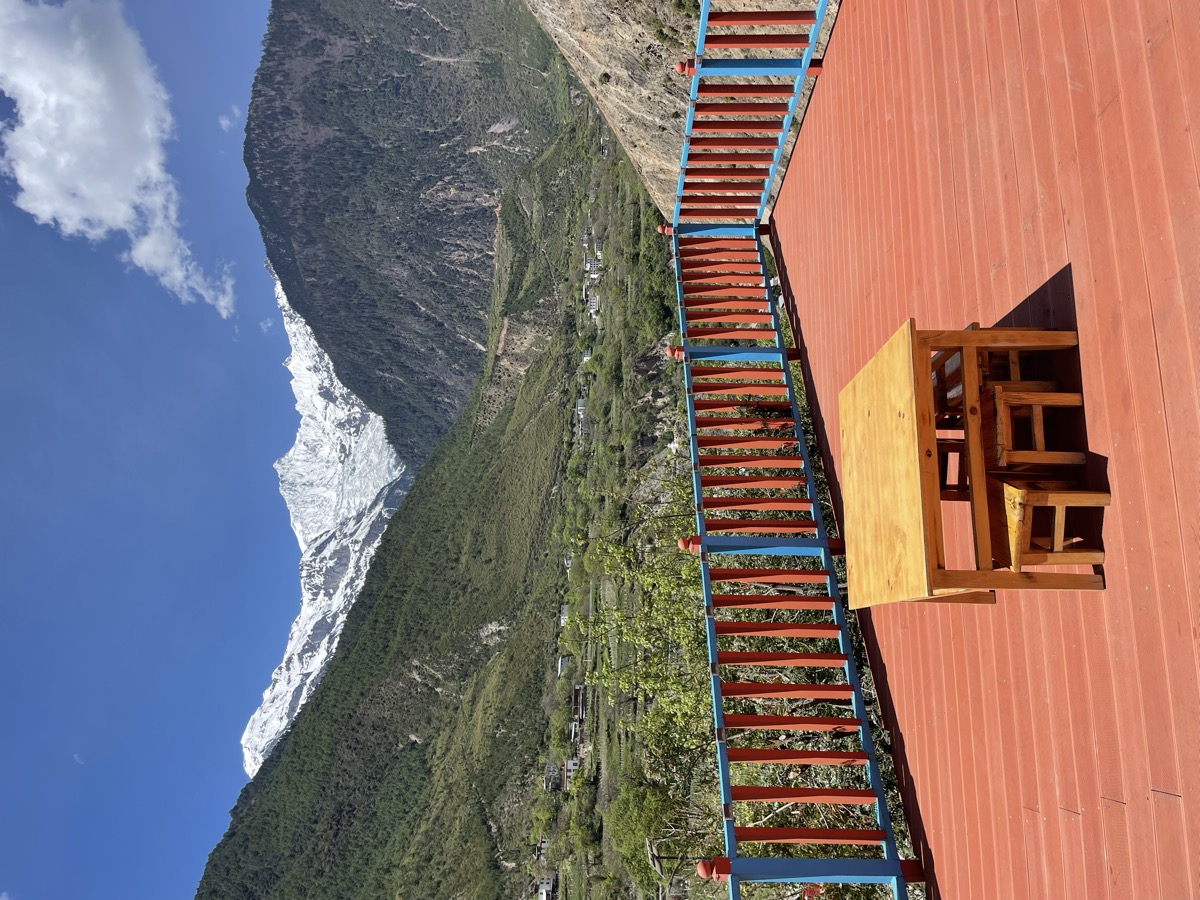
The salted hams are hung in naturally ventilated stone houses — not temperature-controlled rooms, not dehumidified warehouses. The Nuodeng valley’s altitude (1,700 metres) creates a naturally cool, dry microclimate ideal for curing. The air does the work.
Step 3: 36-Month Aging
The defining characteristic of 諾鄧火腿 is its minimum aging period: three years. Most commercial Chinese hams are aged for 12–18 months. Jinhua ham, China’s most famous variety, is typically aged 8–12 months. Nuodeng takes three times as long — and the finest pieces are aged for five years or more.
This extended aging develops a flavour complexity that shorter-aged hams simply cannot achieve: deep nuttiness, concentrated umami, a crystalline texture from the breakdown of proteins into free amino acids.
How Does 諾鄧火腿 Compare?
Versus Jinhua Ham (金華火腿): Jinhua is China’s best-known ham variety, produced in Zhejiang province and used extensively in Shanghainese and Cantonese cooking. It is typically saltier, softer, and used primarily as a flavouring ingredient. Nuodeng is drier, nuttier, and complex enough to be eaten alone — in thin slices, like a great jamón.
Versus Jamón Ibérico: The comparison is not as outlandish as it sounds. Both are dry-cured with minimal intervention, both benefit from extraordinary geographic specificity (dehesa vs. Nuodeng valley), and both develop the same kind of crystalline, nutty complexity over long aging periods. The main difference is fat distribution: Ibérico pigs have higher intramuscular fat from a diet of acorns, while Nuodeng pigs are leaner, producing a drier texture.
Versus Prosciutto di Parma: Less comparable — Parma ham is younger, wetter, and milder. 諾鄧火腿 at 36 months has more in common with 48-month Jamón Ibérico de Bellota than with Parma’s 18-month cure.
How to Order 諾鄧火腿
諾鄧火腿 is available through GutCommon for wholesale, restaurant partnerships, and private orders. Given the limited annual production and 36-month minimum aging requirement, availability is constrained — orders should be placed well in advance.
GutCommon works directly with Nuodeng farming families, providing fair compensation and international market access in exchange for their most precious asset: time-honoured craft. Every ham carries with it the story of a village that refused to let its traditions disappear.