In late March 2024, I set foot in Yunlong County for the first time. Heading north from Dali along the Lancang River valley, the road wound through limestone cliffs past terraced paddies. Three hours later, tucked into a fold in the mountains, the ancient village of Nuodeng appeared.
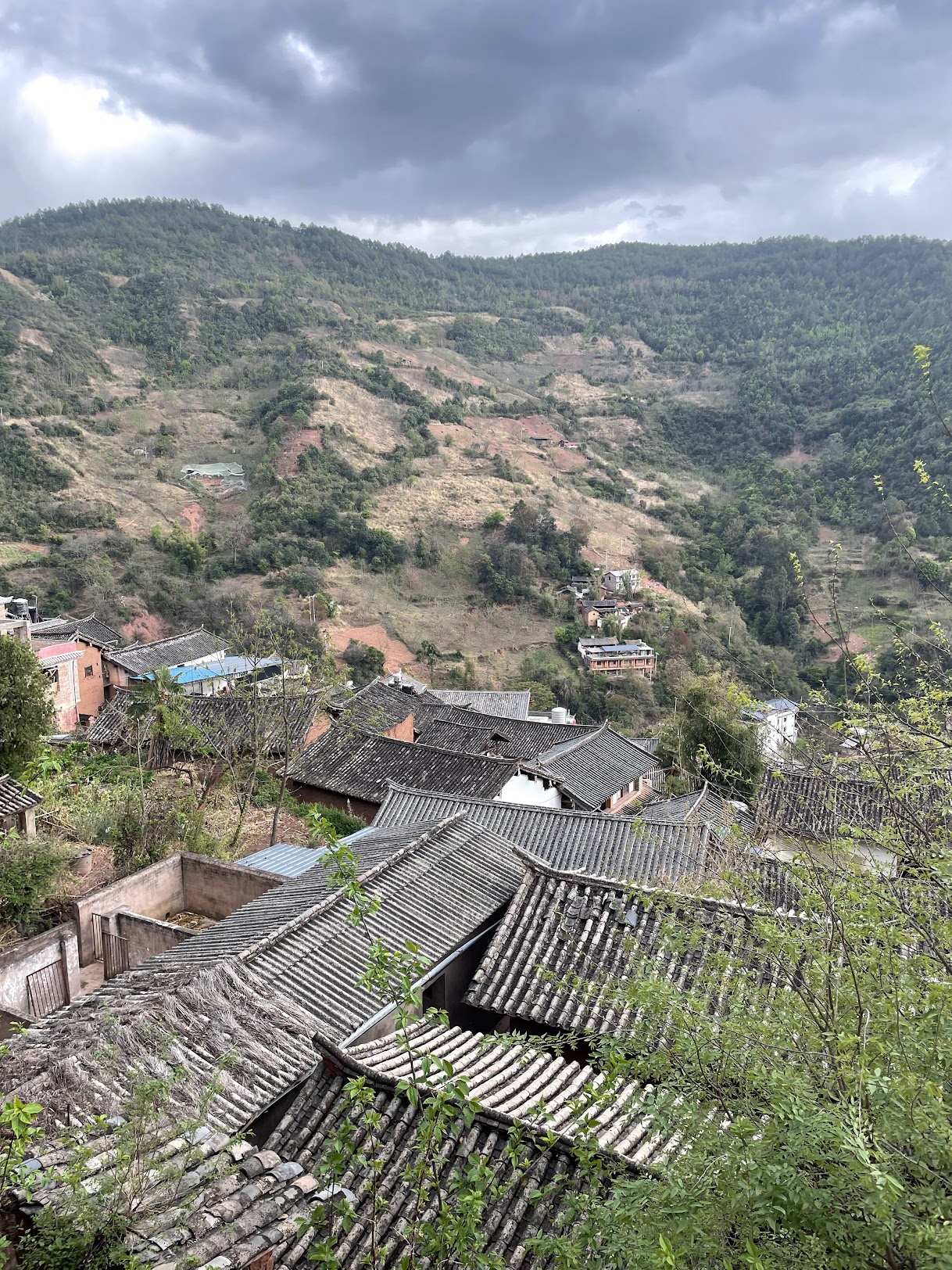
Nuodeng is no ordinary mountain village. Tang Dynasty texts already recorded its salt production. Back then, caravans of the Nanzhao Kingdom departed from here, carrying Nuodeng well salt to Tibet, Burma, and beyond. That route became known as the Salt-Horse Road — 鹽馬古道.
Today no mule trains travel the old road, but the salt remains. Nuodeng's underground brine springs have flowed for over a millennium, percolating through limestone and absorbing calcium, magnesium, and trace minerals that give the salt its distinctive character — the very soul of 諾鄧火腿.
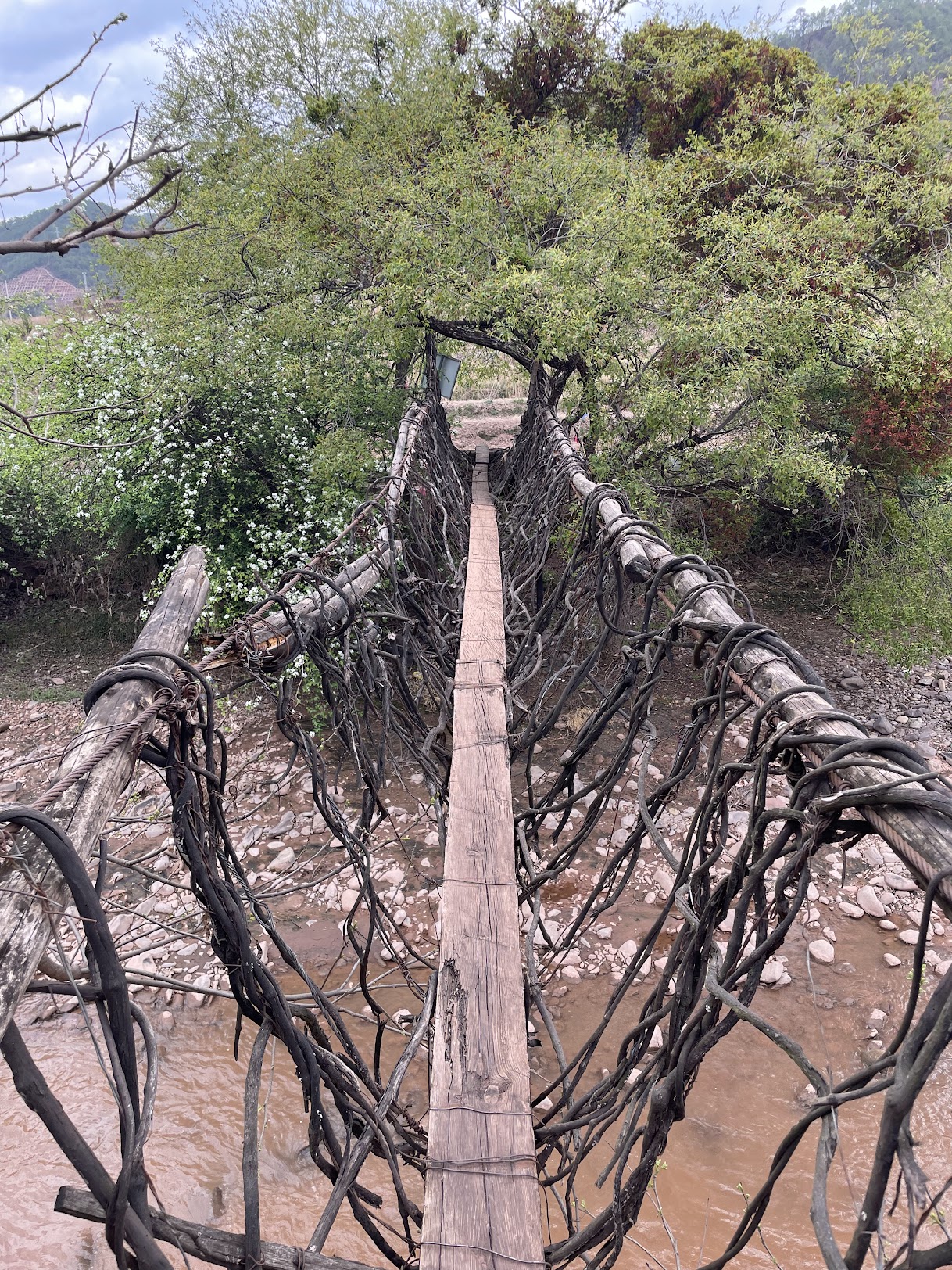
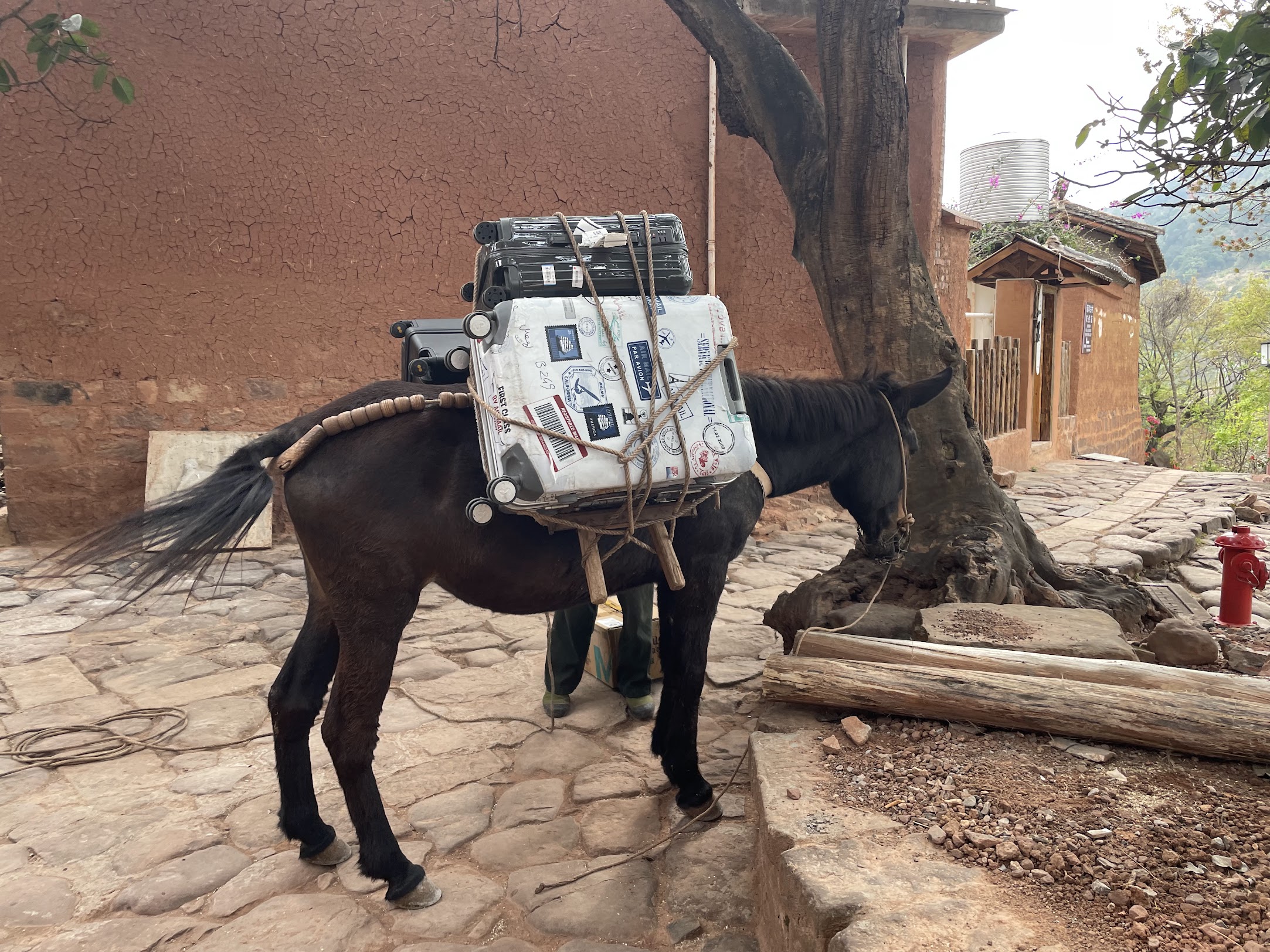
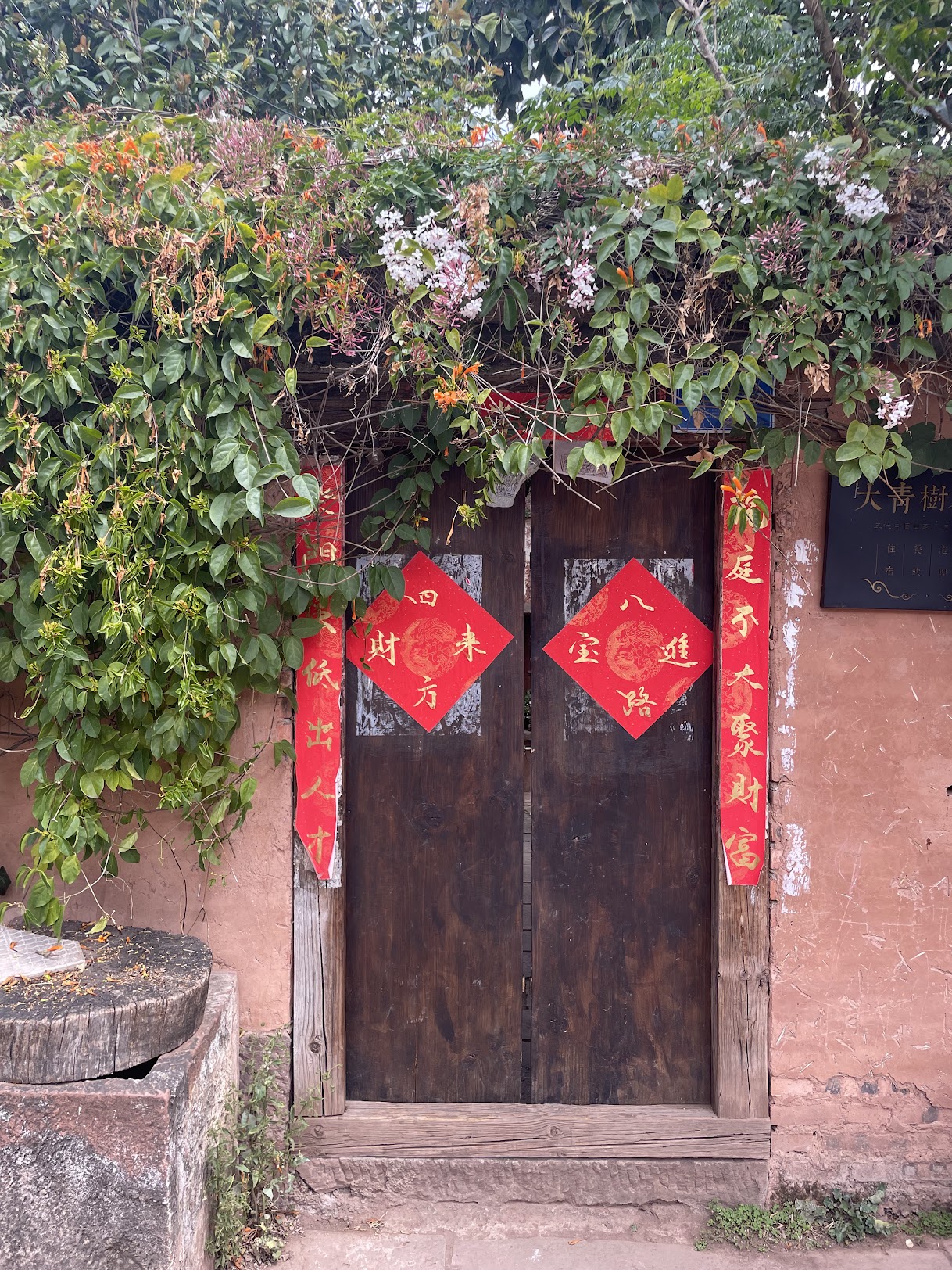
Entering the village, the first thing you notice is the carved wooden doorways. Red couplets are pasted against blackened old timber, their characters still sharp. Some of these houses are three or four hundred years old — built by salt merchants who commissioned the finest craftsmen their wealth could buy. Elaborate carvings, layered eaves: hard to believe you are in a mountain fold this remote.
Midway through the village, there is an ancient brine spring. The opening is small; the water runs clear but noticeably saline. I crouched down and tasted a drop on my fingertip — softer than sea salt, with a mineral depth that lingers rather than stings. This spring sustained an entire village for a thousand years.
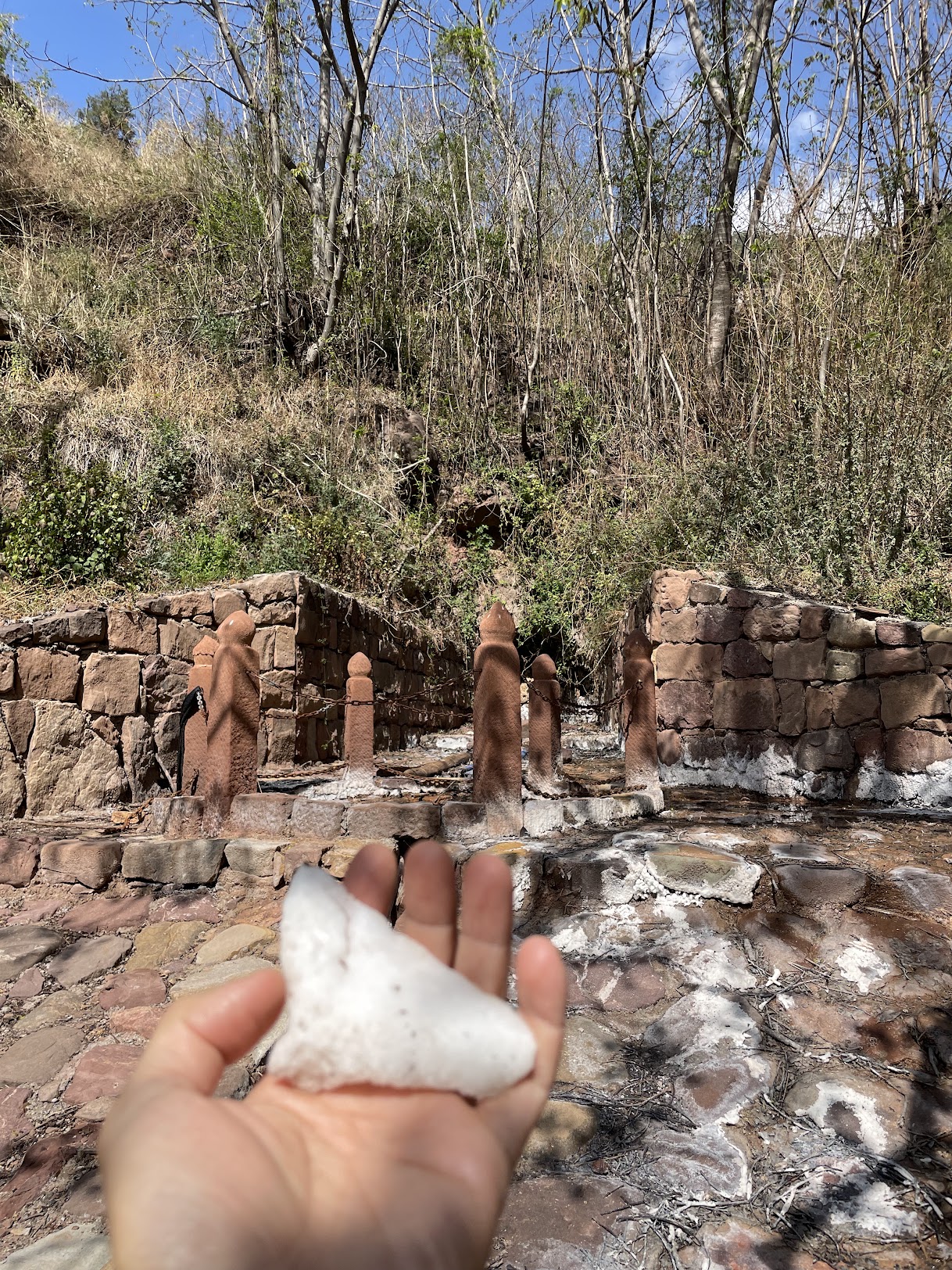
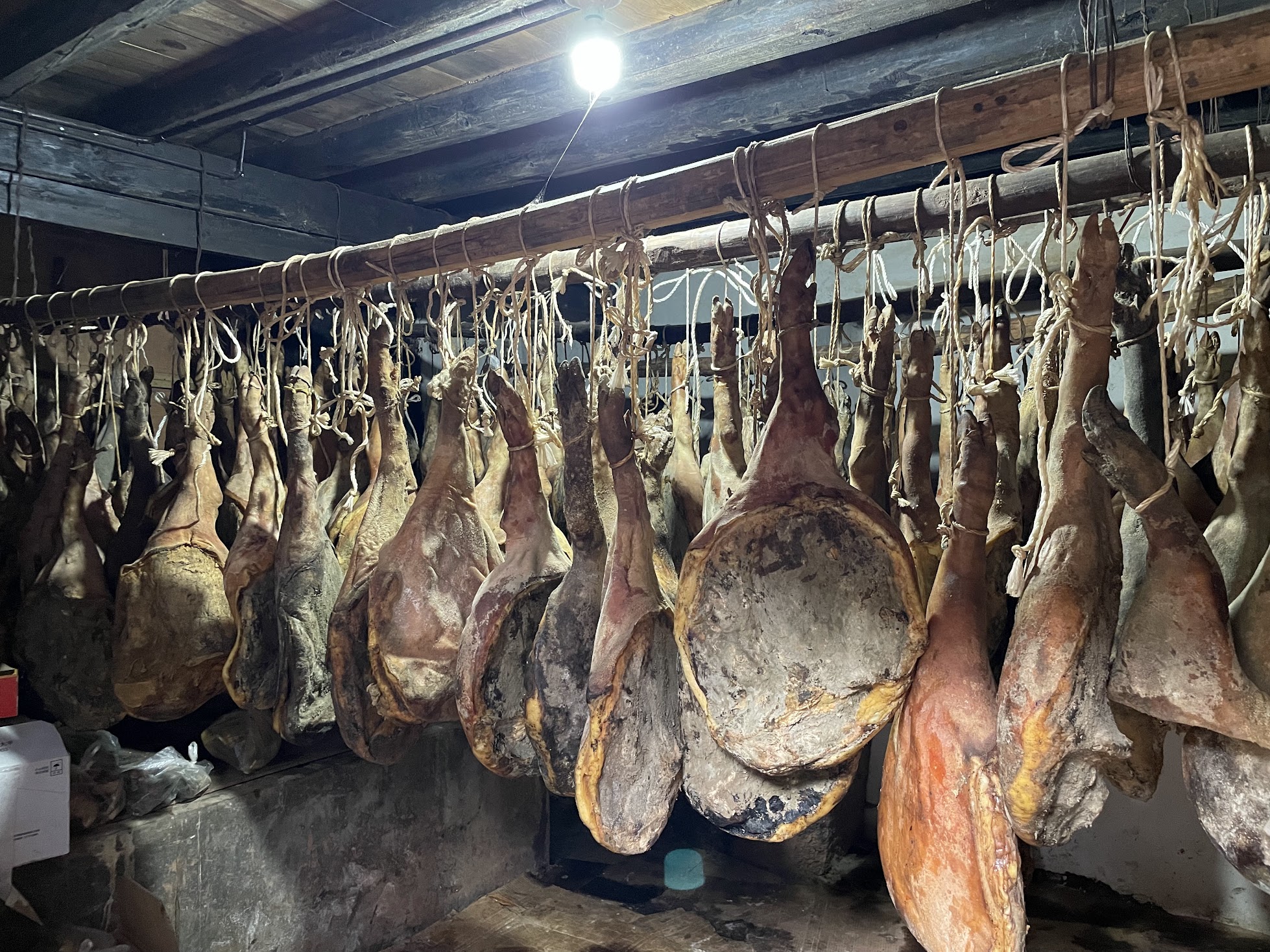
Salt is where 諾鄧火腿begins. Around the winter solstice each year, Bai minority families in the village slaughter their black-footed pigs, remove the hind legs, and hand-rub them with Nuodeng well salt. Every detail of this motion is inherited memory — which muscles need more salt, which need a lighter touch — all in the artisan's hands. No machine replicates it.
一千年的鹽,三年的時間,一條不妥協的腿——這就是諾鄧火腿。
After curing, the hams are hung in naturally ventilated stone houses and left to Yunlong valley's cool mountain air. Minimum three years; the finest pieces are aged five or more. Time is the most important ingredient.
The ageing of Nuodeng ham is not simply drying. It is a living process, driven by microorganisms. In the ventilated stone houses, the outer surface of each ham gradually develops a microbial community — specific moulds, lactic acid bacteria, and yeasts — that simultaneously protects the ham from harmful contamination and breaks down proteins into the complex umami compounds that define its flavour. The taste of Nuodeng ham was not engineered. It is the natural expression of centuries of microbial memory in a specific place.
This is the same logic as the ageing of Parma ham or Iberian ham — the difference being that the microbial environment of Nuodeng is shaped by the specific minerals, humidity, and elevation of Yunlong valley. Thirty-six months of waiting in one place is a different thing from thirty-six months in another. This is why Nuodeng ham is Nuodeng ham, and not simply "Chinese cured ham" — not because of the name, but because of this spring, this valley, these microorganisms, these hands passing the knowledge across generations.
The pigs used for Nuodeng ham are a local black-footed breed. This is not a marketing detail — it is an agricultural fact that directly affects flavour. Black-footed pigs grow more slowly than commercial breeds but develop more evenly distributed fat, with higher intramuscular fat content. This fat structure is precisely what enables the slow development of complex fatty aroma compounds during ageing. The fast-growing breeds selected by industrial agriculture cannot provide the same raw material — even with the same salt, the same valley, the same time, the result would not be the same ham.
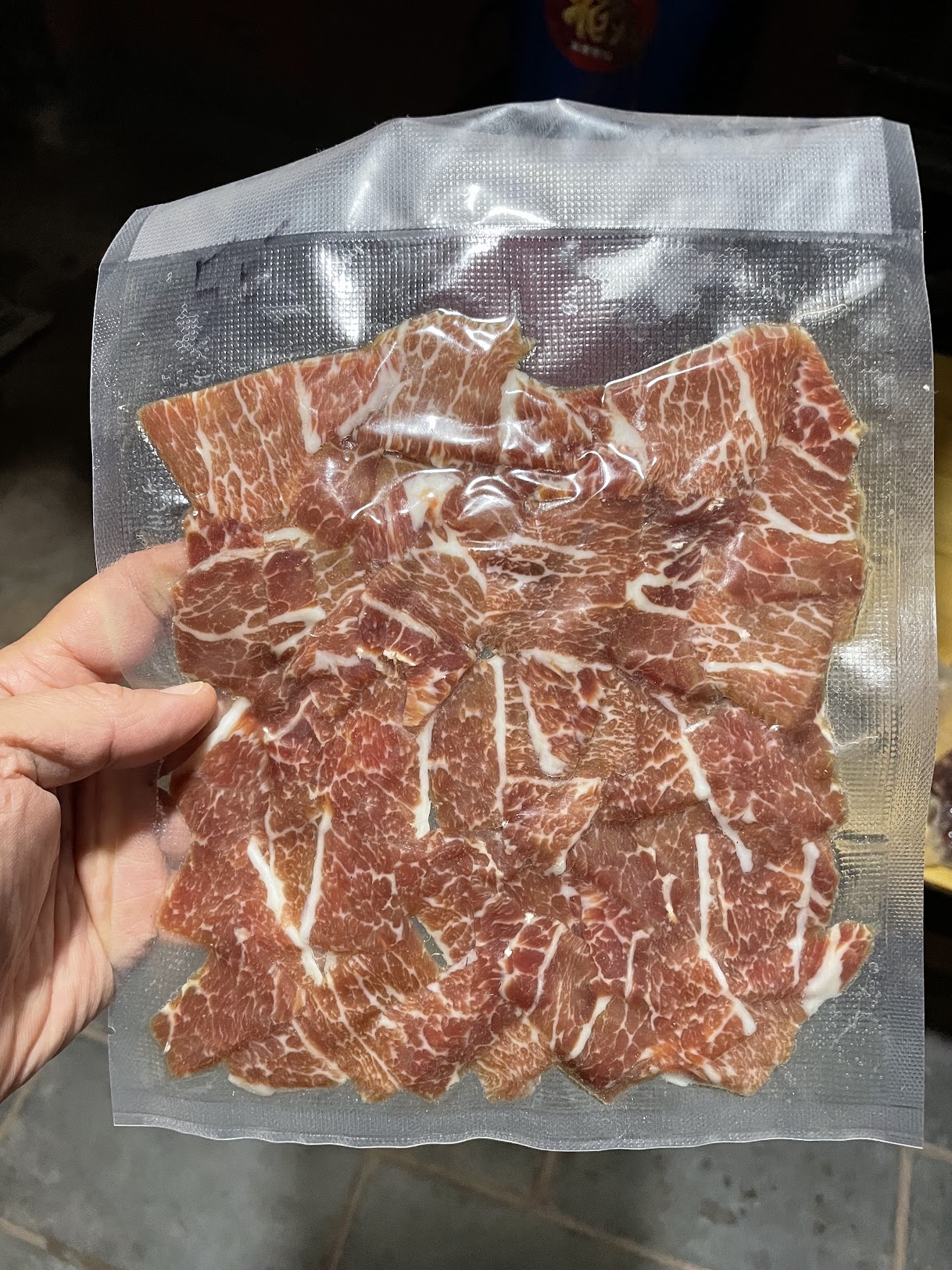
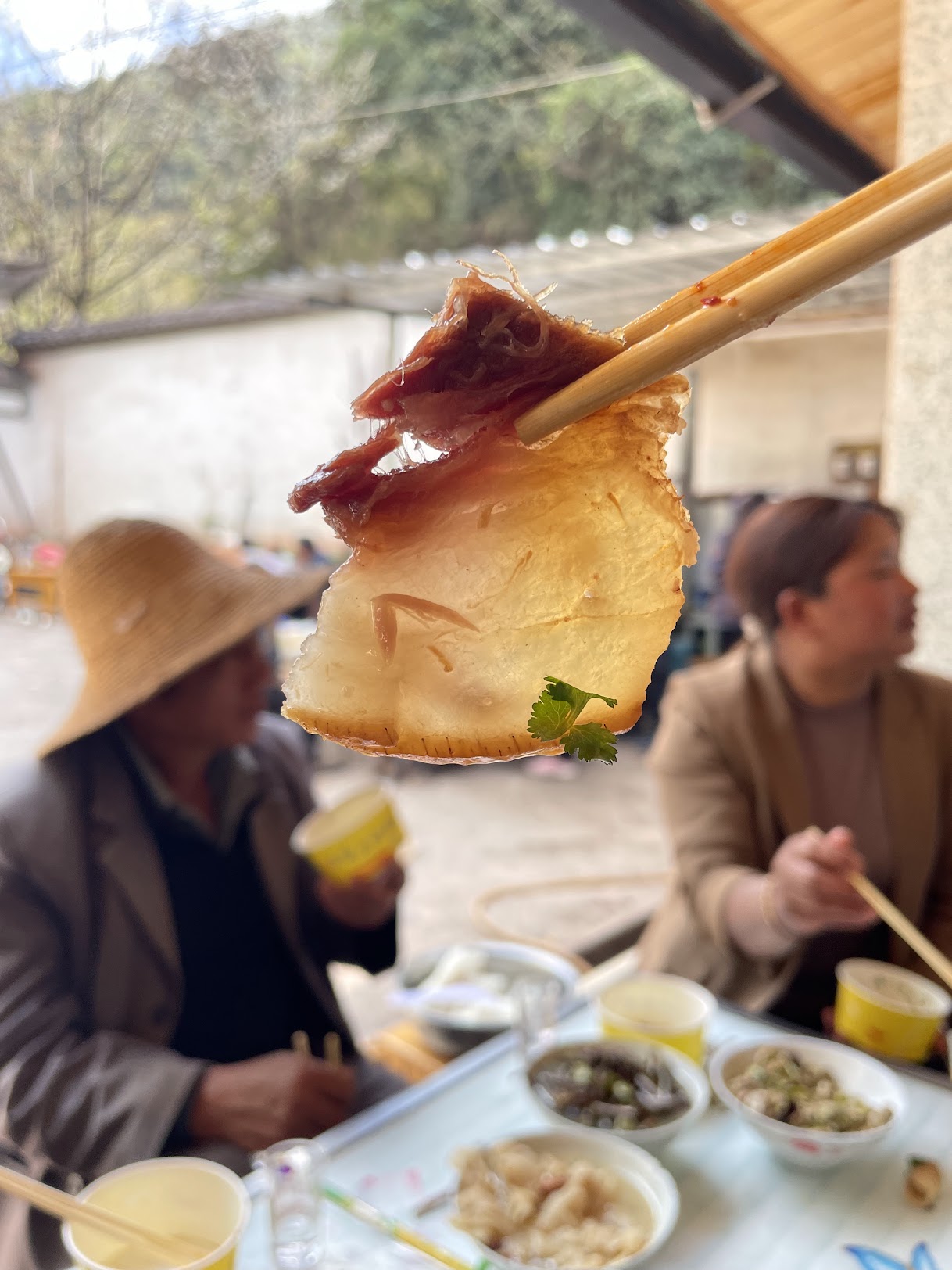
The Salt-Horse Road itself is worth looking at on a map. It ran north from Yunlong to Weixi and Deqin, west to the border trade networks of Burma, and east into the Chinese heartland — a commercial web that, before modern roads existed, connected the far southwestern frontier to the imperial core. Nuodeng's salt was a critical node in that network. Its importance was not only commercial: the exchange of salt was simultaneously a channel for cultural, religious, and ethnic contact. Nuodeng's temple compound, where three faiths share one wall, is in some sense the architectural expression of the cultural mixing that road produced. For more on that temple, read about the Yuhuang Pavilion here.
This first visit to Nuodeng was the beginning of GutCommon's sourcing journey. What we found was not simply a ham — it was a complete civilisational inheritance: geography, history, and craft, inseparable from one another. How to bring it to a wider market while keeping that inheritance alive: this is the question we have been working on ever since. To learn more, visit our Nuodeng ham page.