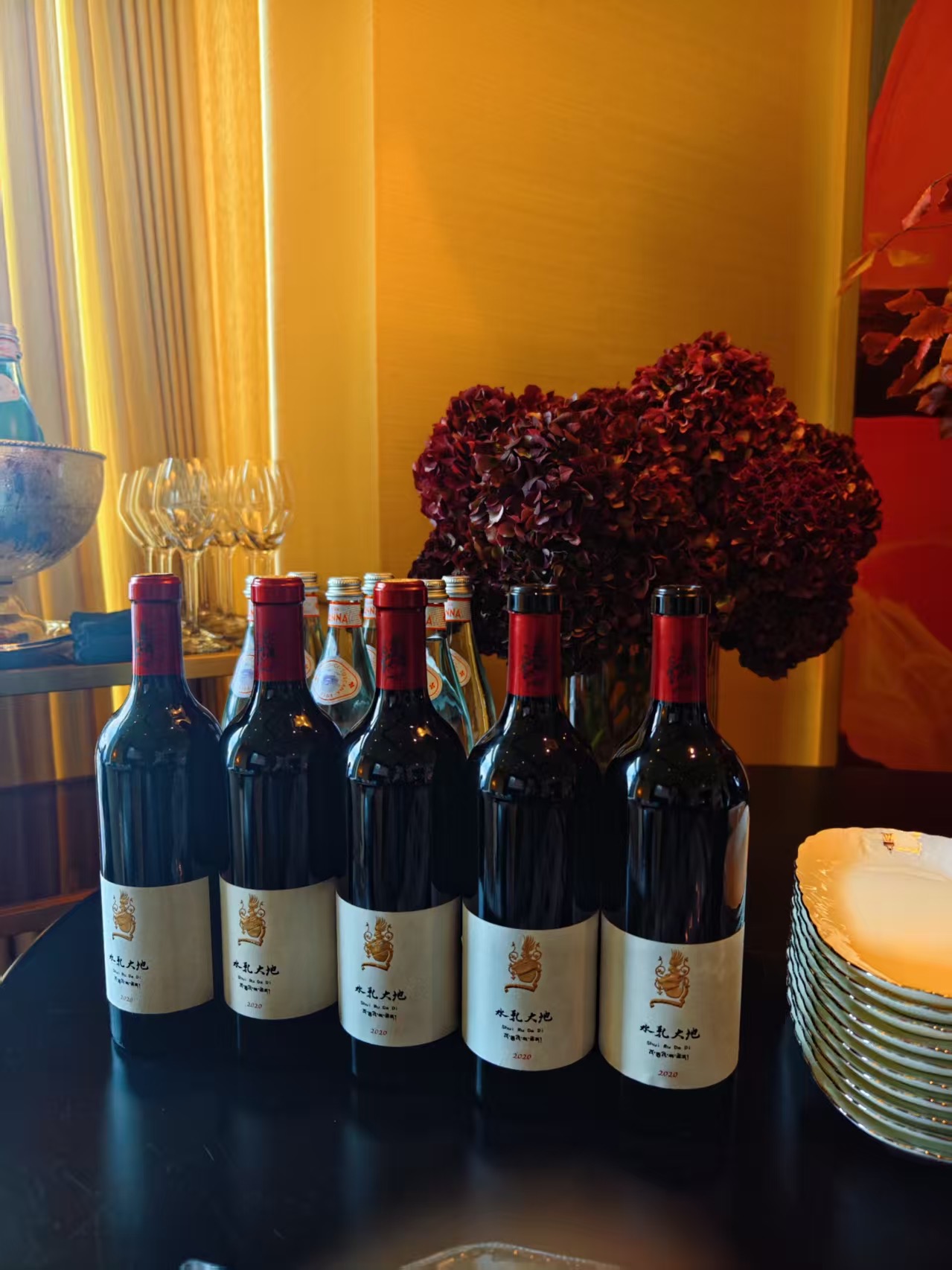
水乳大地. Four characters. Translated literally: “water and earth nurture each other as one.”
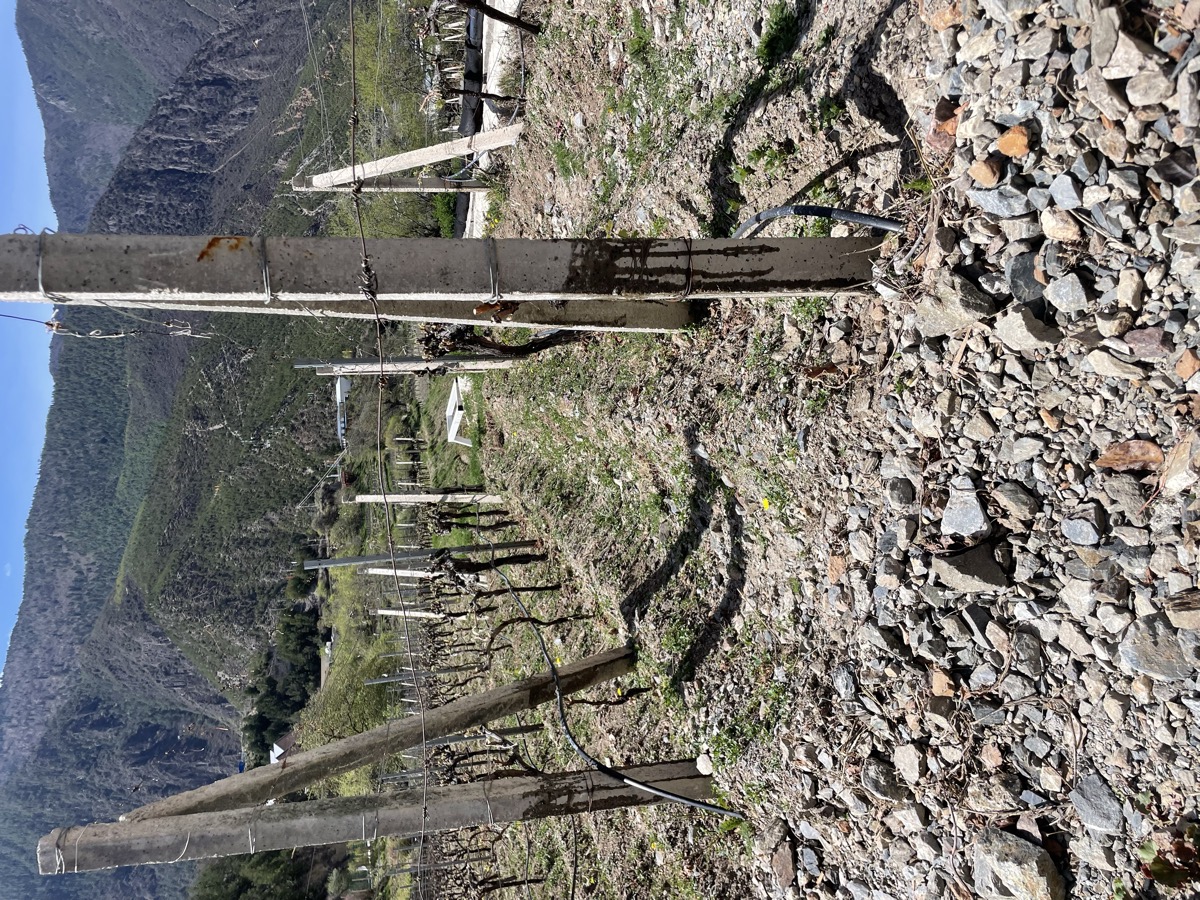
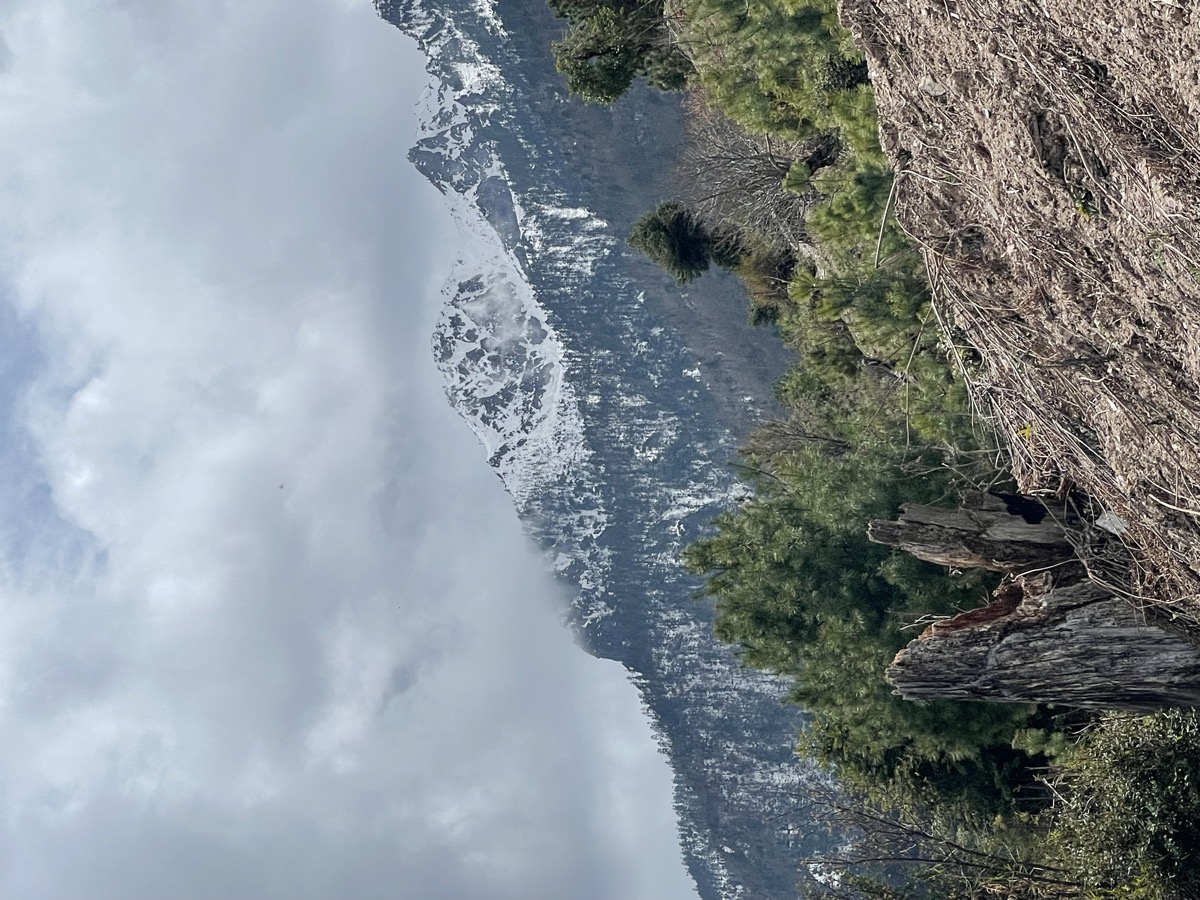
It is a phrase drawn from classical Chinese cosmology — a description of the sacred balance between the elements that sustains all life. As a name for a wine, it is perhaps the most honest description of what happens in the valleys below Meili Snow Mountain, where glacial meltwater and ancient Tibetan soil conspire to produce something extraordinary.
This is the story of 水乳大地 — from its origins in a chance collaboration to the clay pots where it quietly becomes one of China’s most compelling wines.
What Does the Name Mean?
水乳大地 (Shui Ru Da Di) is a classical Chinese idiom that means “the harmony of water nourishing the earth” — a state of perfect, mutual sustenance. In the Buddhist and Bon traditions of the Tibetan plateau, the land around Meili Snow Mountain is considered precisely this: a sacred body where the mountain’s glacial water and the earth’s minerals are inseparable.
For Yves Roduit and Helene, the name was chosen not as marketing, but as a statement of philosophy. This wine does not conquer its terroir. It listens to it.
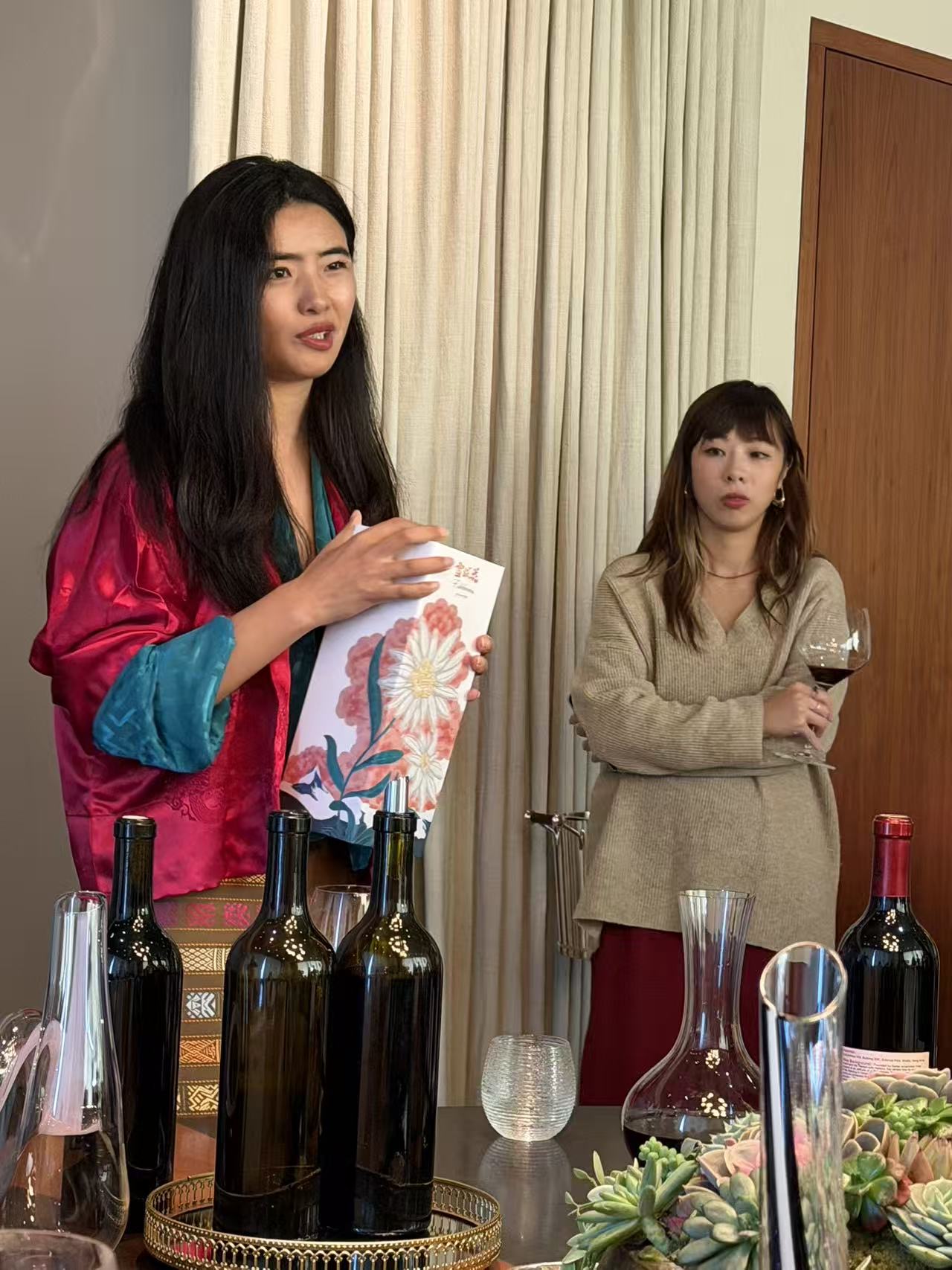
The Winemakers: Yves and Helene
The collaboration that created 水乳大地 began with two unlikely partners.
Yves Roduit came from Chateau Roduit Winery in Fully, Switzerland — a fifth-generation winemaking family with deep roots in Alpine viticulture. His background was in high-altitude mountain wines: the Valais region of Switzerland, where vines grow at elevations similar to Yunnan’s, and where the winemaking tradition emphasises preservation of terroir over stylistic manipulation.
Helene is a Tibetan woman who grew up among the vineyards of the Meili valleys. Her knowledge is not technical in the conventional sense — it is ancestral. She knows which slopes receive the right morning light. Which weeks the mountain weather turns. Which families have farmed with the most dedication.
Together, they represent what 水乳大地 literally embodies: two worlds in harmony. East and West, technical and traditional, Swiss precision and Tibetan patience.
Their shared philosophy: minimal intervention. No herbicides. No synthetic fertilisers. No oak barrels. The wine must express the mountain, not the winery.
Clay Pot Aging: The Ancient Method
The most distinctive choice in 水乳大地’s production is its aging vessel: unlined clay pots (陶罐).
While the global wine industry has converged on French oak barrels as the default aging vessel — and for good reason, given oak’s ability to add structure, tannin, and vanilla character — Yves and Helene chose the opposite path. Clay pots allow micro-oxygenation (the slow, graduated exposure to oxygen that softens tannins and integrates flavour) without adding any exogenous taste compounds.
The result is a wine where every flavour note is authentically the grape’s own: the dark fruit, the mountain earth, the mineral salinity from the glacial soils. Nothing borrowed from oak. Nothing added.
It is the same philosophy that drives the great natural wines of Georgia (the country), where qvevri clay vessels have been used for 8,000 years. Applied to a Tibetan valley at 2,360 metres, it produces something genuinely singular.
Tasting Notes
The eye: Deep ruby — almost opaque at the centre, with a violet rim. High extraction, visually striking.
The nose: Layers of dark fruit open first — blackcurrant, black cherry, a hint of dried plum. Beneath, there is something earthier: a stony, almost flint-like quality. Then, with time, something floral emerges — violet, perhaps, or the wild herbs that grow on the Meili slopes.
The palate: The texture is the first surprise. Velvety and concentrated, but without heaviness. The natural acidity at this altitude is striking — the wine has freshness and tension that lower-elevation Cabernets simply cannot achieve. Mid-palate, raspberry emerges. The finish is long and mineral.
The verdict: This is not a Chinese wine that is “good for a Chinese wine.” It is simply a good wine — one that carries its origin with pride.
Where to Find 水乳大地
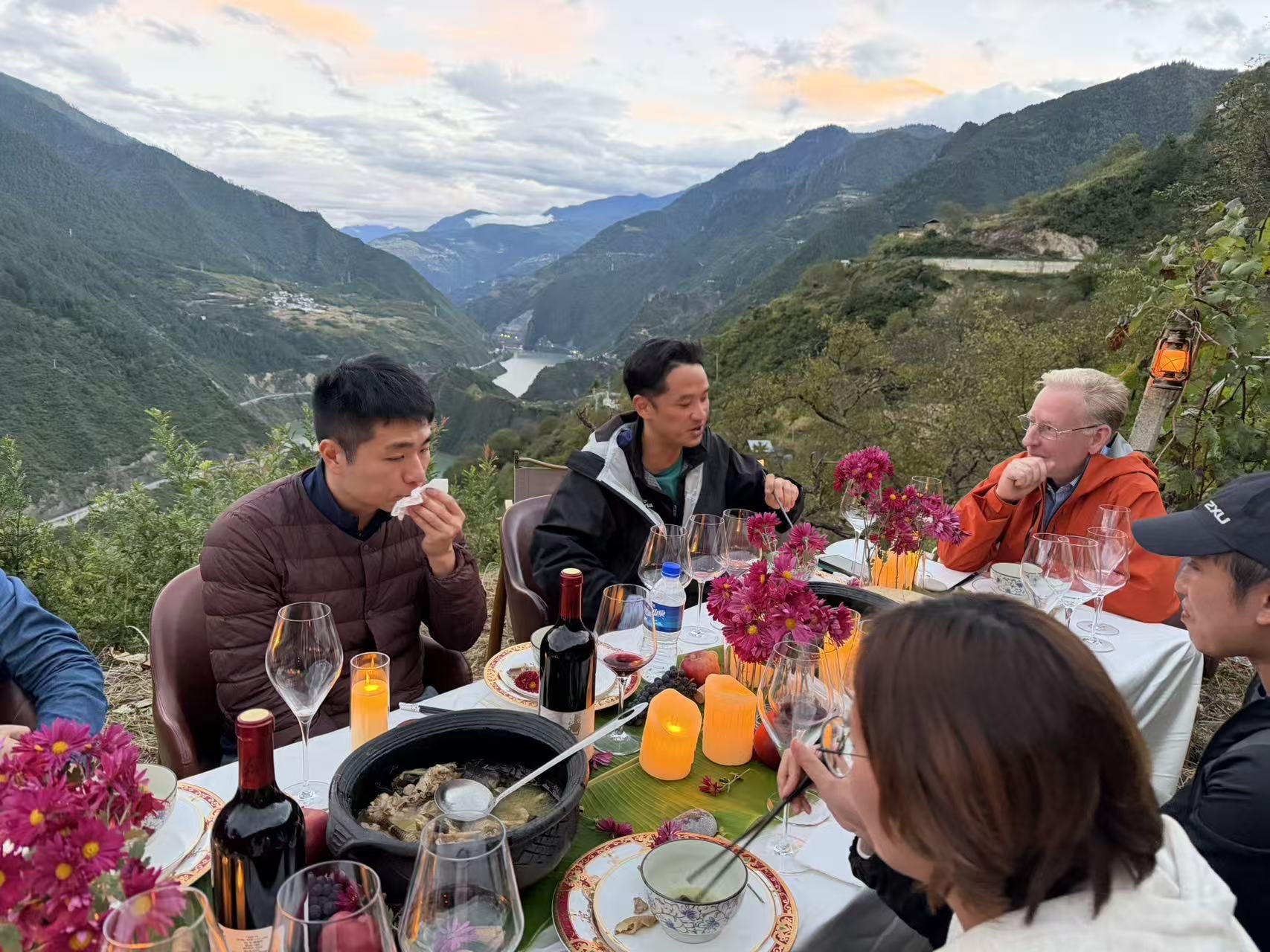
水乳大地 is available through GutCommon for wholesale and restaurant partnerships across Asia. It is currently listed at Rosewood Hong Kong’s Carlyle & Co, Mandarin Oriental Wine Bar, and The Peninsula Shanghai.
For collectors and private buyers, contact GutCommon directly. With only 5,000 bottles produced annually — divided among 16 farming families — availability is limited.