Hong Kong West Kowloon Station is the kind of place that makes you forget which country you're in. Glass curtain walls, air conditioning, escalators — an expensive airport with no planes. At 7:30am, Hwan and I walked through the gates with our luggage, unread work messages on our phones, and a half-finished proposal stuffed into a laptop bag. Destination: Dali, Yunnan. Method: high-speed rail. Estimated journey: ten hours.
Why not fly? The flight is two hours. Almost everyone asked before we left. The answer was simple: we wanted to work. Ten hours with no VPN, no meetings, no one expecting you to respond — possibly the most peaceful ten consecutive hours a Hong Kong professional gets all year. And honestly, we had always wanted to try the cross-border high-speed rail.
The train itself was excellent. The dining cart was a disappointment. I walked to the connector between carriages, found the trolley loaded with boxed rice and mineral water, and asked: any beer? The attendant shook her head. Hot tea, yes. Instant noodles, yes. No beer. This small fact, more than any travel guide, told me we were entering somewhere different.
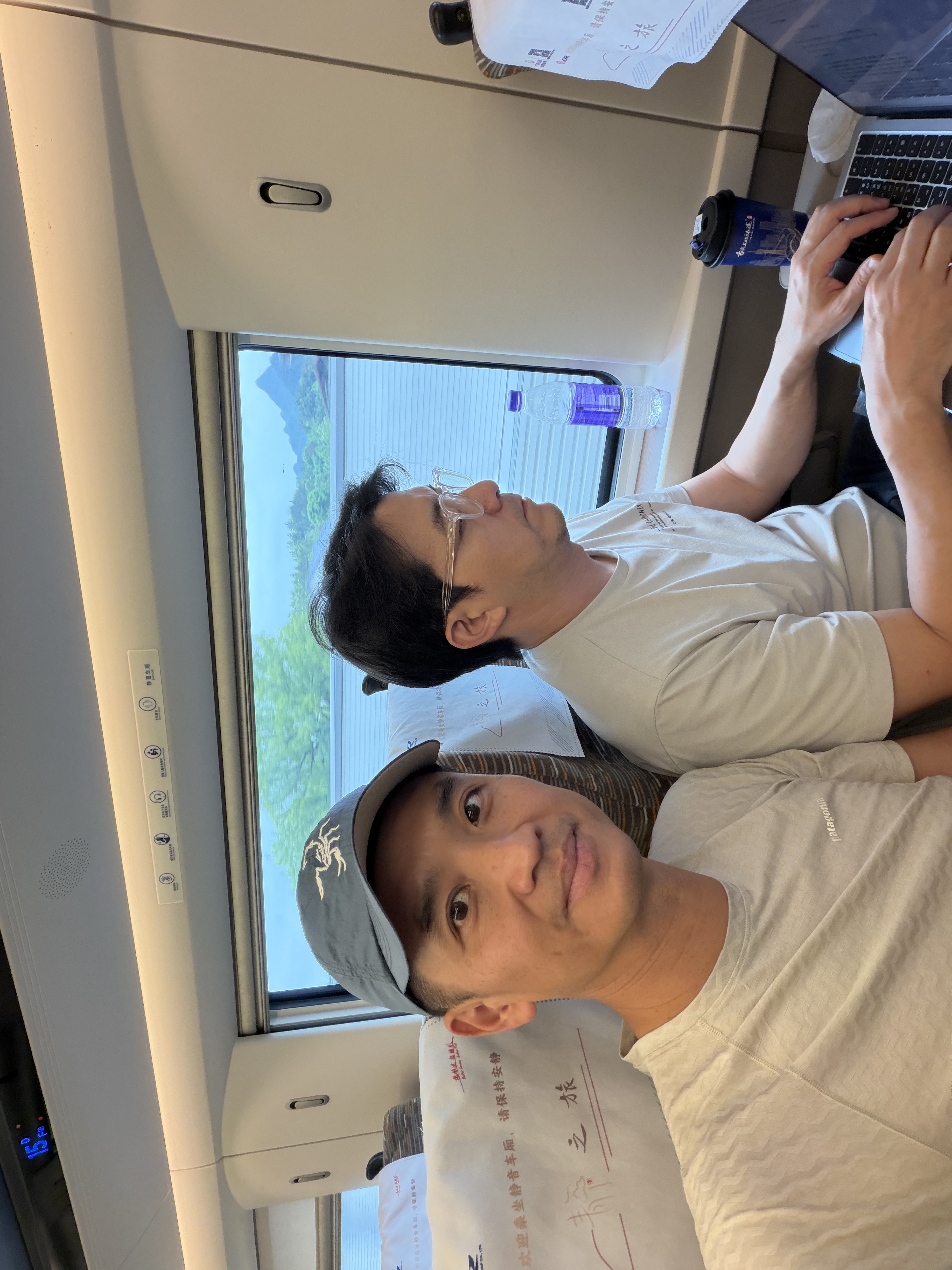
And that is roughly how it went — two people at the window seats, laptops open, the landscape changing frame by frame outside. In the city you never feel it, but travel far enough and you realize: this country is enormous. From the Pearl River Delta's dense urban grid, to Guangxi's limestone karst forest, to the suddenly deep-red earth that appeared when we crossed into Yunnan — the window played a documentary that needed no narration. I closed my laptop and just watched for an hour. Hwan said: you stopped working? I said: this is work.
The red earth of Yunnan is a detail that surprises many people. That deep ochre-red is not a photography filter — it is real, caused by high concentrations of iron oxide in the soil. Yunnan's soils have a specific agronomic name: laterite, or latosol — the product of long-term weathering under tropical and subtropical conditions. The mineral composition of this soil has a direct relationship to the flavour of Yunnan's food: it determines which trace elements plants absorb, and shapes the structure of the soil microbial community that in turn influences how crops develop. Looking out at that red earth from the train window, you are looking at one of the sources of Nuodeng ham's flavour.
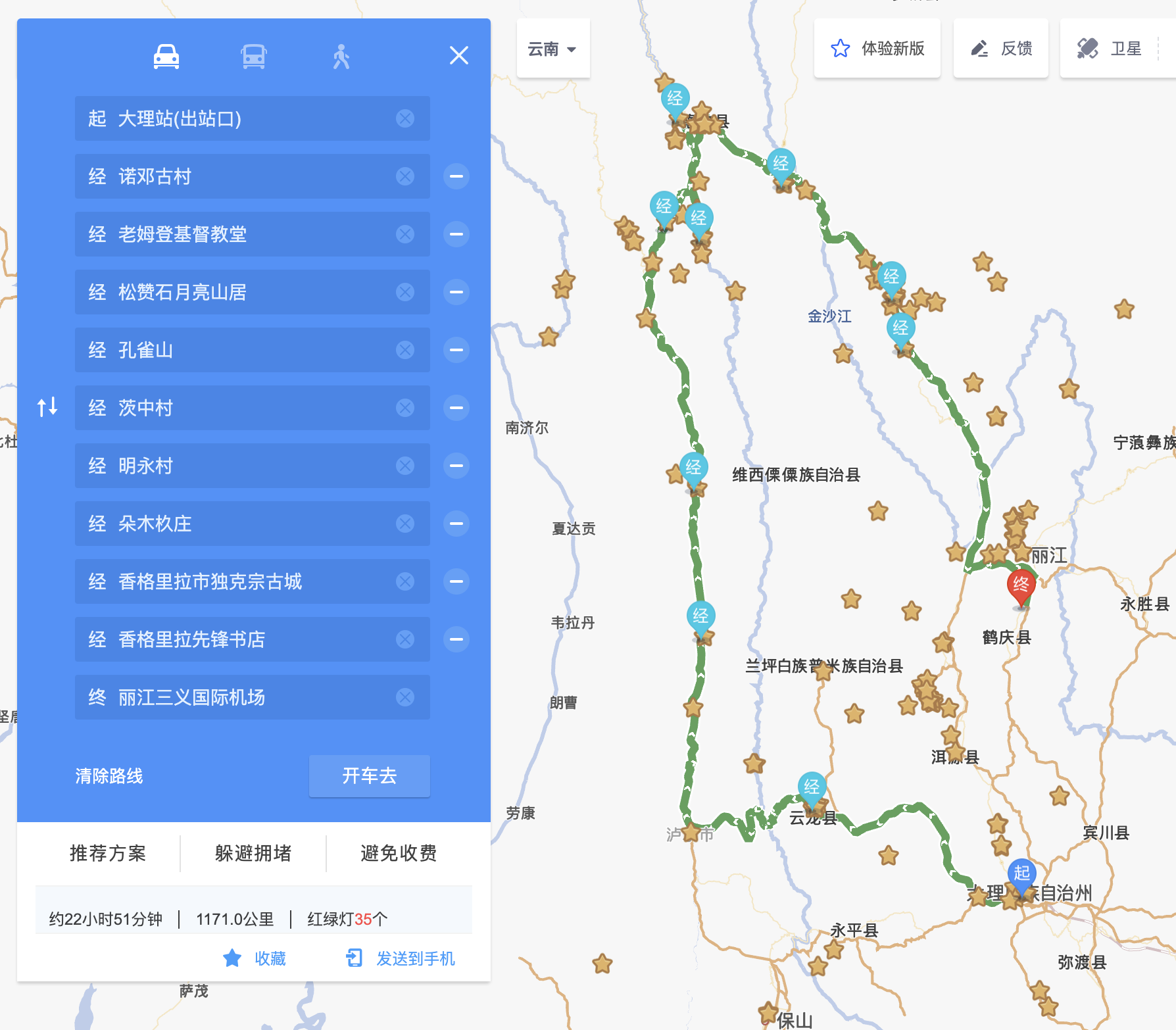
The map gives a sense of scale that is hard to convey otherwise. 1,171 kilometres. Two major river watersheds — the Mekong and the Salween. A 2,000-metre elevation range. The territories of four ethnic peoples: Bai, Lisu, Tibetan, Naxi. This was not a weekend getaway. It was something that required being taken seriously to be done at all.
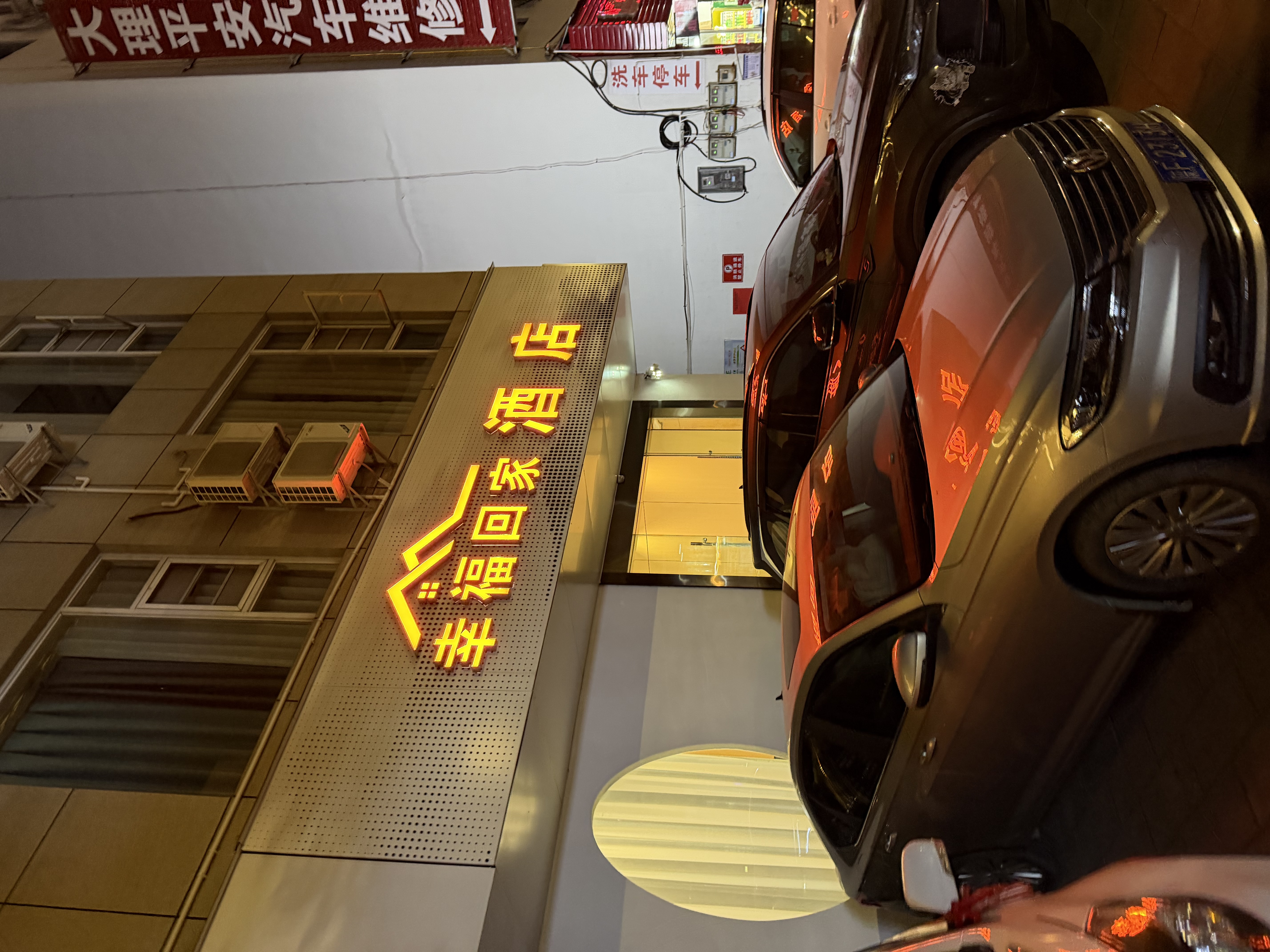
We arrived in Dali just before 9pm. No hotel booked. This is our habit and our flaw in equal measure. Hwan opened his phone, searched nearby accommodation, and found an AI-recommended guesthouse: RMB 108 per night. The room was small but clean, with a window facing the mountains. We dropped our bags and decided to eat first.
Most of the Dali old town night market is staged for tourists. A few streets further out, we found a family kitchen: an auntie at the wok, her son at the till, the menu handwritten on paper stuck to the wall. We ordered rice noodles, stir-fried greens, and a flask of Yunnan rice wine. When she brought the food over, she asked: where are you from? Hong Kong, I said. She nodded — not surprised. This place has always been a stop for people passing through.
What we ate that night was not complicated. No ingredient list, no fortification, no emulsifiers — rice noodles, stir-fried greens, a flask of rice wine, made by someone who has cooked the same way for decades. This kind of meal is easy to underestimate. Research shows that chronic stress — the kind Hong Kong runs on — actively suppresses beneficial gut bacteria; and the vagus nerve, which connects gut to brain, carries signals in both directions. Ten hours of no notifications, followed by a meal like this, is not a wellness practice. It is just the baseline most humans lived at for most of history — and we had briefly returned to it.
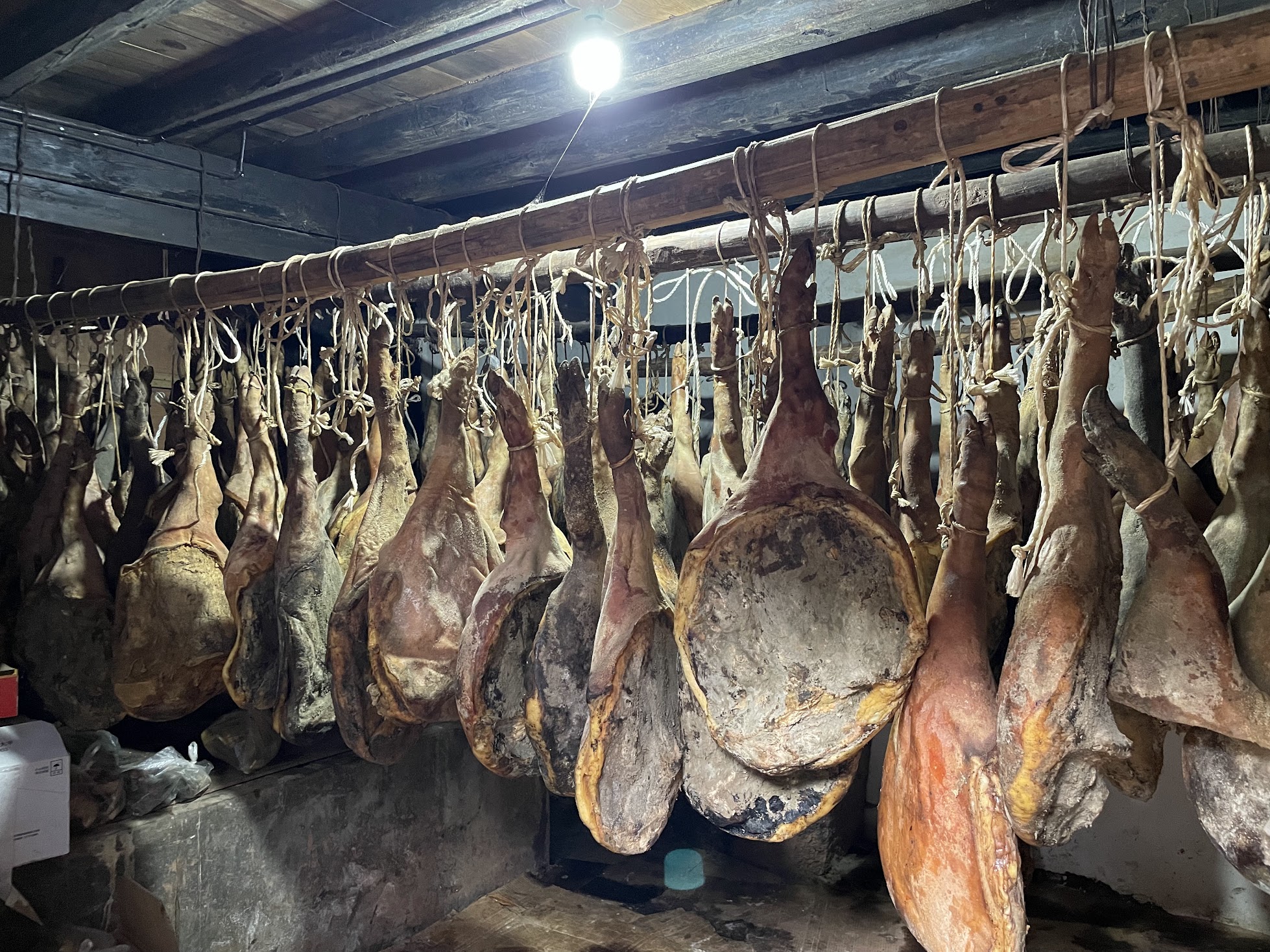
The train takes ten hours. A ham takes thirty-six months. We're not in a hurry.
The next morning, the sun was generous. We rented a Toyota SUV in Dali, destination set for Nuodeng ancient village. From Dali to Yunlong County is the unhurried kind of mountain driving: Bai minority villages, terraced fields, an occasional solitary temple. Yunnan mornings carry a scent of pine in the air. Roll the window down and nothing else is needed.
From Dali to Yunlong, one stretch of road follows the Caojian River valley. At the valley floor, rice paddies. On the slopes, pine forest. Every few kilometres, a Bai minority village climbing the hillside until it disappeared into the treeline. This settlement pattern resembles Nuodeng itself — not expansion across a plain but accumulation on a slope. The Bai people have lived in this terrain for over a thousand years, and the way they build their villages reflects a deep understanding of mountain geography: south-facing, mid-slope, sheltered from prevailing wind, close to water. These siting principles were verified by local people centuries before modern architecture had language for them.
Yunnan mornings smell different because they are different. The mountain air north of Dali — clean, pine-threaded, carrying whatever the forest breathed out overnight — is biologically unlike anything you inhale in Hong Kong. Studies of outdoor air microbiomes consistently find that forest and mountain environments host a wider range of airborne bacteria than urban environments, including species in the Mycobacterium family associated with reduced inflammation and anxiety. This is not aromatherapy. It is microbiology. When we rolled the window down on that mountain road, we were not just enjoying the view.
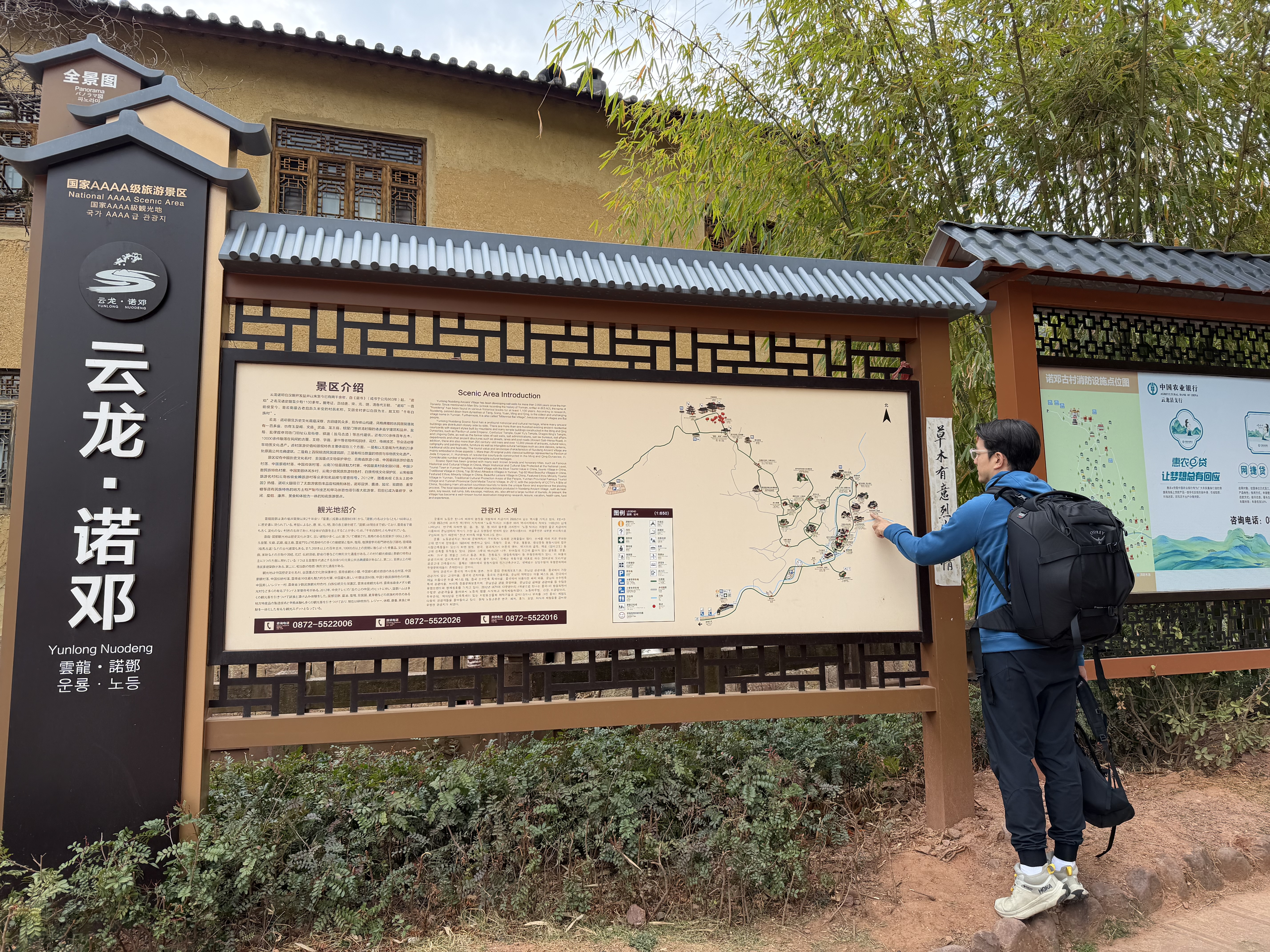
Some things only become visible at lower speed. Take the plane and you see the destination. Take the ten-hour train and you see the journey. The work GutCommon does — finding the right ham, building trust, reconstructing a supply chain piece by piece — operates on the same logic. No shortcuts exist, nor should they. A leg of Nuodeng ham that has cured for thirty-six months will not mature faster because you are impatient. You set the conditions right, and then you wait.
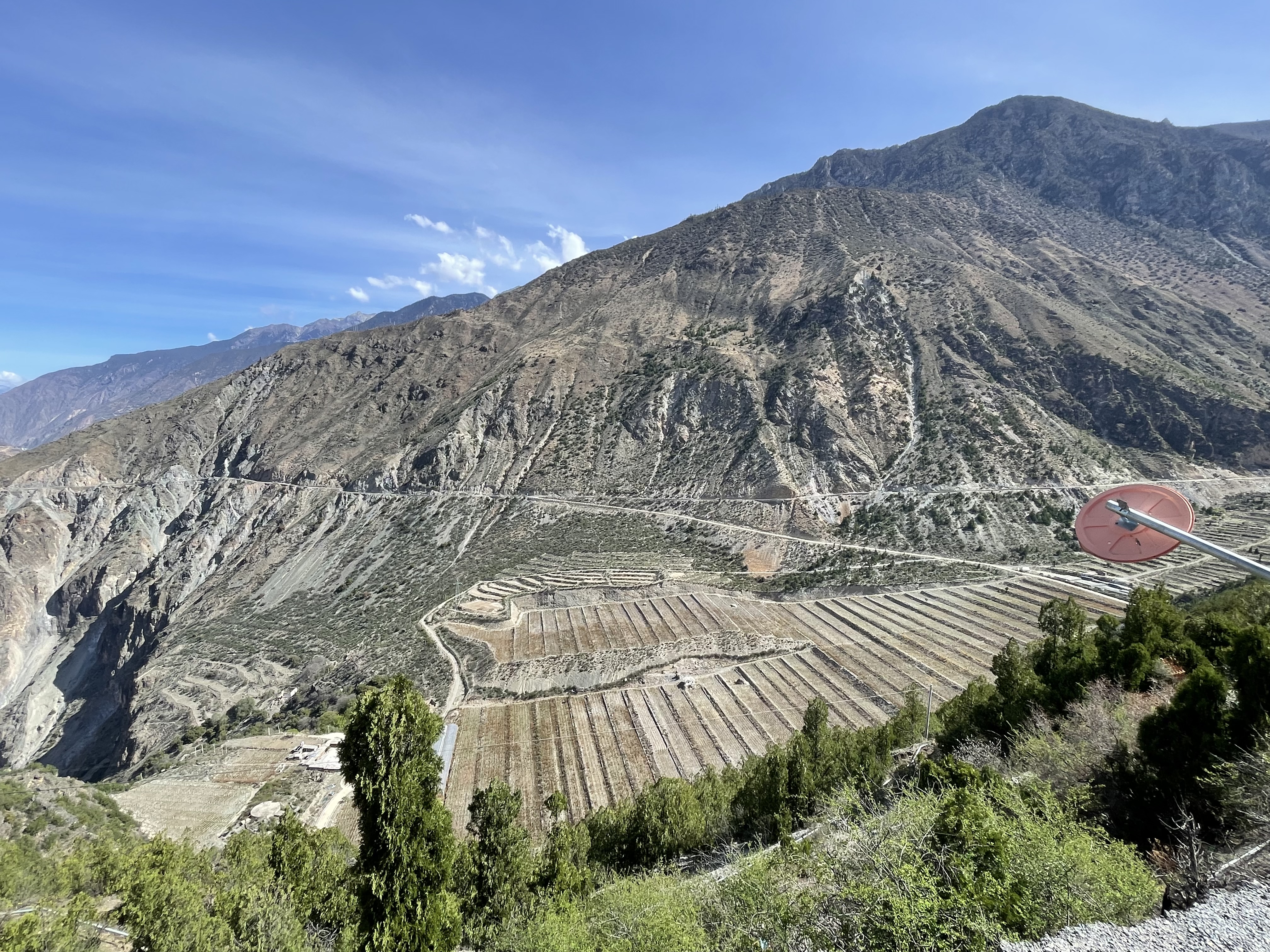
We made this trip partly because we wanted to see these places before they change. The Three Parallel Rivers corridor — the Mekong, the Salween, and the Yangtze running within kilometres of each other — is a UNESCO World Heritage site and one of the most biodiverse landscapes on earth. That diversity extends beyond plants and animals into the microbial world: the soil, the air, the food that grows from both. The communities we visited are not museum exhibits. They are living systems — intact food cultures, intact farming practices, intact microbial environments. We believe the most durable way to protect them is not photography but economics: buying from the right people, consistently, at a fair price. That is what GutCommon is trying to do.
To learn more about what we found in Nuodeng and how we bring it to you, visit our ham page.