諾鄧之行的第四天,我們沿215國道往北,沿著沘江一路上行。目的地是地圖上標注的「古橋博物館」——但那並不是一座博物館,而是沿沘江兩岸散落的三百多年古木橋群,依舊站在原地,無人特意保護,也無人拆除。
On the fourth day of our Nuodeng trip, we headed north along 215國道, following the Bi River upstream. The destination on the map read "Ancient Bridge Museum" — but it was no museum. It turned out to be a series of 300-year-old wooden bridges still standing along the Bi River, quietly holding their ground without preservation efforts or demolition orders.
我沒有料到這樣的東西在這裡還存在。我一直以為,這種古老的木廊橋,只剩日本的京都或奈良還能見到。但眼前這些橋,被春天的桃花包圍,花瓣隨風落入沘江,美得讓人站在橋頭不知說什麼好。它是真實存在的,又完全在意料之外。
I hadn't expected anything like this to still exist here. I had always assumed that ancient wooden covered bridges survived only in places like Kyoto or Nara. Yet here they stood, framed by spring peach blossoms, petals drifting down into the Bi River. The beauty of it was hard to put into words — real, and entirely unlooked-for.
繼續往北,終點是我在地圖上找到的一個地名:順蕩村,雲南雲龍縣。地圖上幾乎沒有任何介紹,只有那個名字,以及少得可疑的幾條評論。我們決定去看看。
Further north, our final destination was a place name I had spotted on a map: 順蕩村, Yunlong County, Yunnan. Almost nothing was written about it — just the name and a suspiciously sparse handful of reviews. We decided to go.
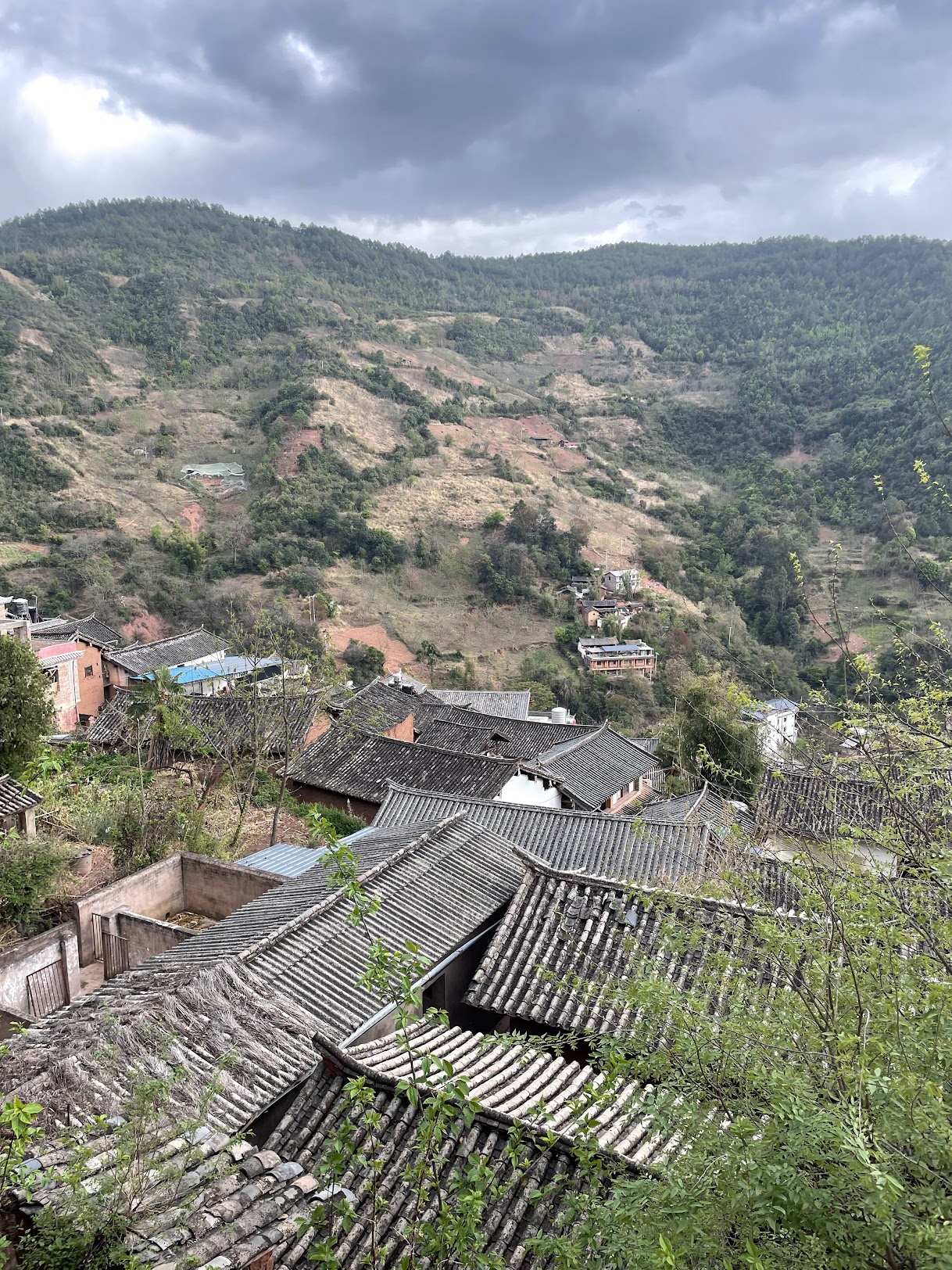
抵達時,村子靜得像一幅畫。一座古橋橫跨小溪,兩座古廟立在山腳。整個村子因為太窮而得以保存——沒有人翻新,沒有人改建,就這樣原封不動地站在那裡。全村只剩兩、三位年邁的老人還住著。桃花在微風中落著,古廟的瓦頂長著青苔,那種美,是日語裡所說的「侘寂」:殘缺、無常、剛剛好。
When we arrived, the village was still as a painting. An ancient bridge crossed a small stream; two old temples stood at the foot of the hills. The whole place had been preserved by poverty — no renovation, no maintenance, nothing touched. Only two or three elderly residents still lived there. Peach blossoms fell in the breeze, moss covered the temple tiles, and the beauty of it was what the Japanese call wabi-sabi: imperfect, impermanent, exactly right.
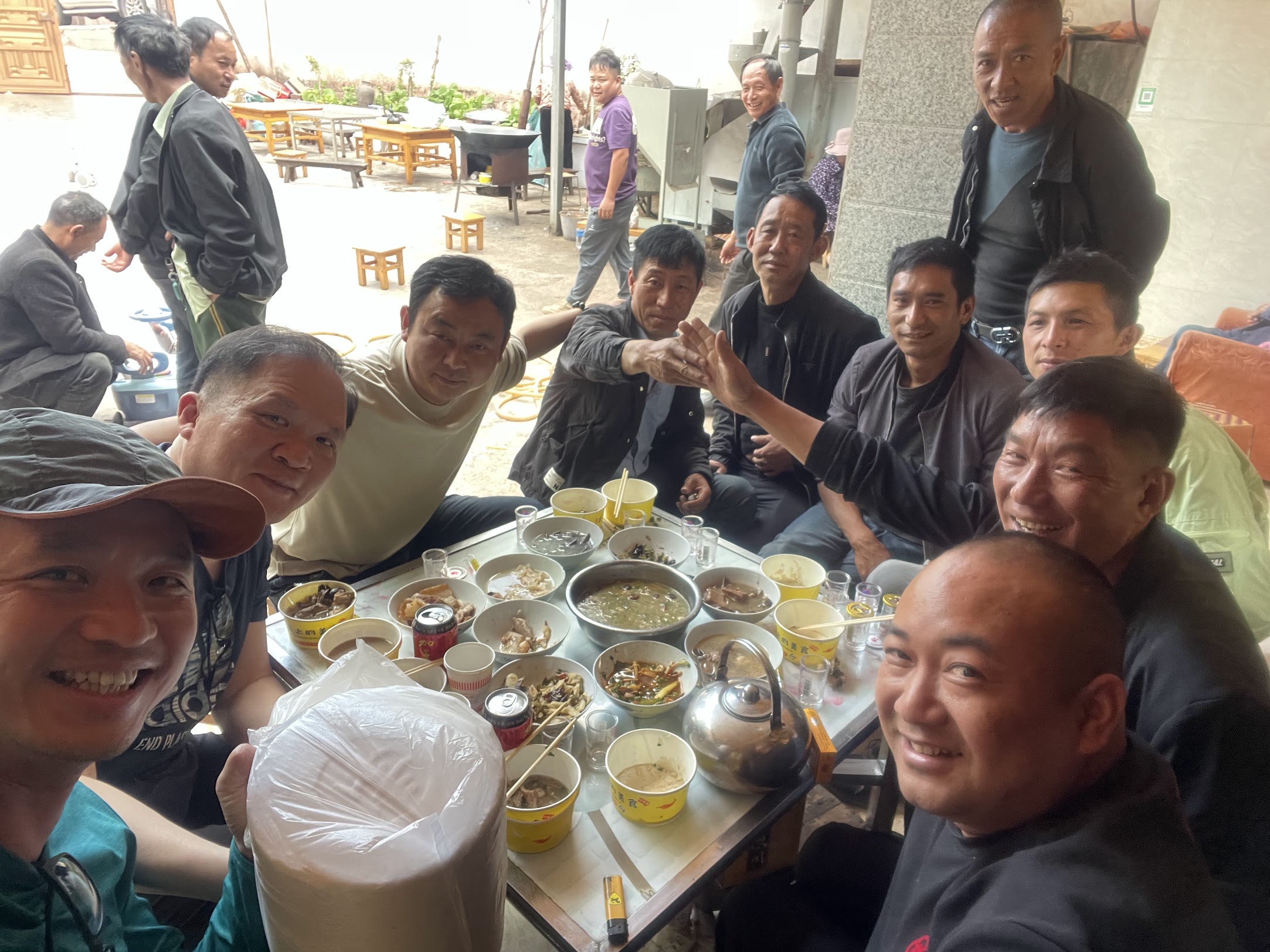
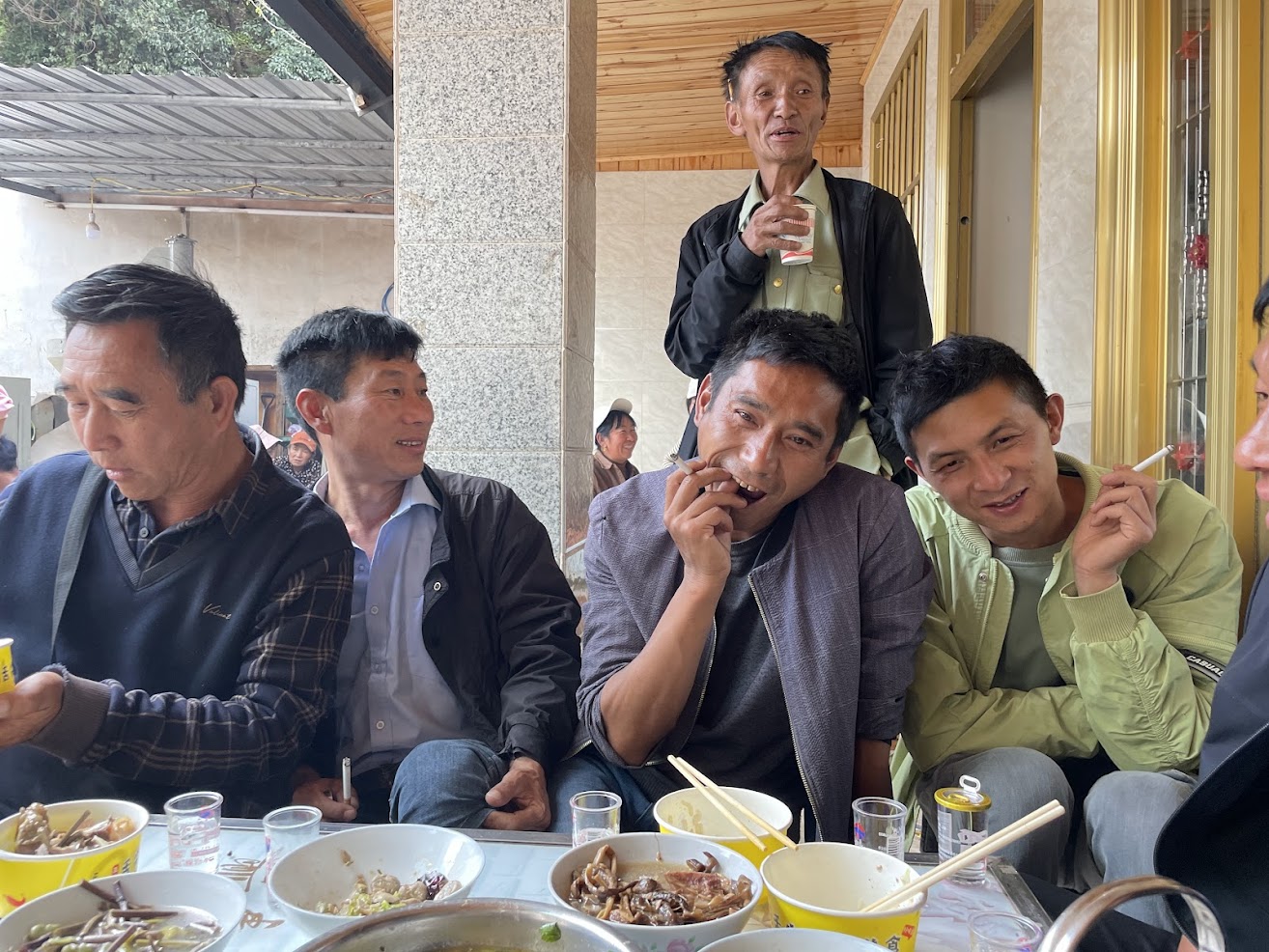
我們發現村委會辦公室院子裡擺著桌椅,熱氣騰騰,似乎正在辦什麼活動。本來只是想進去問問路,順便打聽一下村子的歷史。沒想到話還沒說完,村民已經拉著我們坐下來了。我們就這樣,成了意外的客人。
Near the village committee office, something was clearly going on — tables were set up in the courtyard, steam rising from large pots. We had stopped only to ask directions and learn a little about the village. Before we had finished the question, the villagers were already pulling out chairs for us. Just like that, we were accidental guests.
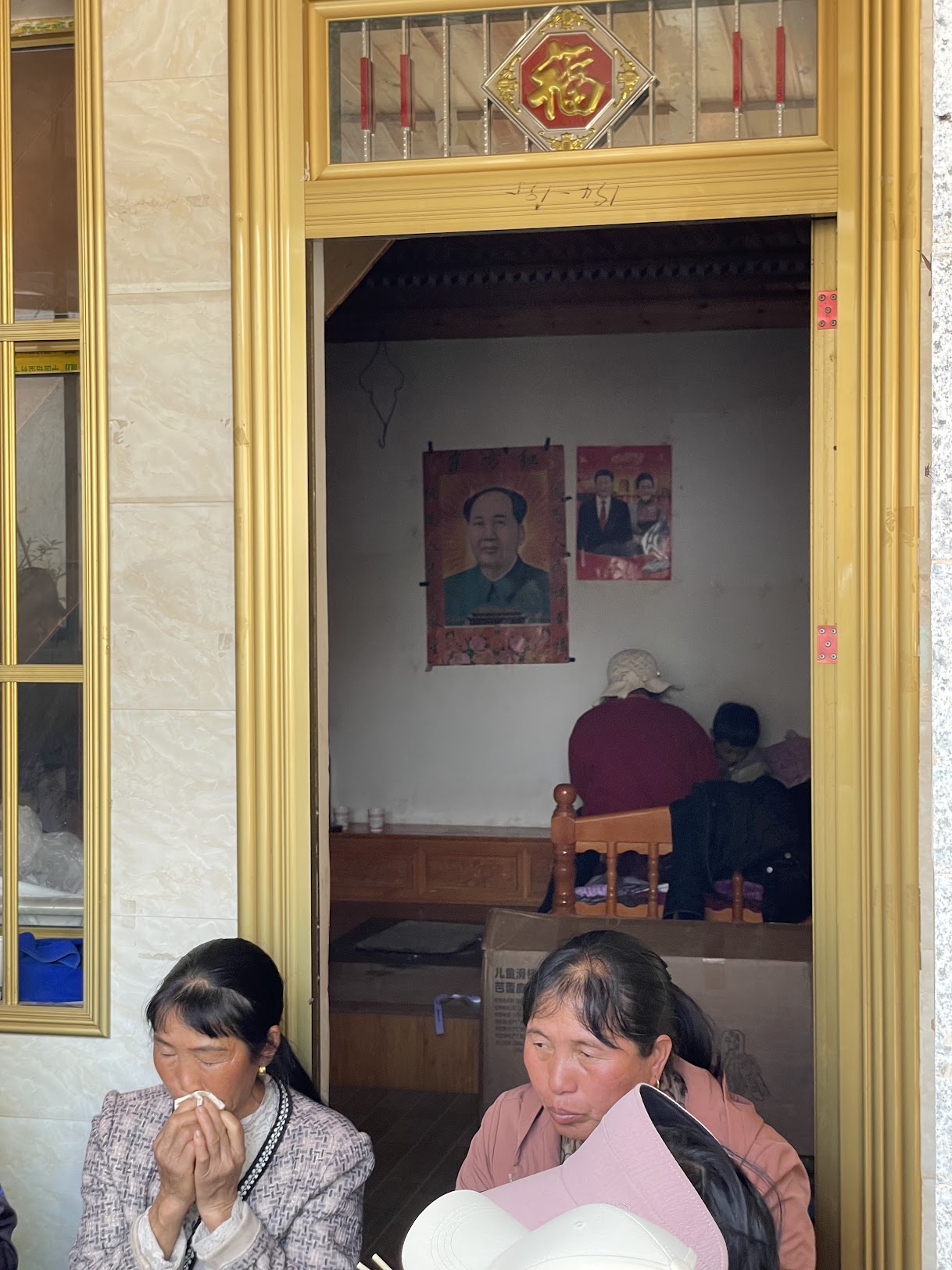
後來才知道,那天是清明。平日裡,大多數順蕩村人已搬到雲龍縣城生活、做生意,村子幾乎空著。但清明是回家的日子,這一天,散落在外的村民都回來了,帶著食材,帶著酒,帶著孩子。我們碰巧趕上,已經算是極大的運氣。
We later learned that it was Qingming — the tomb-sweeping festival. On ordinary days, most of 順蕩's residents have already moved to Yunlong County to live and run businesses, and the village stands nearly empty. But Qingming brings everyone home: people returning with food, with liquor, with children. That we happened to arrive that day was pure luck.
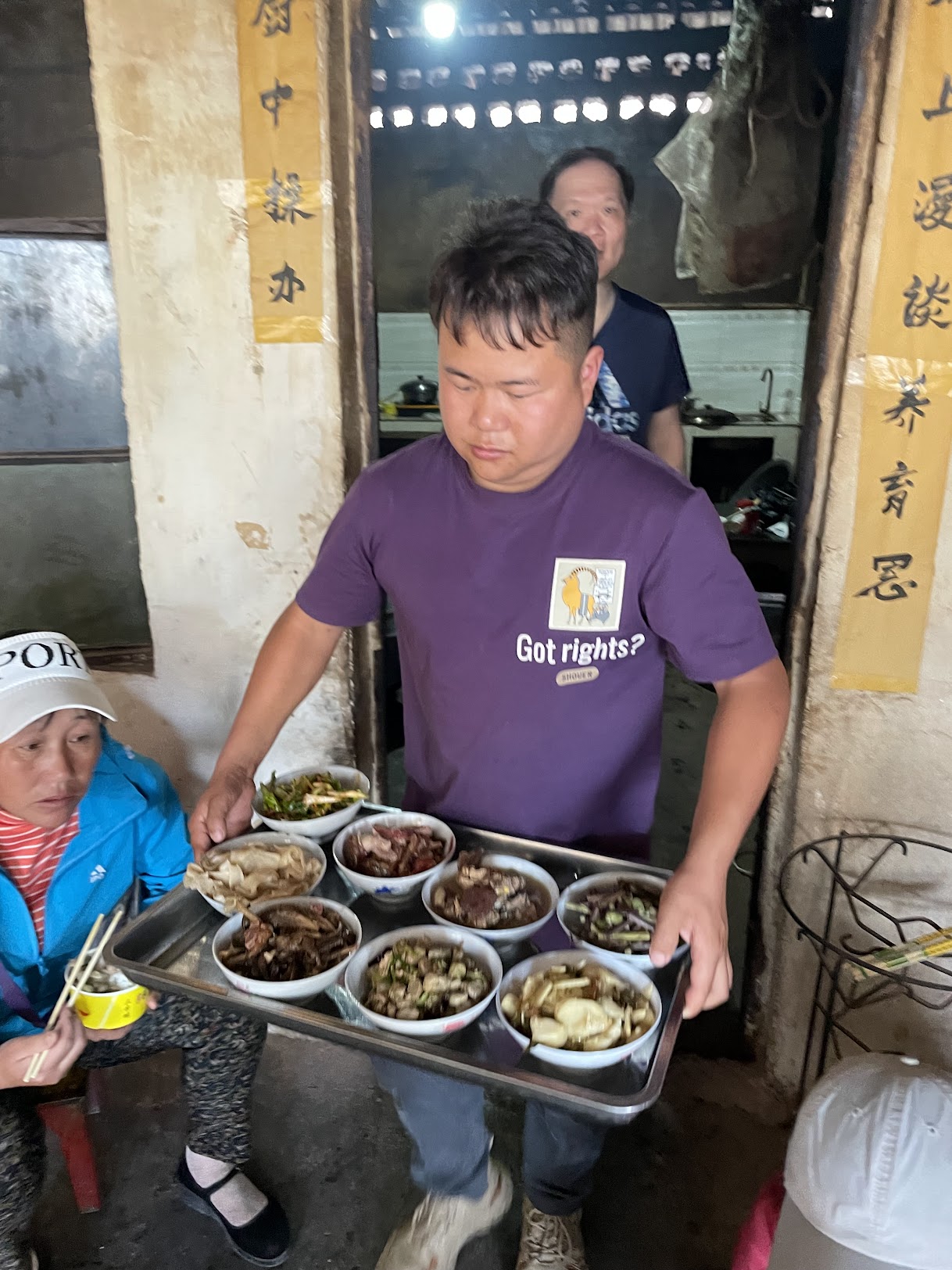
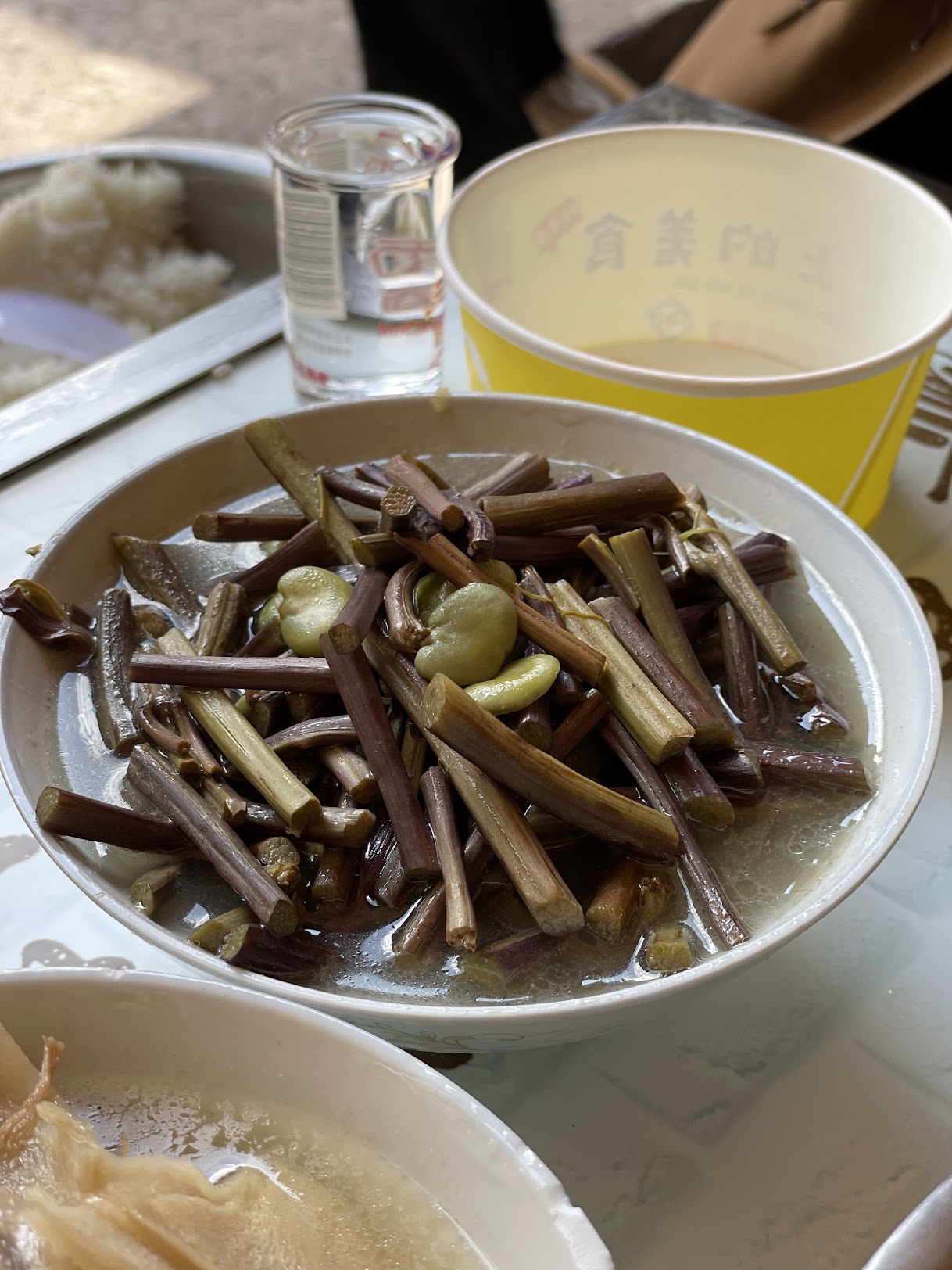
桌上的菜,沒有一樣是提前備好的食材。蔬菜全是當天早上上山採回來的野菜,用最簡單的手法調拌。白族人待客,向來不藏私:有什麼放什麼,不講排場,只講情誼。
Nothing on the table had been bought in advance. The vegetables were wild greens picked fresh from the mountain that same morning, dressed simply. The Bai receive guests openly: what is in the house goes on the table. No ceremony, only warmth.
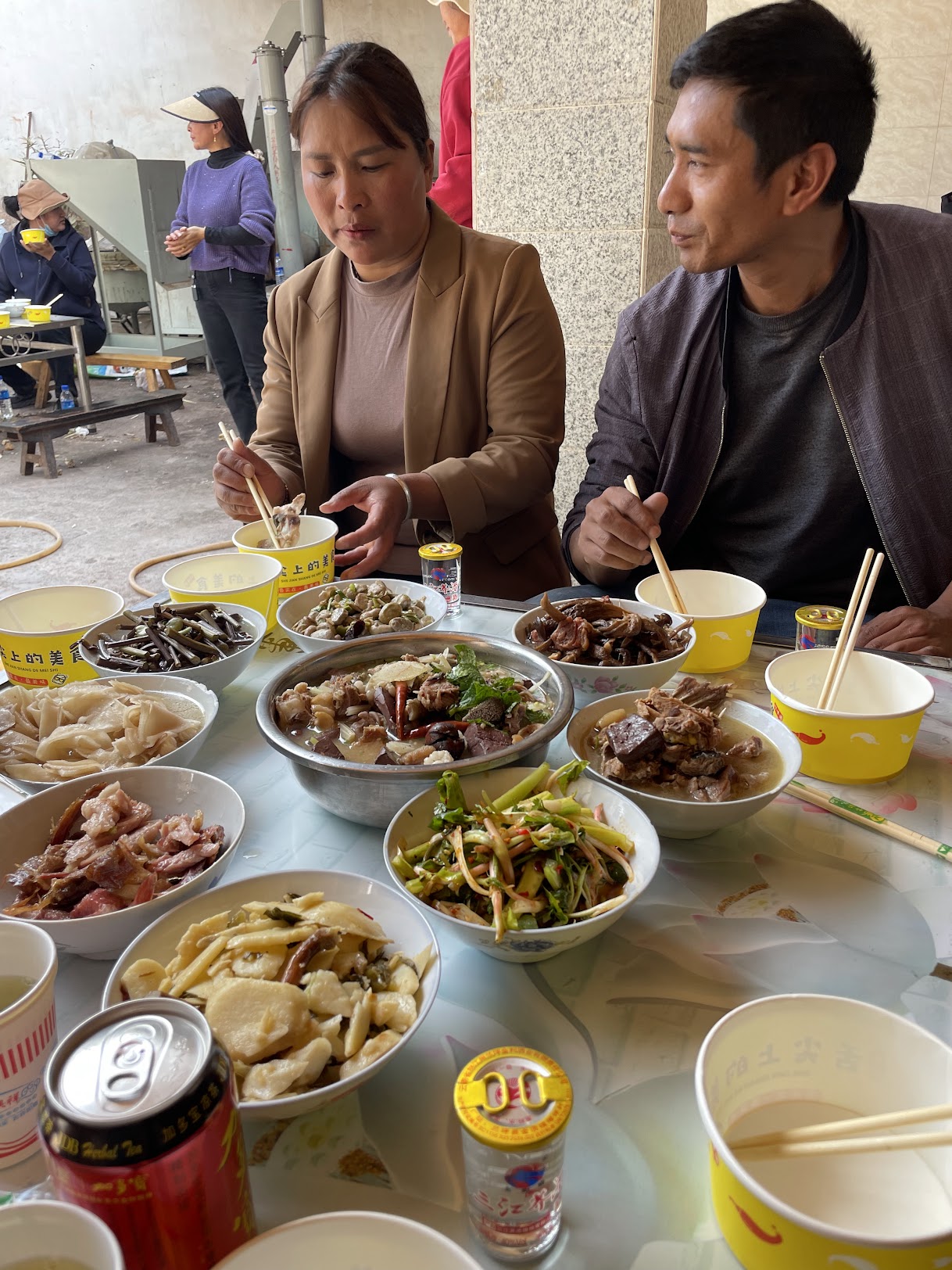
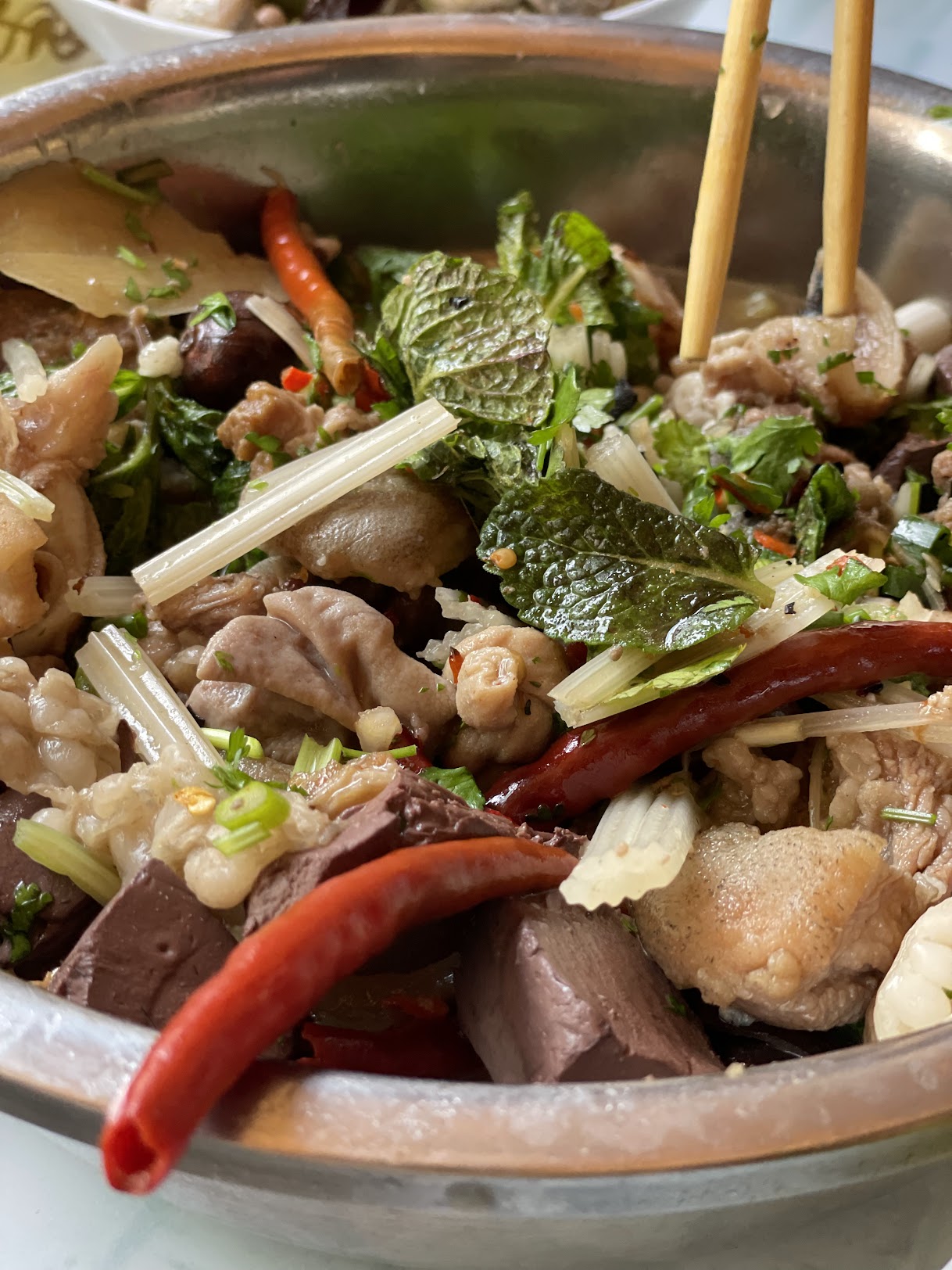
席間最搶眼的是一道用大鐵鍋現炒的雞肉,薄荷、辣椒、花椒,在鍋中翻滾,香氣衝天。這是白族最家常的炒法,不求精緻,只求一個「鮮」字。旁邊還有一碗燉得軟爛的山根,像極了某種慢火候的哲學——急不得,也不需要急。
The most eye-catching dish was a wok of chicken stir-fried over high heat with fresh mint, dried chili, and Sichuan pepper — a fragrance that punched clean through the mountain air. This is the most domestic Bai cooking: nothing refined, just absolute freshness. Beside it sat a bowl of slow-braised mountain roots, soft and yielding: the philosophy of the unhurried, made edible.
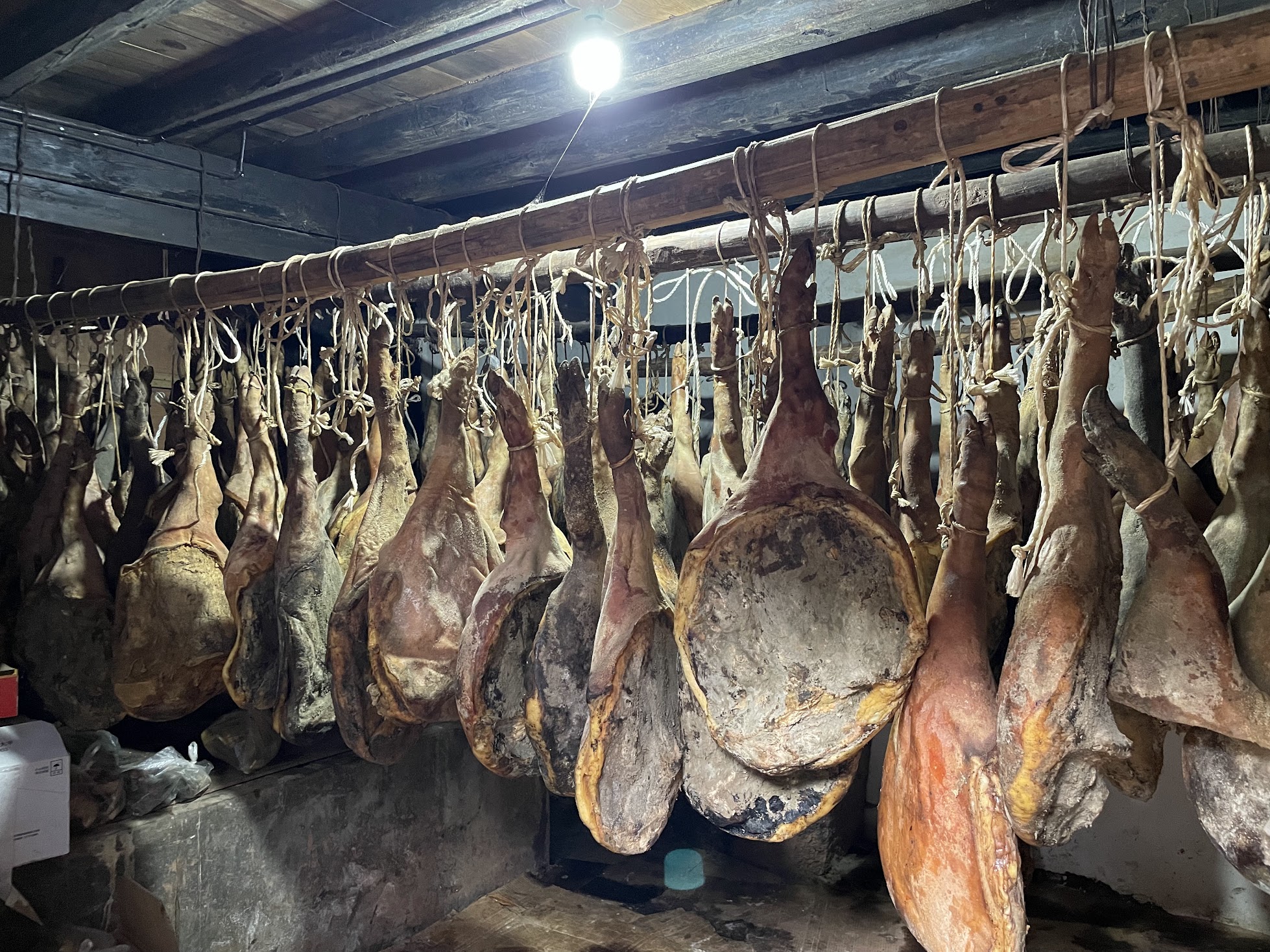
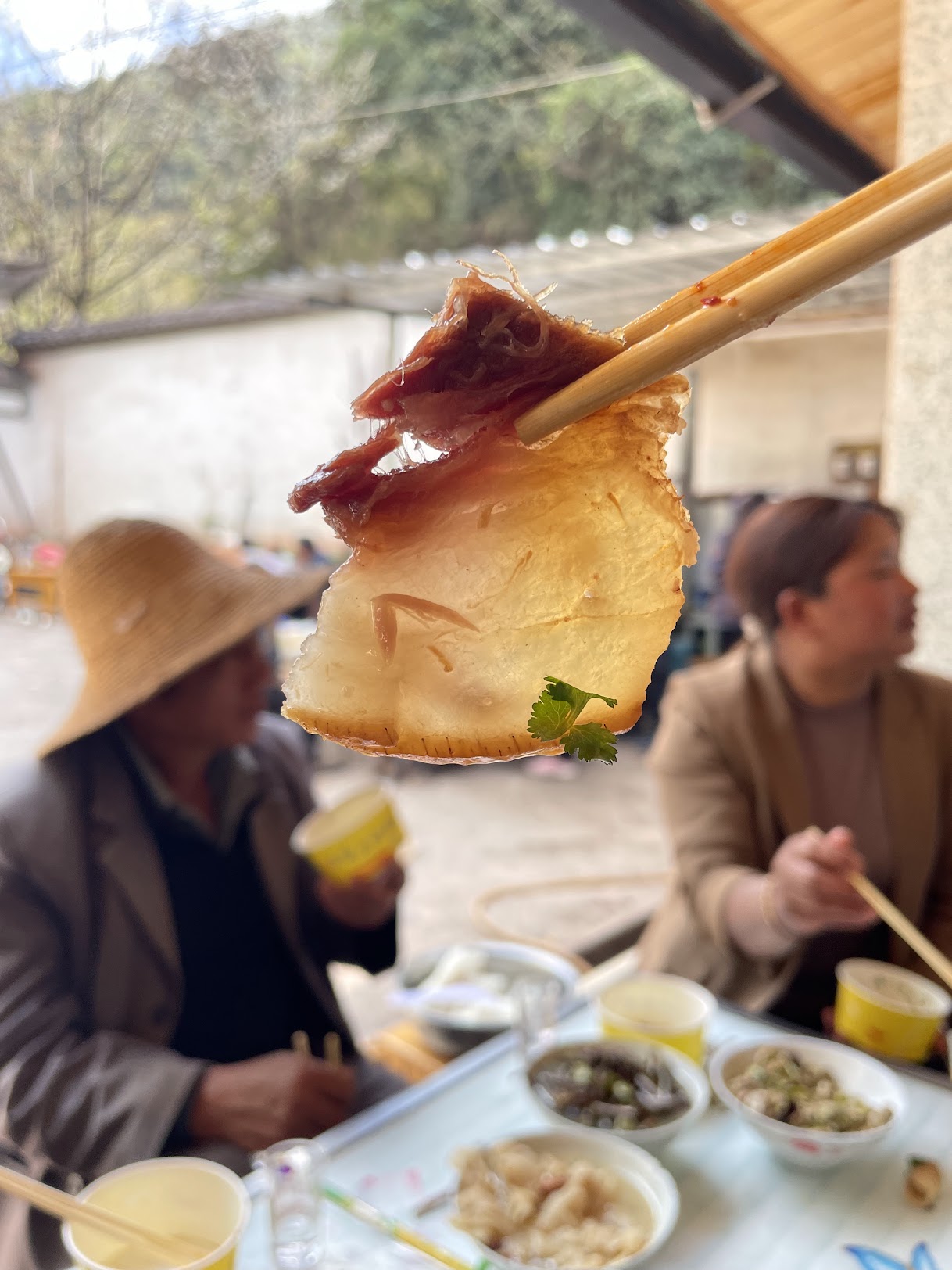
飯到半途,有人端來了一盤諾鄧火腿。切得極薄,幾近透明,橘紅底色隱約透光,脂肪晶凝通透,白得像凍結的光。這不是正式的上菜,只是有人去家裡取了一條自家醃製的腿,切了幾片帶來。村裡幾乎每家都有,有的是自用,有的是等待出售。我夾了一片入口,鹹香濃郁,帶着一種只有長時間陳化才能形成的堅果底韻,在舌尖慢慢化開。
Midway through the meal, someone brought out a plate of 諾鄧火腿 — cut razor-thin, nearly translucent, the crimson just catching the light, the fat crystalline and translucent, white as frozen light. This was not a formal course; someone had simply gone home, taken down one of their own legs, and sliced a few pieces for the table. Almost every household has one aging somewhere. I put a slice in my mouth: deep, salty-savoury, with a nutty finish that only years of curing can produce, dissolving slowly on the tongue.
飯後,村長與我坐在院子一角,用普通話夾着比手劃腳慢慢閒談,給我講述鹽馬古道當年的刻苦:騾馬負重,翻山越嶺,一去幾個月,鹽就這樣從順蕩一路走到遠方。後來公路通了,騾子退休了;後來鹽政統一,井鹽停了幾十年。但村長說這些的時候,沒有抱怨的語氣,只是陳述,像在說天氣。
After the meal, I sat in a corner of the courtyard with the village head — the 村長 — talking slowly in Mandarin with a lot of gesturing. He told me of the hardships of the ancient salt-horse road: mules heavy-laden, crossing mountain after mountain for months at a time, carrying Nuodeng salt to distant places. Then the paved road came and the mules retired. Then state salt regulations stopped the well salt for decades. He recounted all of this without complaint, the way you state the weather.
他說,路通了是好事,年輕人終於可以出去了。但他也說,年輕人出去了,誰來做火腿呢?但我聽到的,是一個時代的裂縫。
The road opening is good, he said — at last the young could leave. But then: now that the young have left, who will make the ham? What I heard was the crack in a whole era.
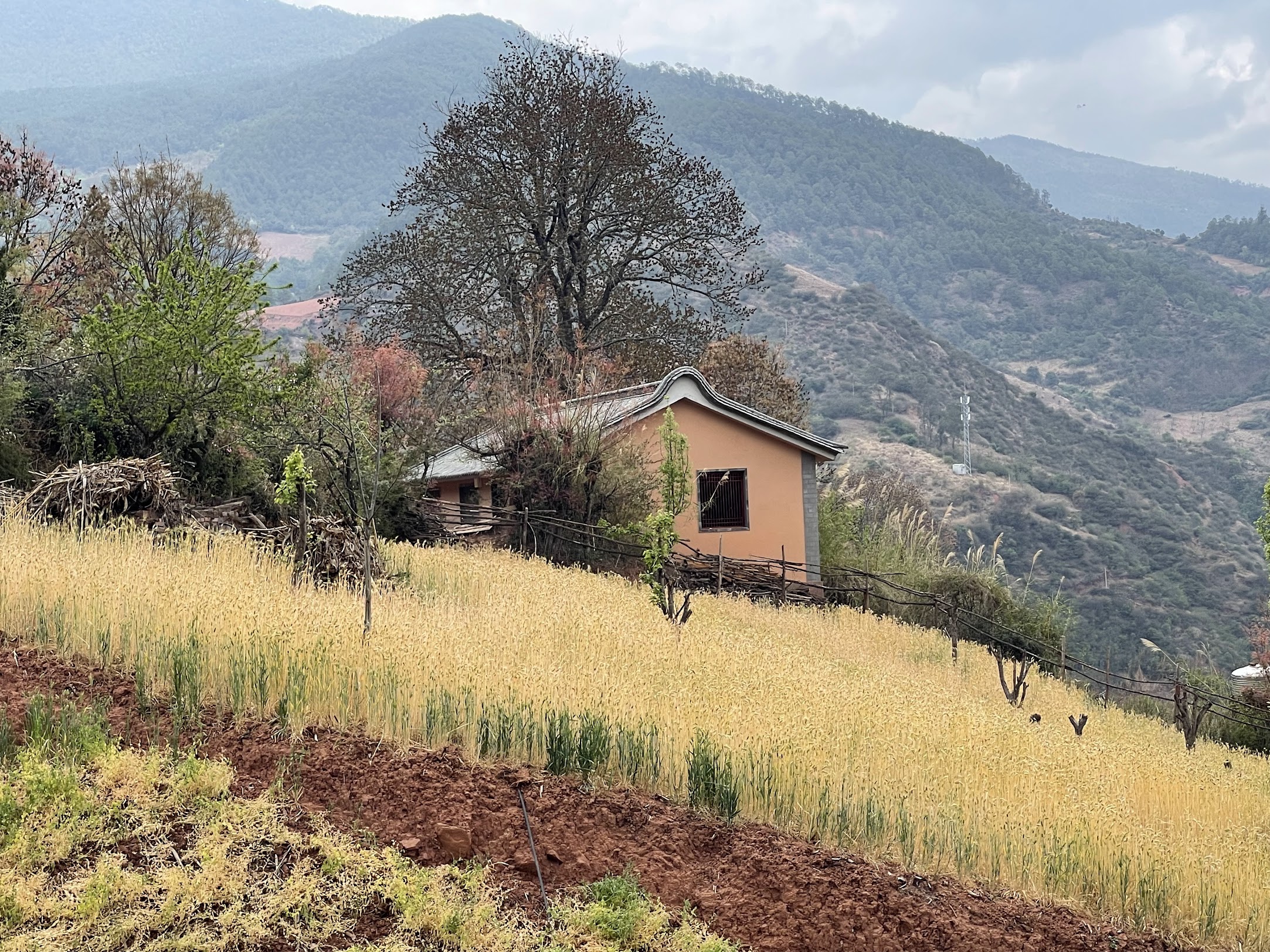
席間,村委書記也與我們聊起了他正在摸索的脫貧路子。他帶我們去看古法造鹽的作坊——那一刻我才真正明白順蕩村在歷史上的位置。之後,他又帶我們走到村外的一大片草地,草地背後的山坡上,長著一大片茂密的合桃樹。枝葉盛茂,靜靜地守在那裡,像是在等著什麼。
The village committee secretary — 村委書記 — had also been talking with us throughout, sharing the ongoing effort to find a way to lift the village out of poverty. He took us first to the traditional salt-making workshop — 古法造鹽 — and then out beyond the village to a wide open meadow. Behind it, the hillside was thick with walnut trees, dense and quiet, as if they had been waiting for something.
他說,他自己也做火腿,希望我們能試試,也希望我們能夠支持他的火腿生產,幫他把火腿帶出去。我們幾乎沒有猶豫,就答應了。
He told us he also made ham himself, and hoped we would try it — and perhaps help bring it to a wider market. We said yes almost without hesitation.
(當然,現實遠比那一聲答應複雜。後來我們在合作過程中遇到了非常多的問題——管理理念不同、衛生標準不一致——每一個都要逐一解決。我那年暑假也專門去了西班牙,參觀了一家釀製傳統有機火腿的家族工廠,與第三代掌舵人深談,他們對雲南火腿也充滿興趣。每一步,都比想像中難,也比想像中值得。)
(In reality, that yes opened a much longer road. We ran into many problems along the way — differences in production philosophy, inconsistent hygiene standards — each requiring its own solution. That summer I also made a dedicated trip to Spain, visiting a family-run traditional organic ham producer, talking at length with the third-generation owner, who was genuinely fascinated by Yunnan ham. Every step proved harder than expected, and more worthwhile.)
但就在那片合桃樹坡地前,我們靈機一觸:GutCommon第一批自己監製的火腿,就用合桃來餵這些豬吧。
But it was standing before that hillside of walnut trees that something clicked: for GutCommon's first batch of ham — the one we would oversee ourselves — we would feed the pigs on walnuts.
傳統不是靠懷念就能活下去的。它需要市場,需要收入,需要讓堅守的人有理由繼續堅守。那天在順蕩村,我們只是問了個路,卻找到了一個答案。
Tradition does not survive on nostalgia. It needs a market, income, a reason for the people who stay to keep staying. That day in 順蕩, we stopped to ask for directions — and found, instead, an answer.