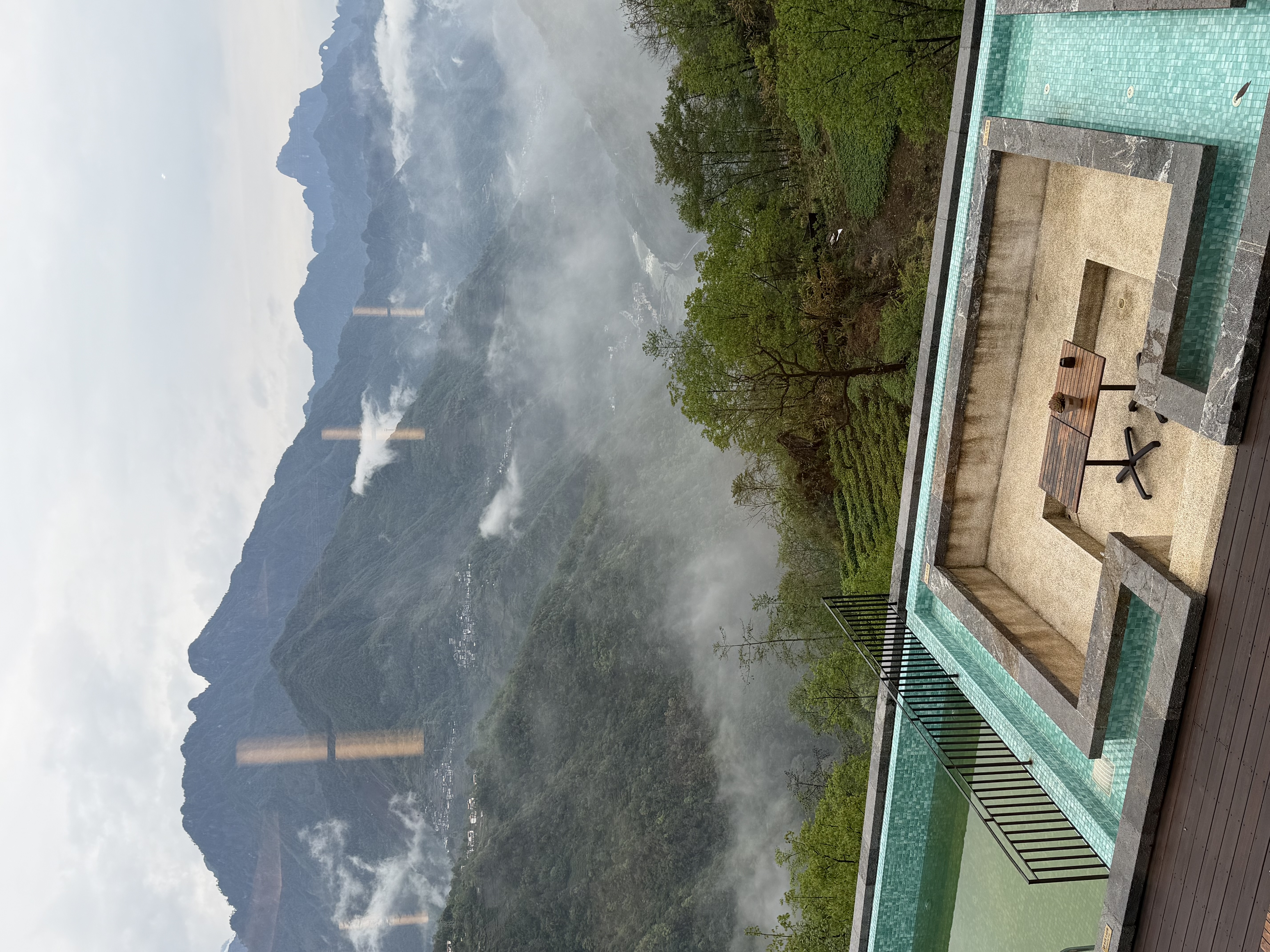
After 石月亮, we drove further up the mountain. No guesthouses, no signage, no tea shops, nothing set up for outsiders. The concrete road was new. But what it led to had not changed much in decades.
I have seen many villages that have been developed. You recognise it immediately — freshly painted walls, homestay signs, residents positioned at doorways anticipating strangers. This was not that. The people here were living, not performing living for anyone.
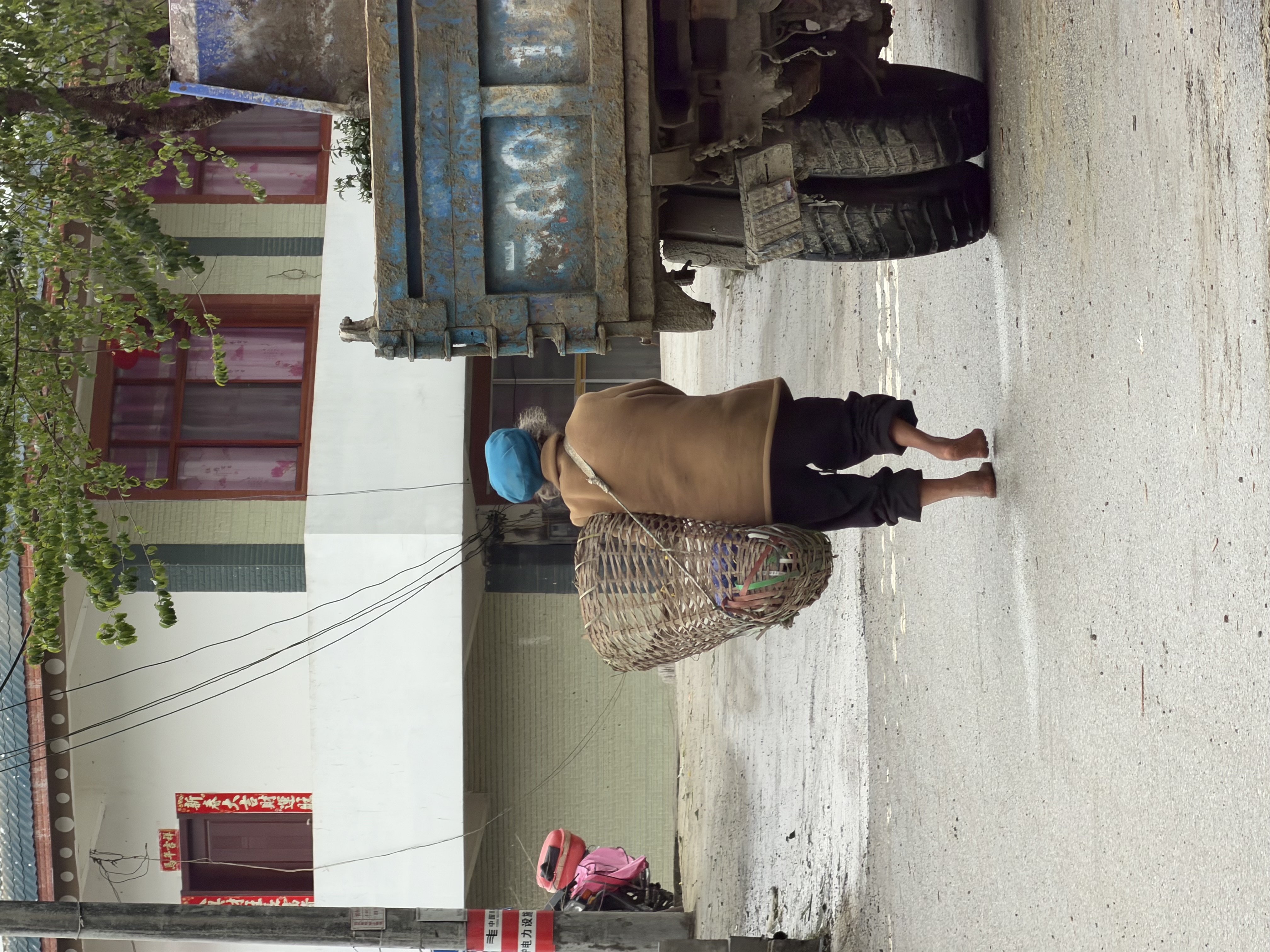
We saw an elder. Viewed from behind: barefoot, carrying a wicker basket on back, walking along a freshly poured concrete road. The gait was steady. No shuffling, no hesitation. This person looked to be in their seventies and moved like someone in their forties.
Barefoot contact with soil is a documented phenomenon. Skin directly on earth means direct exposure to soil microbial communities — whose complexity far exceeds what most people imagine. Healthy forest soil contains over a hundred million bacterial cells per gram, and thousands of distinct fungal species. Skin contact with soil is one of the oldest conversations between the human body and the ecosystem around it. Western epidemiology only began taking this seriously in the last two decades. The people here never needed to research it. They have simply always lived this way.
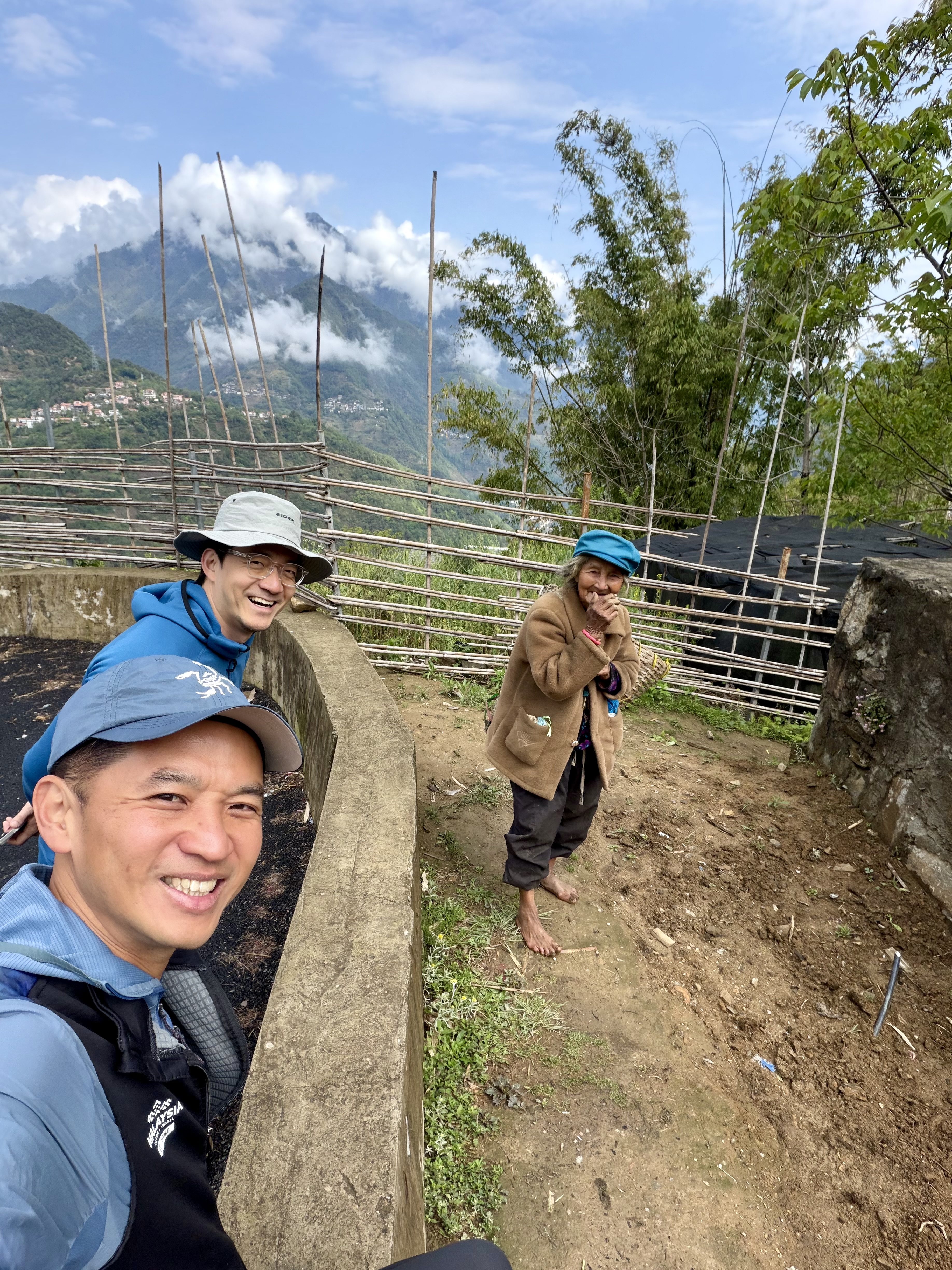
We encountered a farmer by an animal pen on the slope above the road. No shared language — he spoke Lisu, his Mandarin was minimal, Cantonese was irrelevant. We communicated through smiling, through gestures, through the kind of attention that needs no translation: he looked at our car, we looked at the animals in his pen, we nodded at each other, acknowledging that all of this was good and worth existing.
The air here is among the cleanest I have breathed in China. This is not rhetorical. High altitude, primary forest cover, no industry, almost no traffic — these conditions together produce an aerial microbial environment that cannot be replicated in the lowlands. Each breath carries spores, volatile organic compounds, and antimicrobial compounds exhaled by the forest itself. Research on phytoncides — plant volatiles — shows that these compounds benefit not only the immune system but act directly on the gut microbiome. What the city cannot do for you, the air here does every day.
We drove higher, passing tea plots along the way. The tea trees here are not planted in neat rows — they grow at the forest edge, mixed with other plants, clearly old, trunks as thick as a wrist. This tea and the tea in supermarkets are not the same category of thing.
Then, as we drove toward Gongshan, the crosses emerged from the morning mist. Not one but two, standing above the valley in the fog, with a gravity that surprised me.
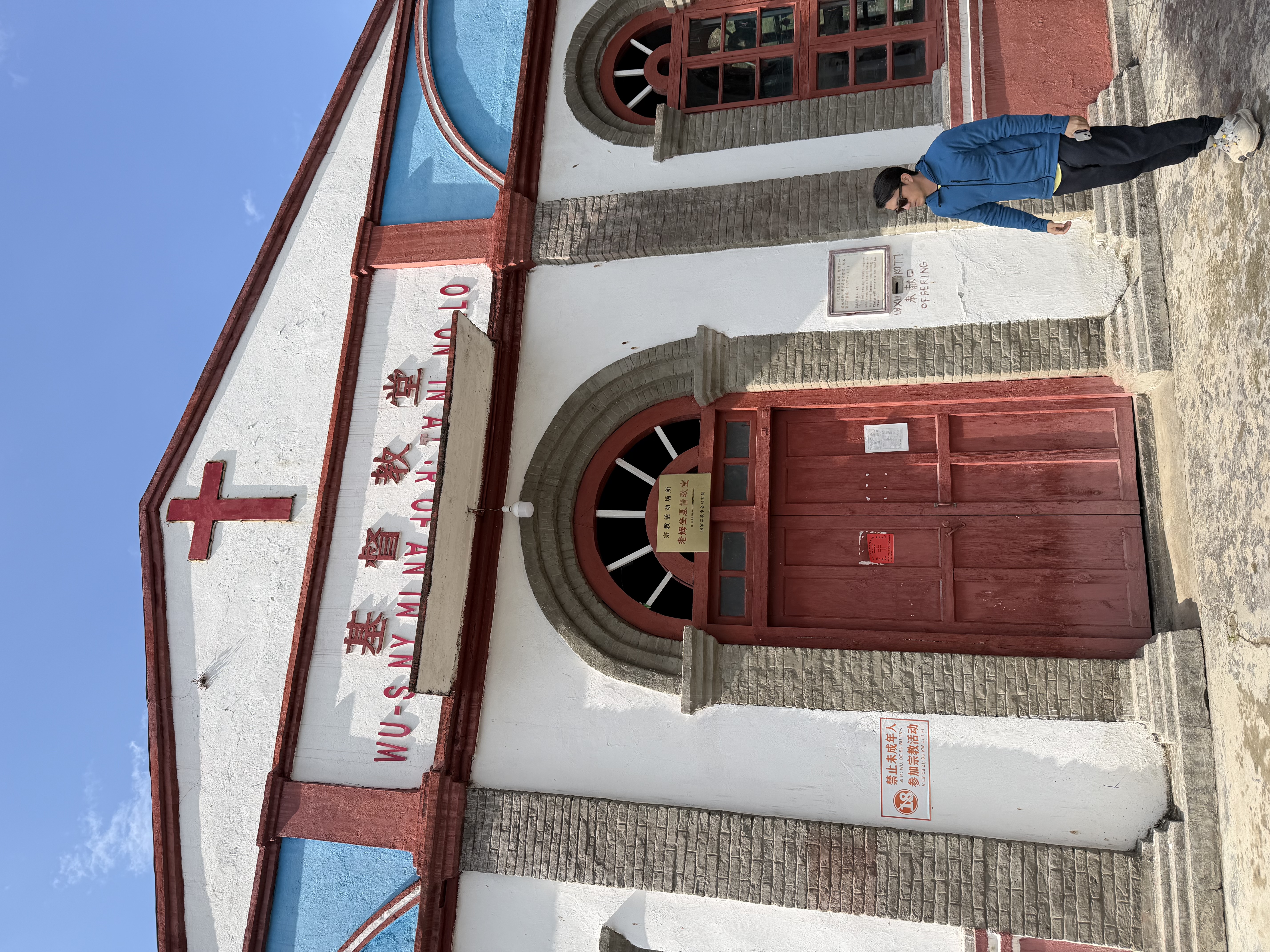
Gongshan's Catholic Church — 耶穌聖心堂, the Sacred Heart — is a little-known remnant of French-Chinese encounter in the deep mountains. Missionaries from the Société des Missions Étrangères de Paris entered the Nujiang valley in the late nineteenth century. The canyon was then almost entirely closed to outsiders, and the missionaries met fierce resistance. The Baihanlo Incident of 1905 resulted in the deaths of several missionaries and converts. But the mission did not stop — Father René Ducoeur and his successors continued building in the aftermath of conflict. The main structure was established between the 1910s and 1940s.
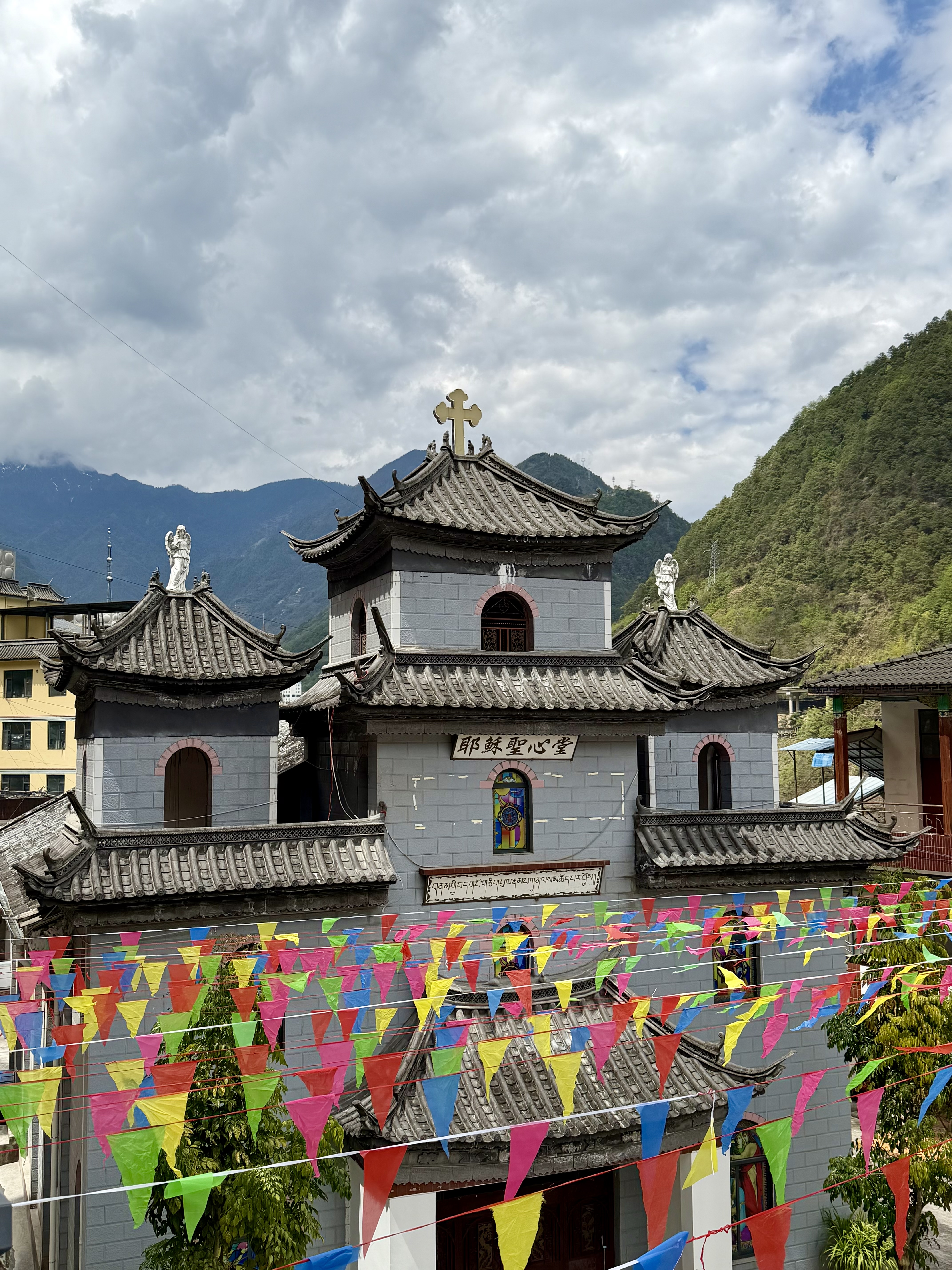
The church exterior is Chinese — flying eaves, layered rooflines, the visual vocabulary of traditional Chinese temple architecture — but crowned with a gold cross, flanked at the entrance by white angel statues, colourful bunting strung between columns. This is not compromise or awkwardness: it is a genuine fusion of two visual languages, evolved naturally through a building process that took decades. During the Cultural Revolution the church was forced to close and suffered damage. After religious policy loosened in the 1980s, the local community organised its own restoration.
Standing at the church exterior, I thought about the Fraser Script. The Lisu churches with their written facades, Gongshan's Chinese-style Catholic church, Nuodeng's three-teachings temple — cultural preservation in this canyon has never depended on external forces. It has depended on communities choosing to keep things alive. They are not preserving relics. They are using them: praying inside, repainting the exterior, hanging lanterns at festivals. This is a more durable form of preservation than any museum.
Keeping a living tradition alive requires not funding, not legislation, not institutional endorsement — though all of these can help. What it requires at its core is a community's conviction that these things are still worth existing. That is something no outsider can give, and no outsider can take away.
This is what GutCommon thinks about constantly: what we can do is let people outside know these things exist, understand their value, find ways to support them. The rest is for the people here to decide. To learn more about what GutCommon does, read our story.