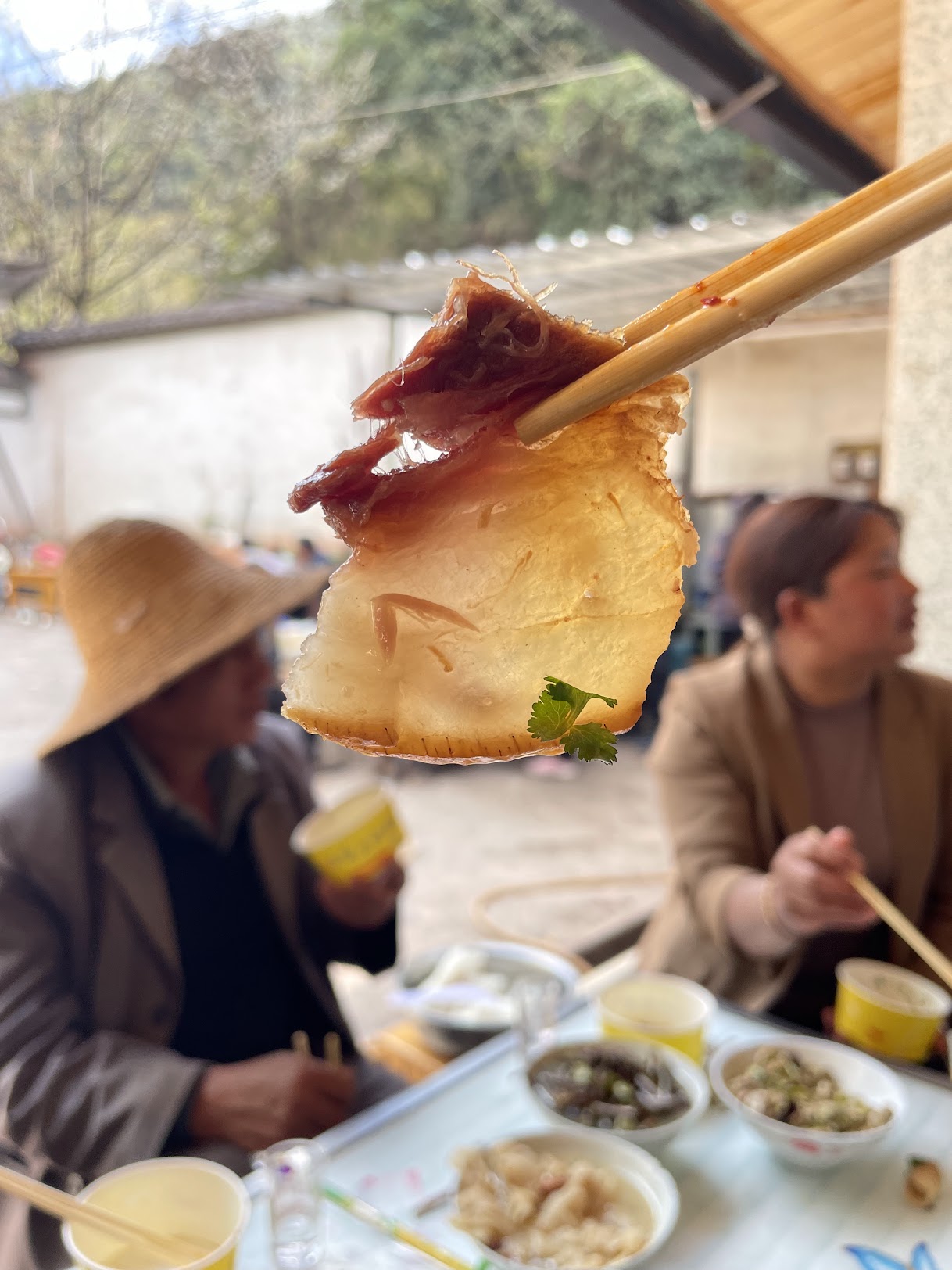
Hongkongers are not strangers to ageing. We talk about dry-aged beef, vintage champagne, the seimaibuai of sake. But few people think about the ham that has been going through its own long, disciplined journey deep in the mountains of southwest China.
This is not a travel story. It is a story about how tradition travels. And it does not begin with taste. It begins with hygiene.
當山村遇上國際標準 · When a Village Meets the World’s Standards
The first time I walked into a ham-curing workshop in the Yunnan valley, the image was one of contradiction. Hams hanging under the eaves, mountain wind threading through the space, the slow drift of salt in the air — and on the other side, earth floors, household tools, a traditional operation with no batch records.
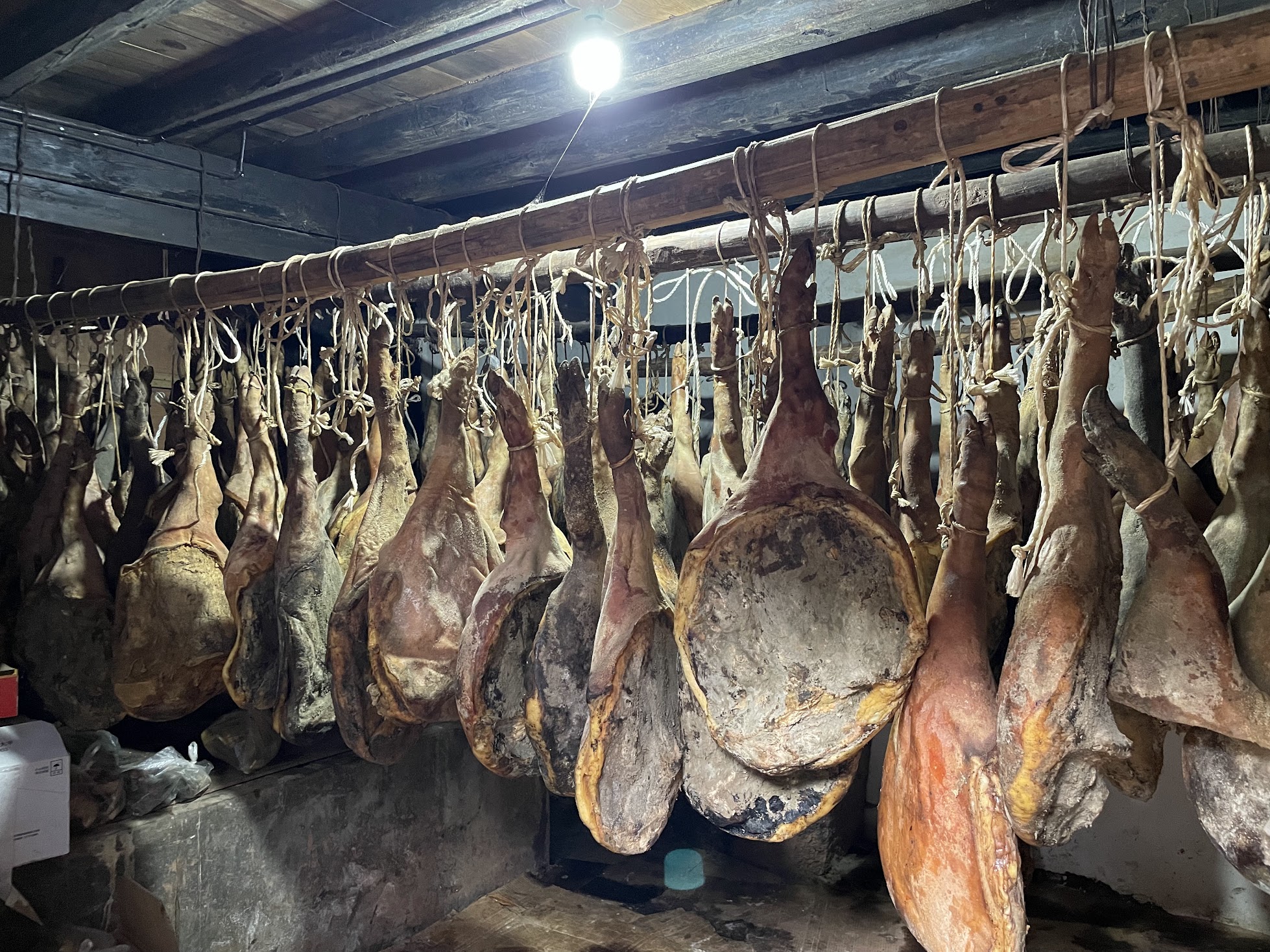
This contradiction is the reality facing many artisan foods in China. Flavour can be ancient. But the world market will not lower its standards for romance. For cured meat to reach tables in Hong Kong, Japan, and Europe, there is one non-negotiable: it must be safe to eat raw.
And so, a quiet transformation began.
沒有改變火腿,只改變它被對待的方式 · Not Changing the Ham — Changing How It Is Treated
Many people assume modernisation means industrialisation. The real upgrade is something quieter: bringing discipline into tradition. The ham is still cured with ancient salt. It still ages on mountain wind and season. What changed is the rhythm of the workshop around it.
The processing space was divided into two zones: a non-clean area for trimming and washing; a clean area for drying, inspection, and packaging. Flow became one-directional. Tools were segregated. Every ham was given a batch number and provenance record. None of this appears on the table. All of it is the condition that allows tradition to travel.
從經驗走向數據 · From Instinct to Data
In the past, villagers relied on smell and experience to judge whether a ham was safe. Today, the workshop has introduced a new language: data. Environmental microbial testing is conducted regularly. Each batch is measured for water activity and pH. Temperature and humidity are recorded daily.
These calm, rational numbers have not weakened tradition. They have made it more consistent, more reliable. When science and experience coexist, the ham can finally leave the valley with confidence.
時間,才是真正的主角 · Time Is the Real Protagonist
Once hygiene and stability are in place, the ham's real journey can begin. Here, three years is only the starting point.
三年:成熟的開始 · Three Years: The Beginning of Maturity
At 36 months, the ham reaches a state of completion. Salt-savour and sweetness find balance. Fat begins to melt. Flavour is whole and direct — like a young red wine, structured and full of energy. In many places, this is where the story ends. But in the valley, the hams continue to hang in silence.
四年:最迷人的轉折 · Four Years: The Most Compelling Turn
In the fourth year, change becomes subtle and profound. The ageing environment is slightly cooled and humidified. White frost and green mould begin to appear on the surface — not a defect, but the mark of natural fermentation. Saltiness recedes. Fat fragrance advances. Notes of nuts and mushrooms begin to emerge. The texture moves from fibrous to dense and yielding.
This is the age most sought after by fine restaurants and wine clubs — because it stands precisely at the intersection of power and elegance.
五年:時間的濃縮 · Five Years: The Concentration of Time
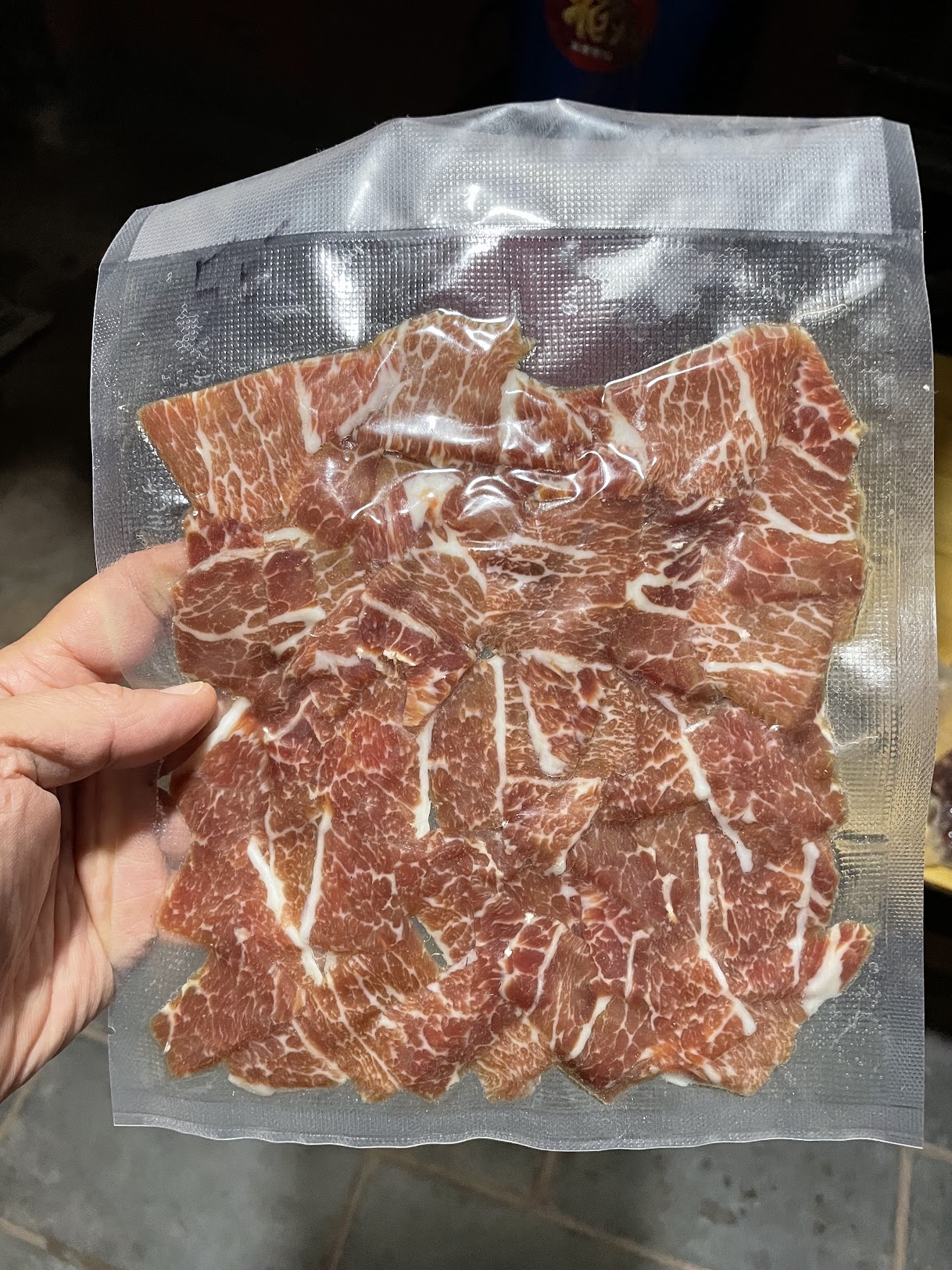
When ageing crosses 60 months, ham is no longer simply food. When cut, fat seeps out like honey. The bone joints take on an amber hue. The aroma no longer announces itself — it unfolds slowly. Flavour becomes concentrated, faintly sweet. The texture is at once firm and yielding, dissolving on the palate. It is closer to vintage champagne or old sherry: a thing that belongs to patient people.
山谷與世界之間 · Between the Valley and the World
Today, when a ham leaves the mountain village, it carries more than salt and wind. It carries records, test results, temperature logs, and a traceability system — an invisible body of discipline. Tradition has not disappeared. It has simply been taken more seriously.
When it finally reaches a table in Hong Kong, Japan, or Europe, what we taste is not only the flavour of time — but a quiet transformation that allowed the wind of a valley to travel, at last, with confidence into the world.
Ready to taste what five years tastes like? Nuodeng ham is available here.