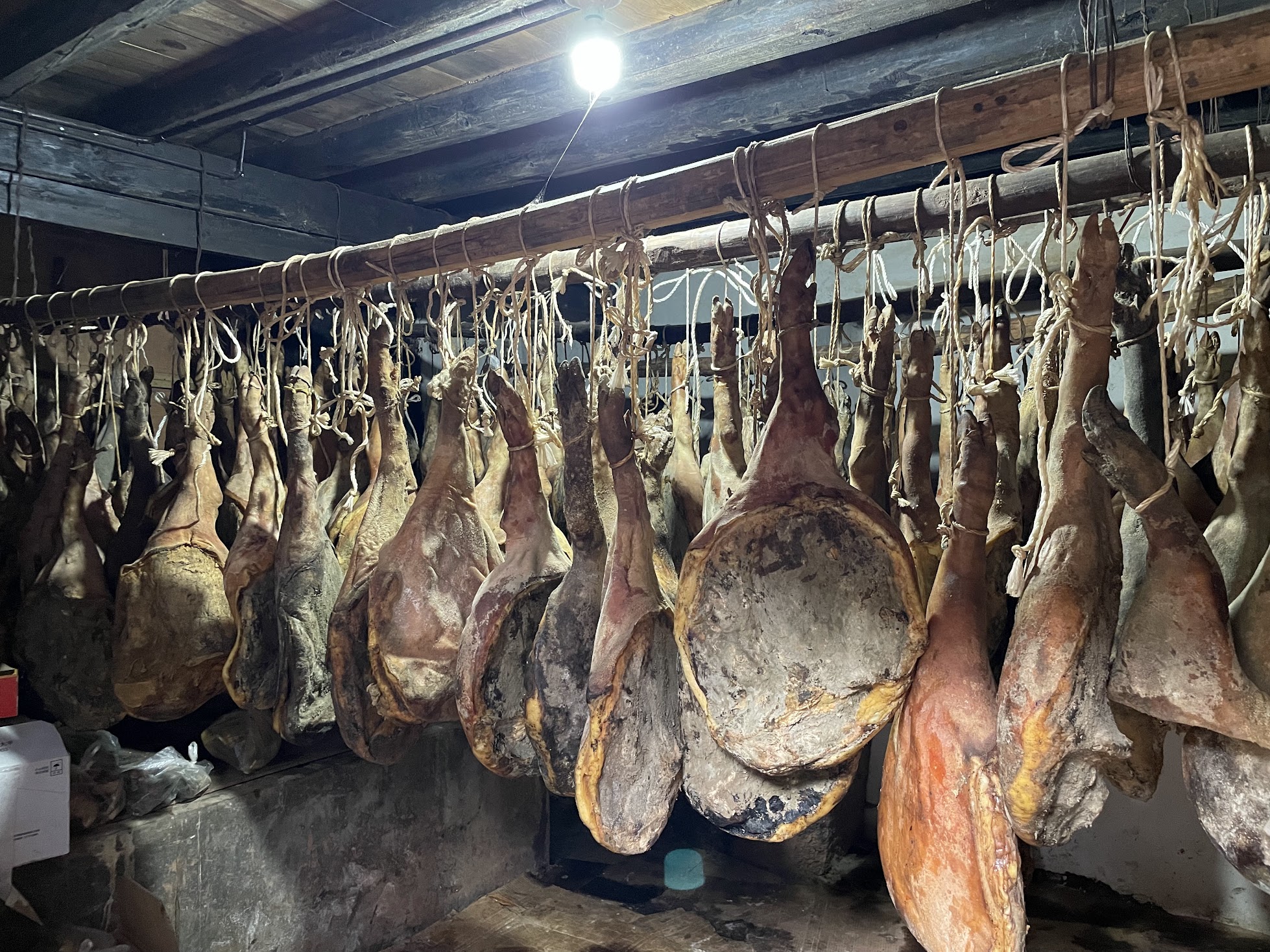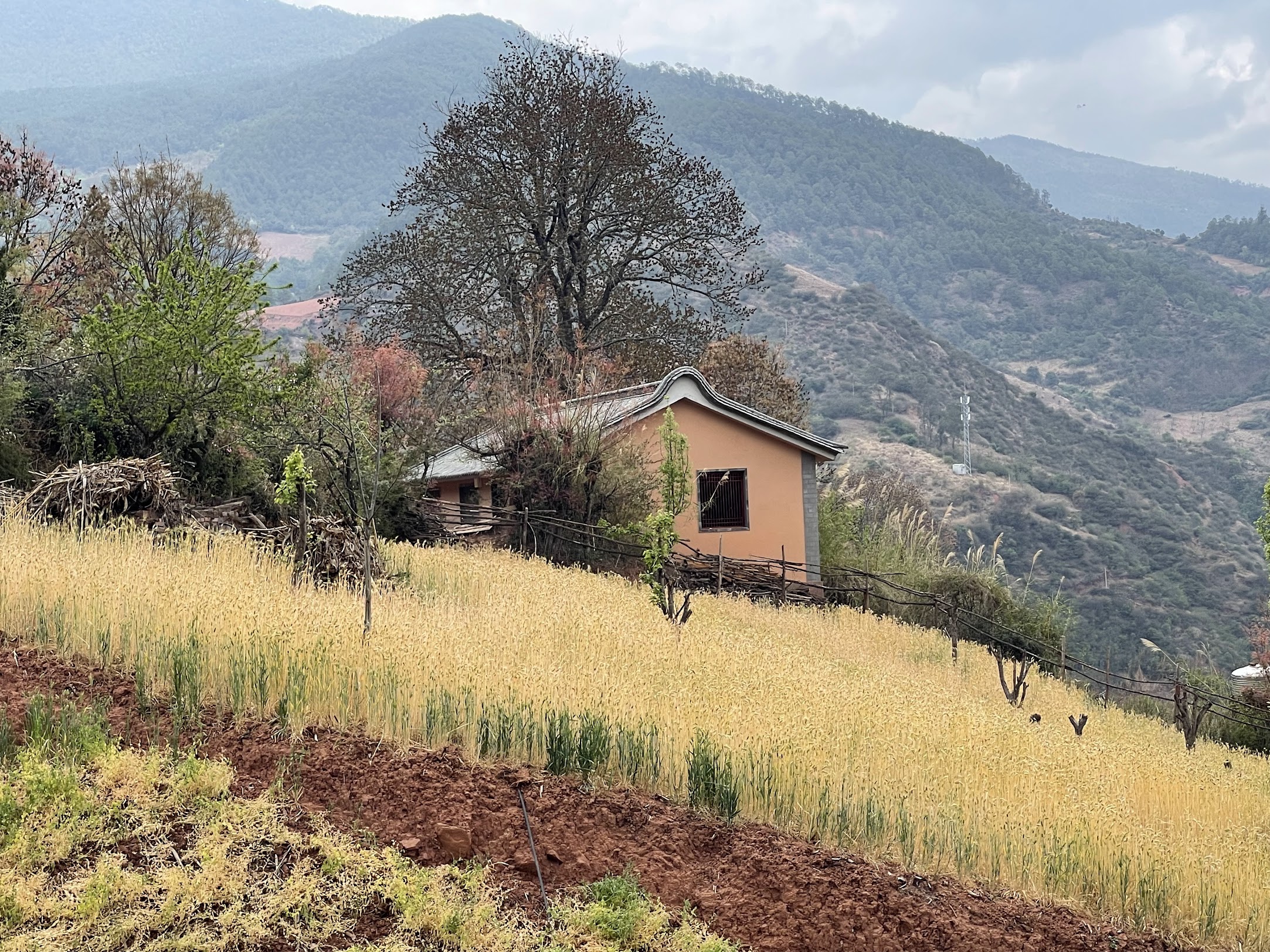
Walking into Nuodeng, I expected to smell meat. This is, after all, a village famous for its ham — stone houses everywhere hung with aged hind legs. But the first breath that hit me was not meat. It was salt: mineral, cool, carrying something ancient from deep underground. I paused, and turned to the village elder walking beside me. He pointed down the slope toward the ancient well and said something I have been turning over ever since: "The soul of the ham is here."
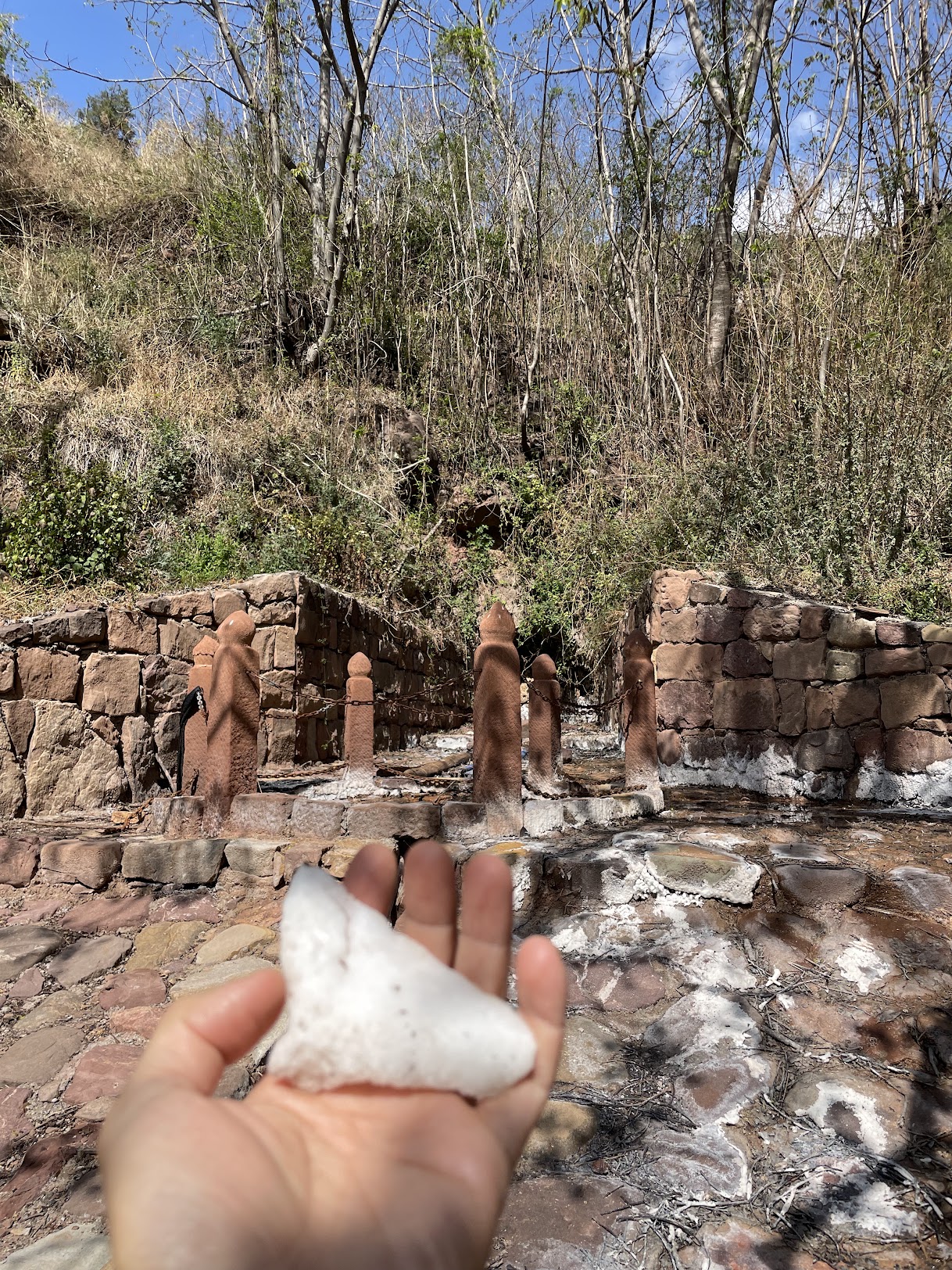
Nuodeng's underground brine spring has flowed for over a thousand years. The water percolates slowly through limestone, absorbing calcium, magnesium, and trace minerals before surfacing as white crystals. I touched a pinch to my tongue — nothing like sea salt. Not a direct sting of salinity but a softer mineral depth that unfolds slowly and lingers. Each year around the winter solstice, Bai minority families take these white crystals and hand-rub them into every muscle of each pig leg. The motion looks simple. What it contains is the embodied memory of generations.
After the salt rub, there is a second step many people do not know about: the surface of each leg is sprayed with corn wine — 玉米酒, a local baijiu. This is not for flavour. It is antimicrobial management: the alcohol suppresses unwanted bacteria while setting specific biochemical conditions on the surface, allowing the right microbial communities to establish during aging. The ham is then hung in naturally ventilated stone houses, left to the cool valley air of the Yunlong mountains. Minimum three years. No temperature control, no dehumidifiers — only mountain wind and time.
In recent years, researchers have travelled to Nuodeng trying to explain why this ham is so singular. The answer points to microbiology. Nuodeng's mineral salt, combined with the mountain microclimate at 1,700 metres above sea level, creates a unique microbial ecosystem on the ham surface. This microbial community is what determines the final colour, the aroma compounds, and the depth of flavour after aging. If you take the same recipe and replicate the process in Shanghai using sea salt, you get a different ham. Same method, different place, different result.
In wine, we have long accepted a simple truth: geography determines flavour. Burgundy is not Bordeaux — not because of the winemaker's skill, but because the soil, slope, and microclimate leave an irreplicable imprint on every grape. The French call this terroir. We rarely apply the same frame to food. Nuodeng ham is the most persuasive case I have encountered. No other Chinese ham depends so completely on a single local mineral input — the ancient well, the limestone it passes through, the brine it carries to the surface. Remove any one element and you have a different food.
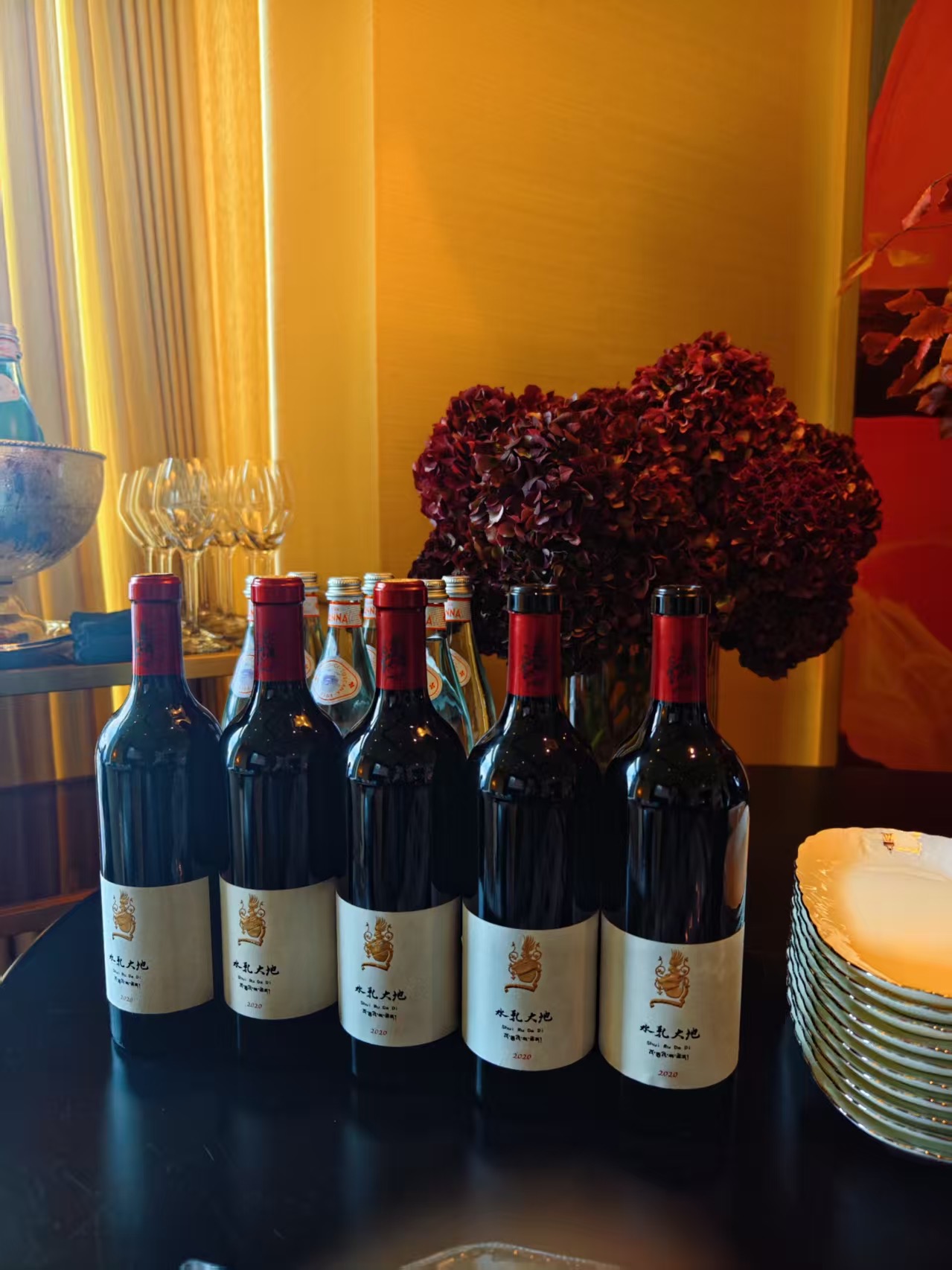
This parallel is clearest when you consider the two products GutCommon represents. 水乳大地 — GutCommon's Meili Snow Mountain Cabernet Sauvignon — is equally a product defined by local minerals, altitude, and microclimate. The shared principle is not category but philosophy: both are made in a place remote enough, specific enough, that the local conditions enter the food or drink completely, rather than being industrially erased. The wine world has a phrase for this: "expression of place." Nuodeng ham is the most direct case I know of that concept applied to food. You can read more about 水乳大地 and how its terroir shapes the wine in our dedicated post here.
The mineral composition of Nuodeng's salt has direct significance for those who eat it. In the modern diet, refined table salt contains almost only sodium chloride — the refining process has stripped everything else out. Nuodeng's ancient brine, by contrast, carries calcium, magnesium, potassium, and a range of trace elements alongside its sodium content. These minerals are not merely precursors to flavour compounds during fermentation and cooking — they enter the body of the person eating, supplementing the mineral diversity that is systematically absent from modern diets. Scientists studying gut health increasingly observe that the health of the gut microbiome depends not only on dietary fibre and polyphenols, but on mineral diversity. The highly processed food supply of modern life erodes that diversity. The mineral complexity of traditional food is one of its most underappreciated health dimensions.
這不是食譜,而是地理。這片山谷的鹽,才是真正的廚師。
The ancient well cannot be moved. The valley's cool air cannot be bottled for export. In Nuodeng, protecting the ham means protecting the place — the spring, the stone houses, and the families whose hands still carry the muscle memory of salting. GutCommon's role is not to replicate but to connect: to make this place economically viable, to give the people who hold this craft a reason to stay, and to keep the well flowing. The fate of a terroir food is ultimately the fate of its terroir.
If you want to taste what a valley tastes like, 諾鄧火腿 is available through GutCommon's ham page.