The Deqin-Gongshan Highway — formally an extension of G219 — is the most demanding road I have driven in China. Not because of the scenery, which is magnificent. Because of what it demands in preparation, which is more than most people expect.
Before entering the highway, there is a fuel stop. This is the last opportunity to fill the tank. But the thing that occupied me more than fuel was my backup provisions: lemon honey water, packs of nuts, dried fruit. On this road, if the car broke down, the nearest help might take hours. You need more than a full tank. You need the ability to keep functioning while you wait.
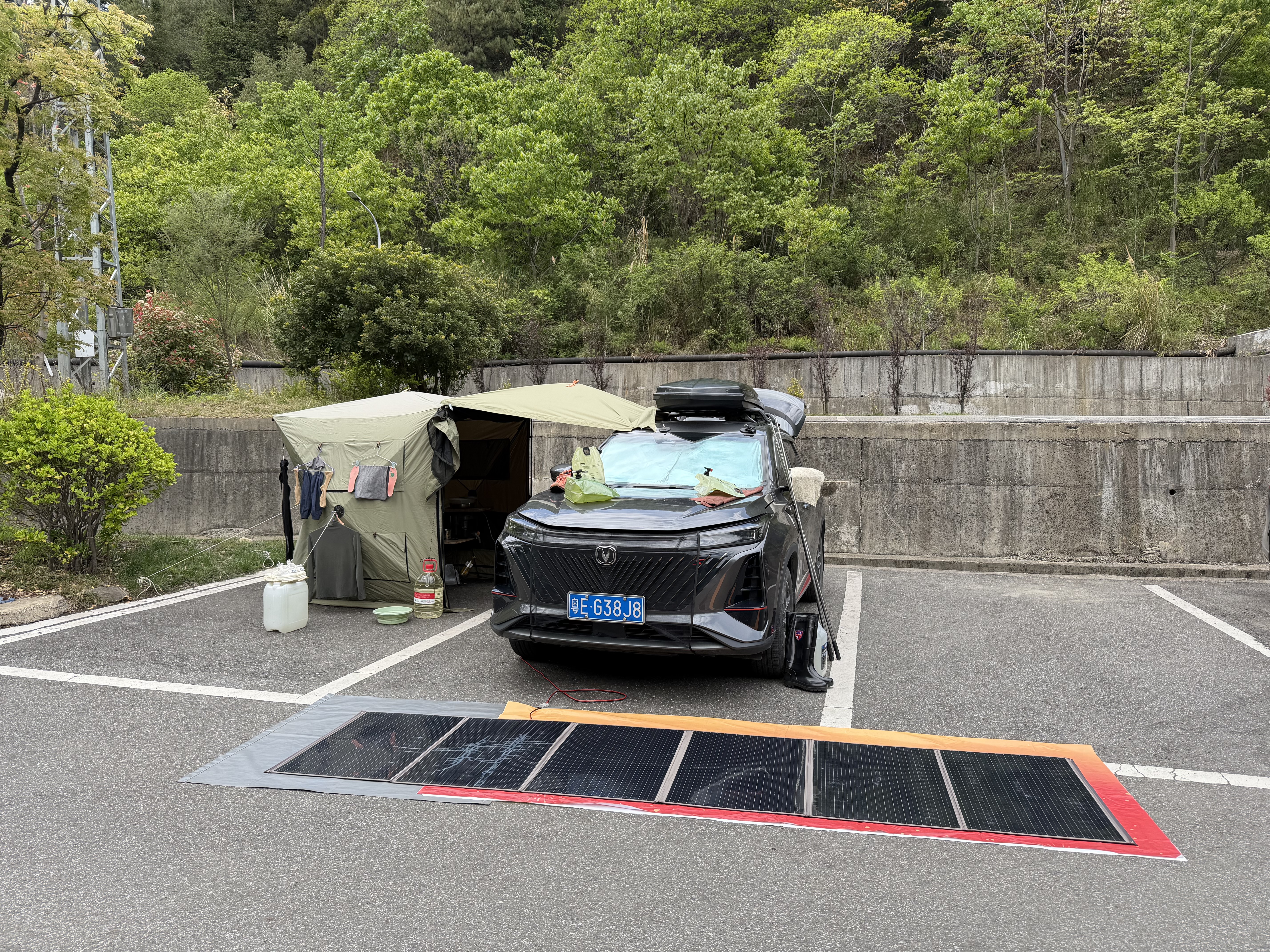
In the car park at that last fuel stop, I saw a black SUV. The roof rack showed signs of heavy use. But the notable thing was what was laid out beside the car: several solar panels, flat on the ground of the car park, angled toward the sun. Beside them, a lightweight tent. Beside the tent, a camp stove and a pot.
The owners were a couple from Guangdong in their thirties. This was their first complete G219 circuit — from Xinjiang to Yunnan, crossing the entire western border of China. The solar panels powered their vehicle accessories. The tent freed them from dependence on roadside guesthouses. The stove let them buy ingredients from villages along the route and cook for themselves.
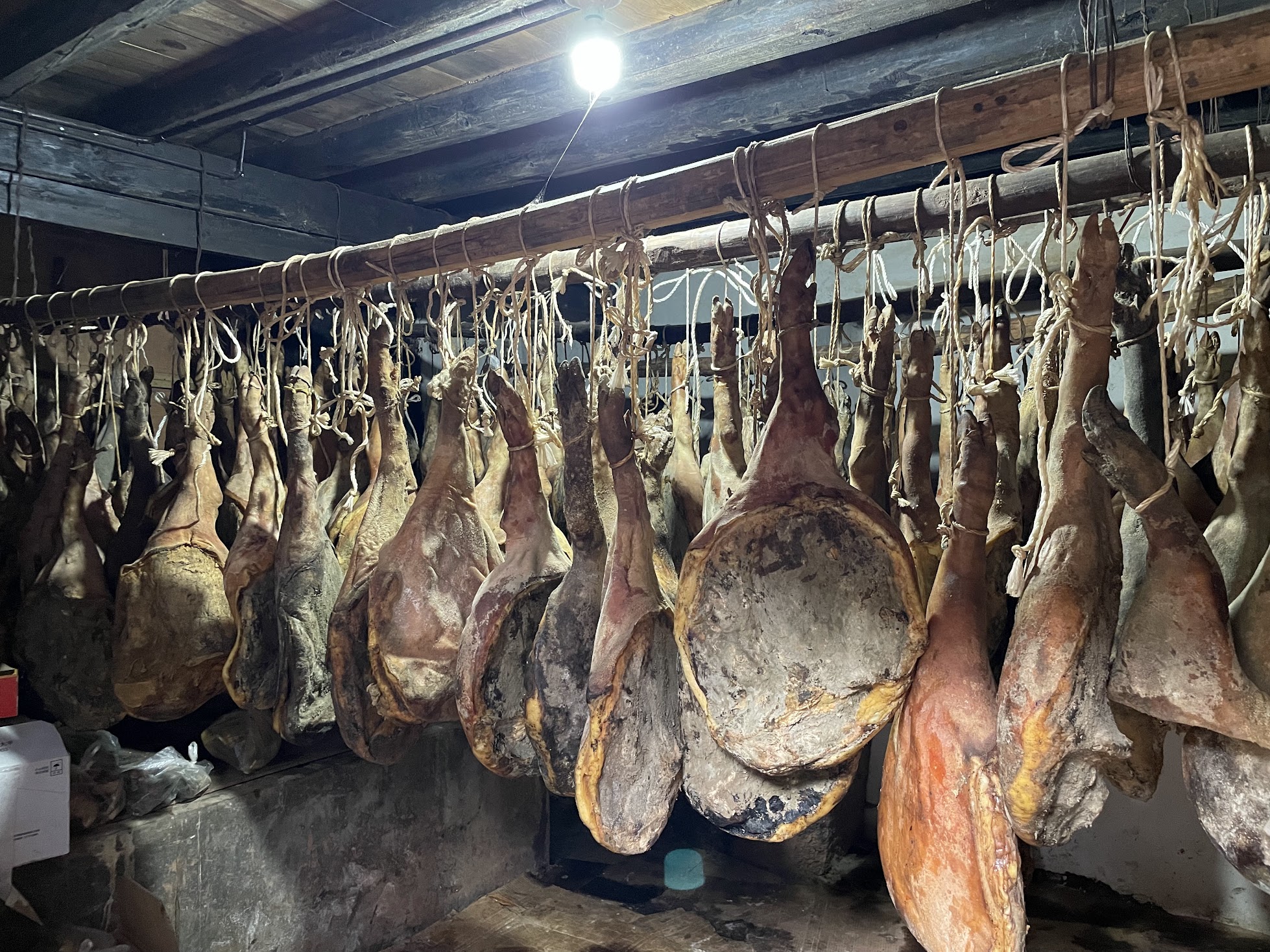
I stood watching for a moment, thinking: the most enviable part of this setup was not the solar technology but the stove. Because if you can buy local ingredients in each village along G219 and cook in the local manner, then every meal you eat is the microbial terroir of that place. Nuodeng lard, Nujiang ferns, Deqin highland barley — each carries the distinctive microbial signature of its location, and your gut is updated at every meal with the microbial communities you encounter. My cooking level does not qualify me to test this hypothesis. But this couple's did.
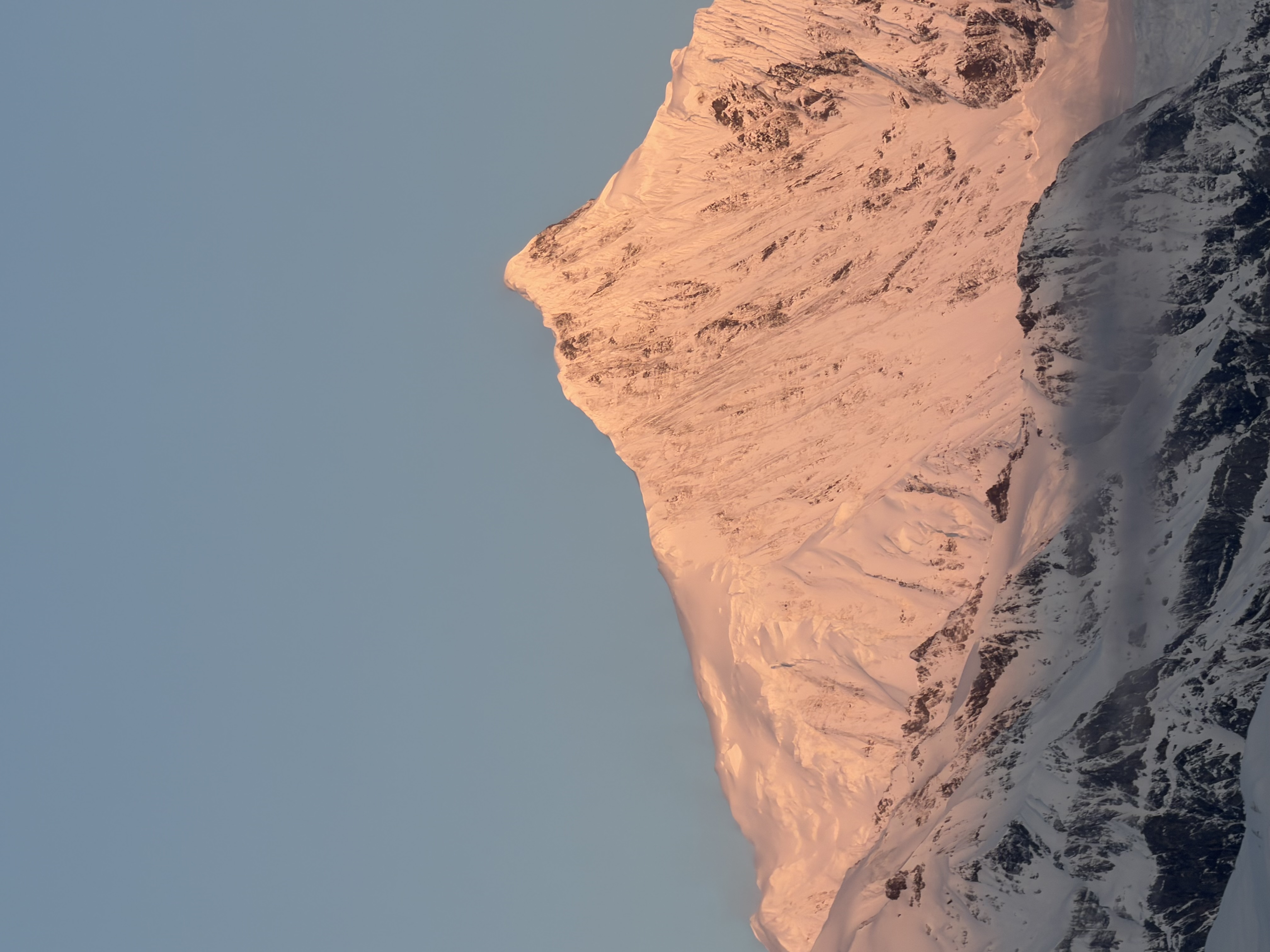
We said goodbye and drove on toward Peacock Mountain — 孔雀山, the highest pass on the Deqin-Gongshan Highway, close to four thousand metres. In some seasons there is snow on the road. In some seasons there is rockfall. When we arrived, the road was dry and the sky was clear, but the air was cold enough to sharpen everything.
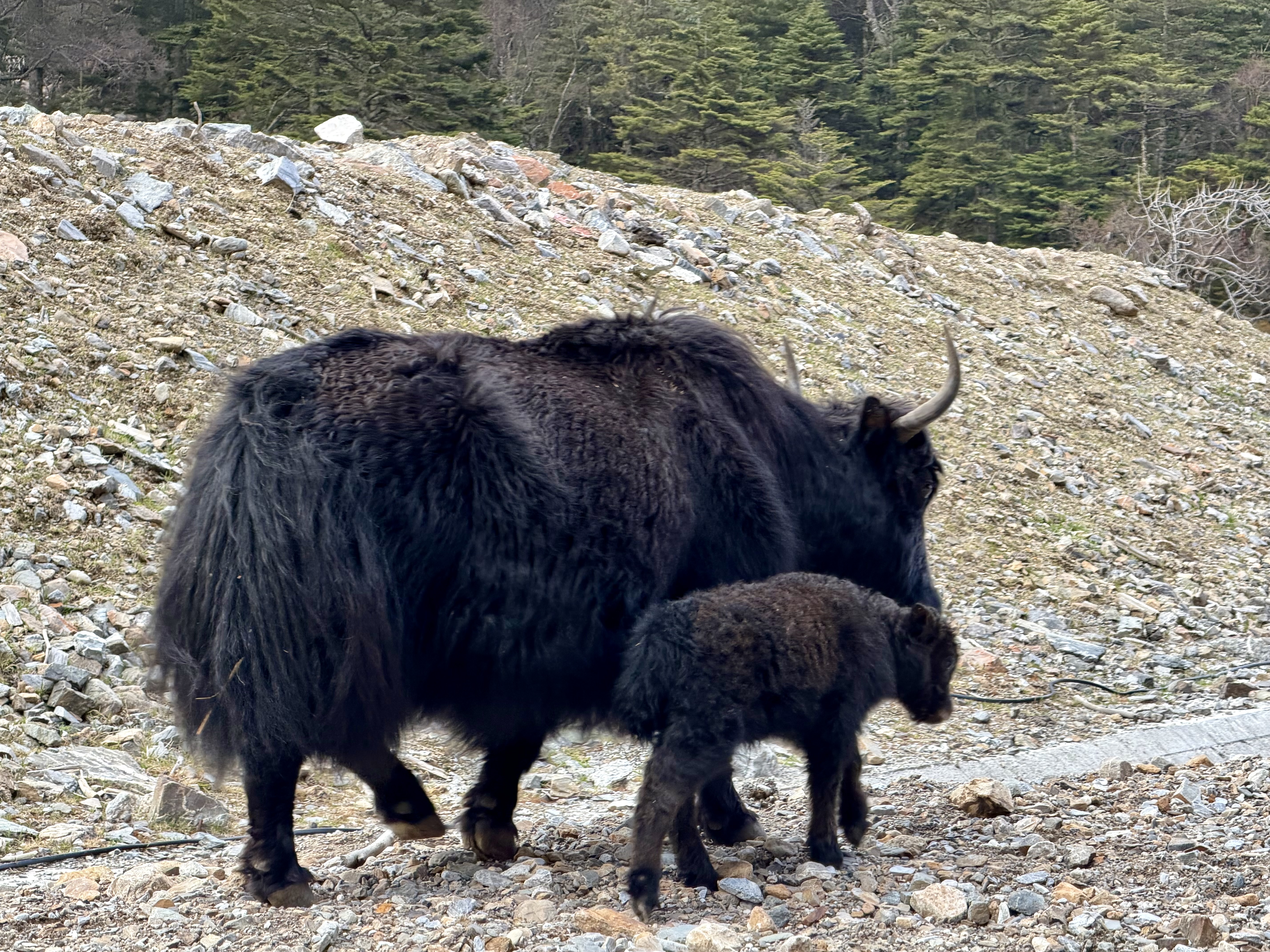
On the slope above the road, we saw the yaks. A mother and her calf, standing on the rocky face, pine forest behind them. They were grazing, or searching for grass — at that altitude, vegetation is sparse, and they ranged widely to find enough.
Yaks are indicator species for high-altitude ecosystem integrity. They are acutely sensitive to degradation — populations contract quickly under pollution, overgrazing, or climate pressure. The presence of yaks on Peacock Mountain means that Peacock Mountain's ecosystem is, at least so far, substantially intact.
Over the pass of Peacock Mountain, the world changed. Not gradually. Within one ridge, almost completely.
On the other side of Peacock Mountain, you leave the Nujiang basin and enter the Lancang — the Mekong. The topography shifts: from vertical canyon walls to wide, dry valleys and open slopes. The climate shifts: the humid, misty world of the Nujiang canyon is replaced by intense high-altitude UV and dry air. You can feel the quality of the light change.
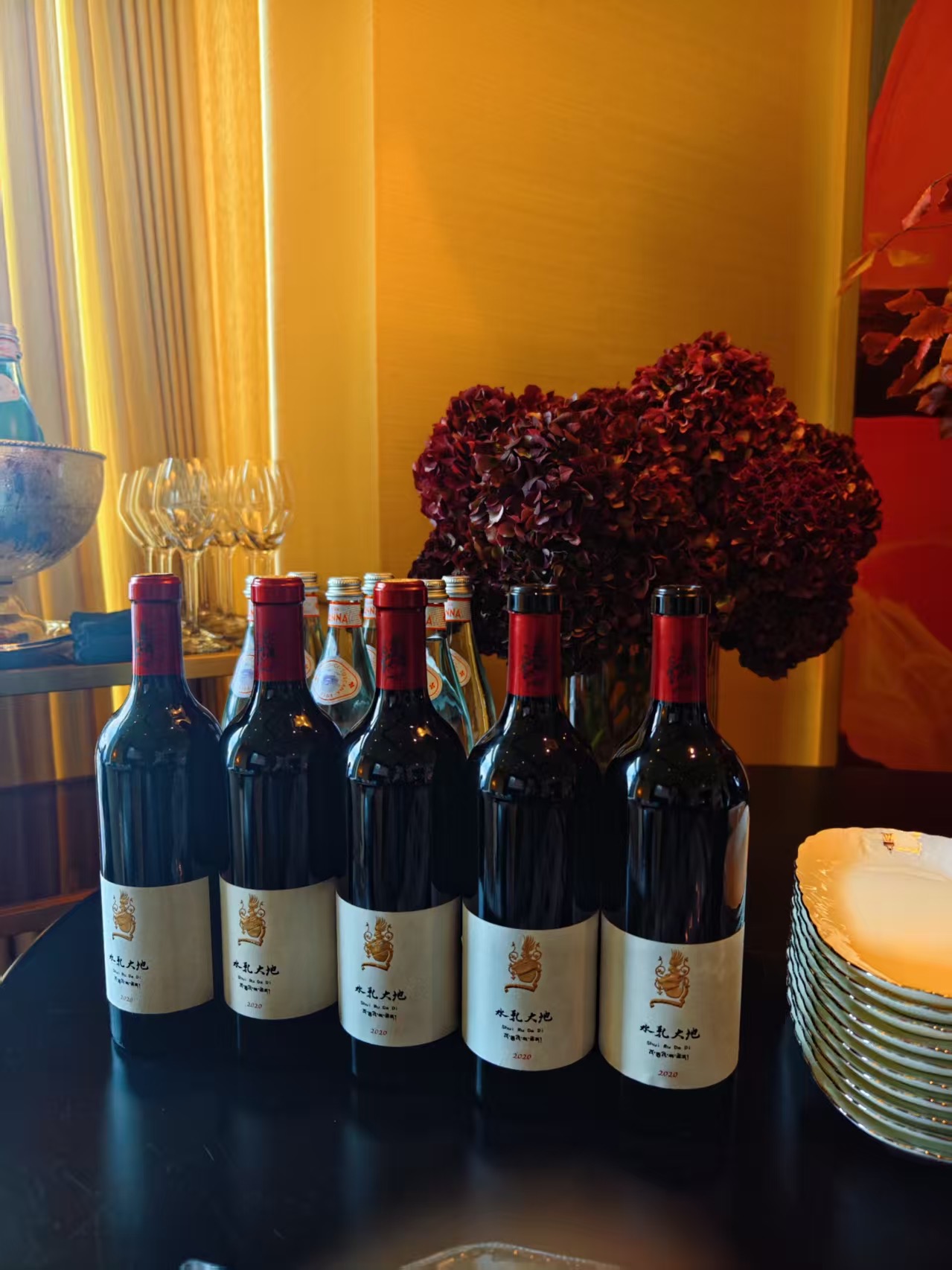
This transition is essential context for understanding the wines of Deqin. The vineyards in this area are, in many respects, the result of over a decade of searching by LVMH across all of China. They chose this site because it offers a combination of conditions difficult to find simultaneously anywhere else in the world: high altitude (the vine skins develop more anthocyanins and phenolic compounds under intense UV), glacier spring water for irrigation, extreme diurnal temperature swings (the stress drives the plant to concentrate complex compounds in the fruit), low humidity (reducing fungal disease), and wild yeast communities shaped by centuries of Tibetan agricultural culture around them.
The conditions that make the wines here exceptional are the same conditions that make the fermented foods here exceptional: extreme environment, rich wild microbial communities, and generations of accumulated agricultural knowledge. What this canyon produces cannot be replicated elsewhere, because the canyon itself is the condition. Deqin was ahead. We drove on. To learn more about what GutCommon does, read our story.