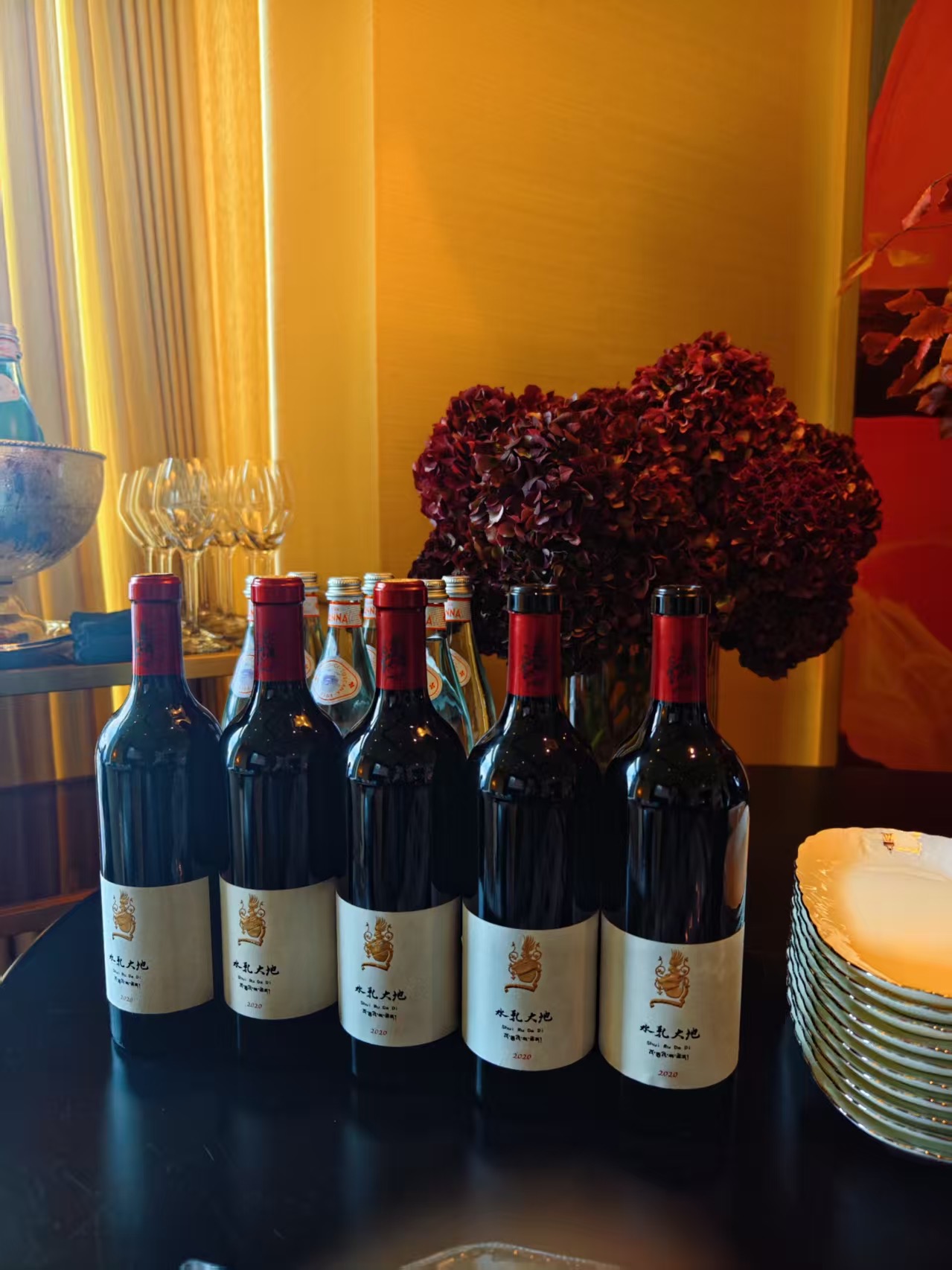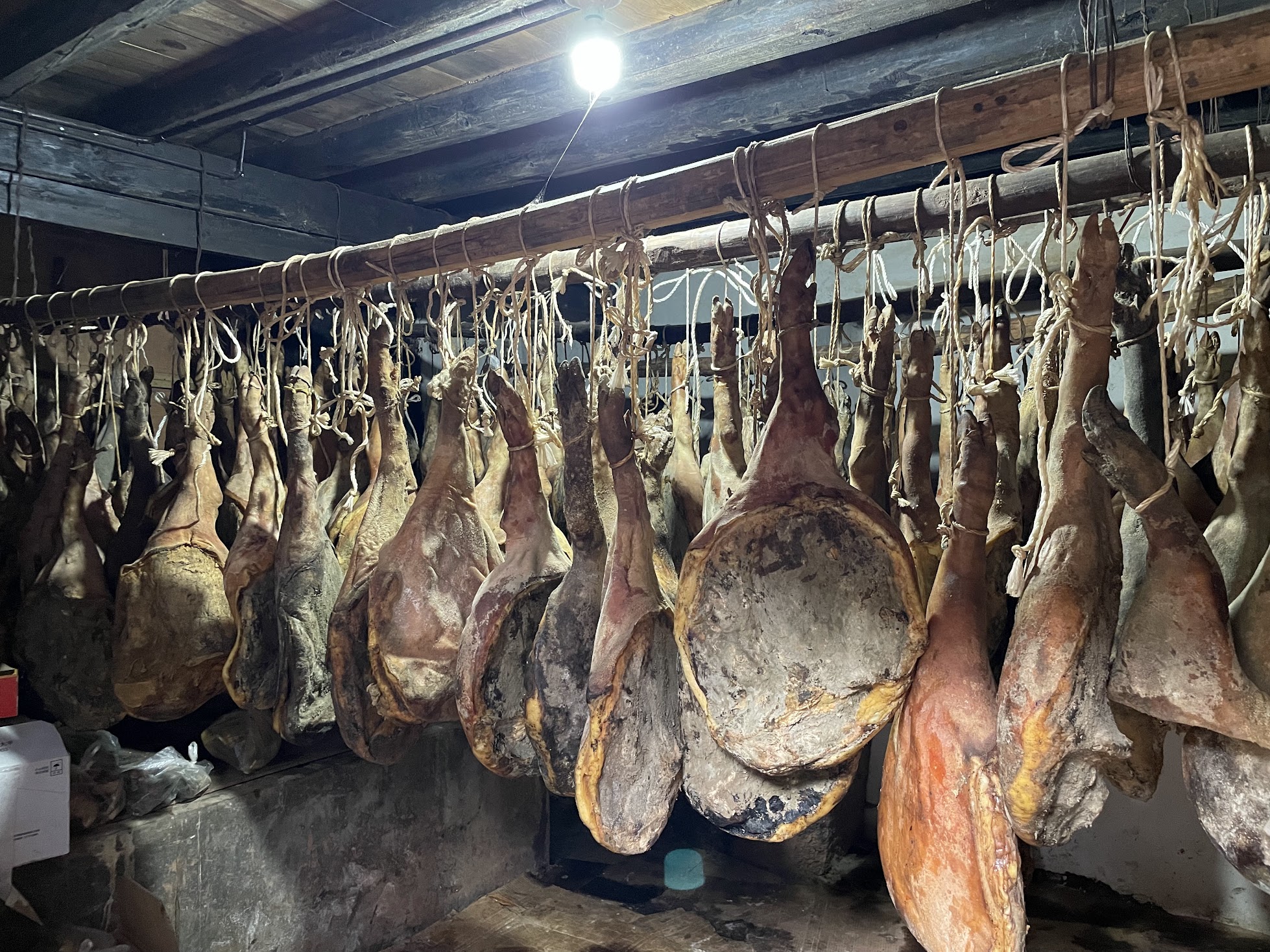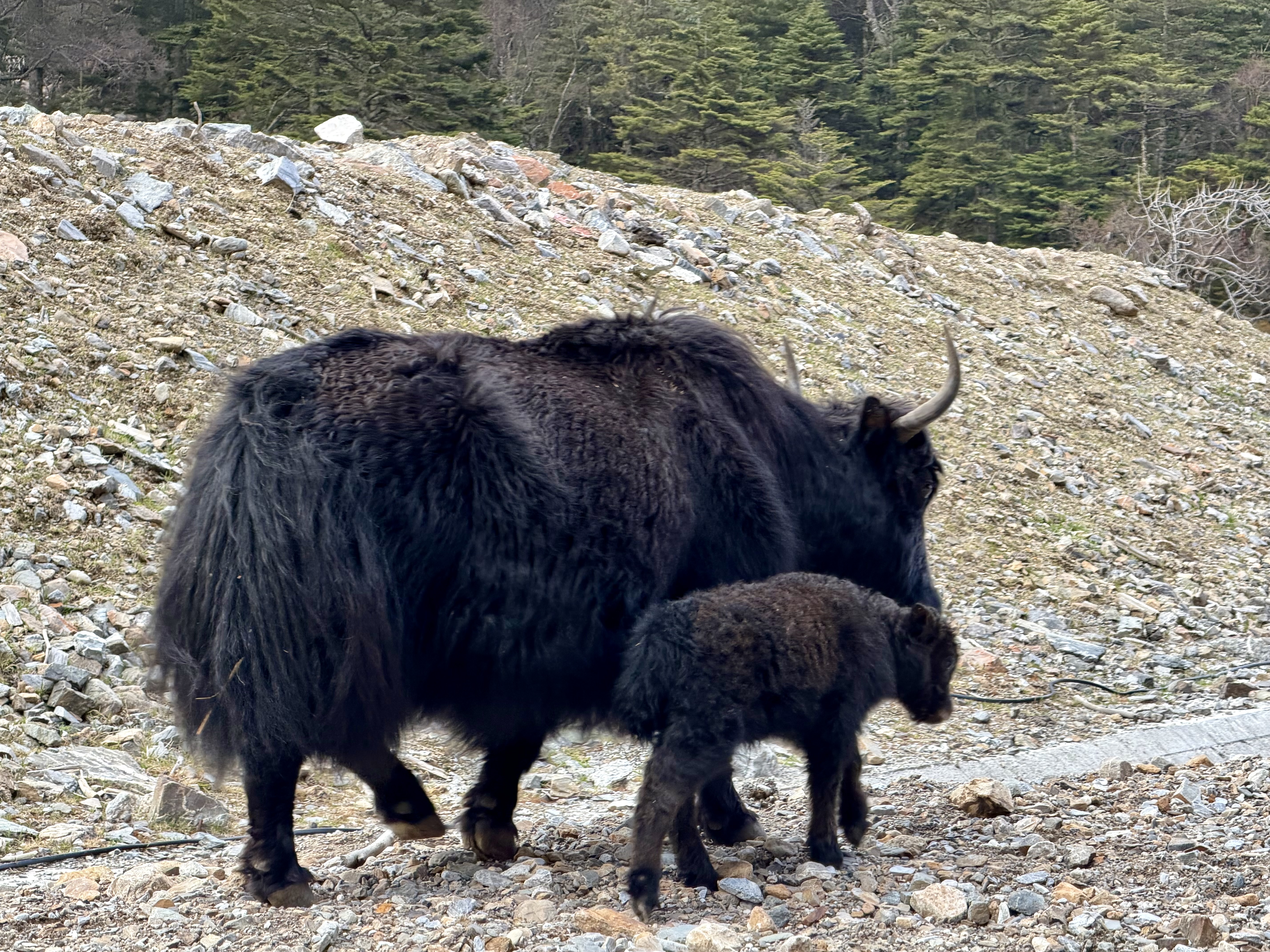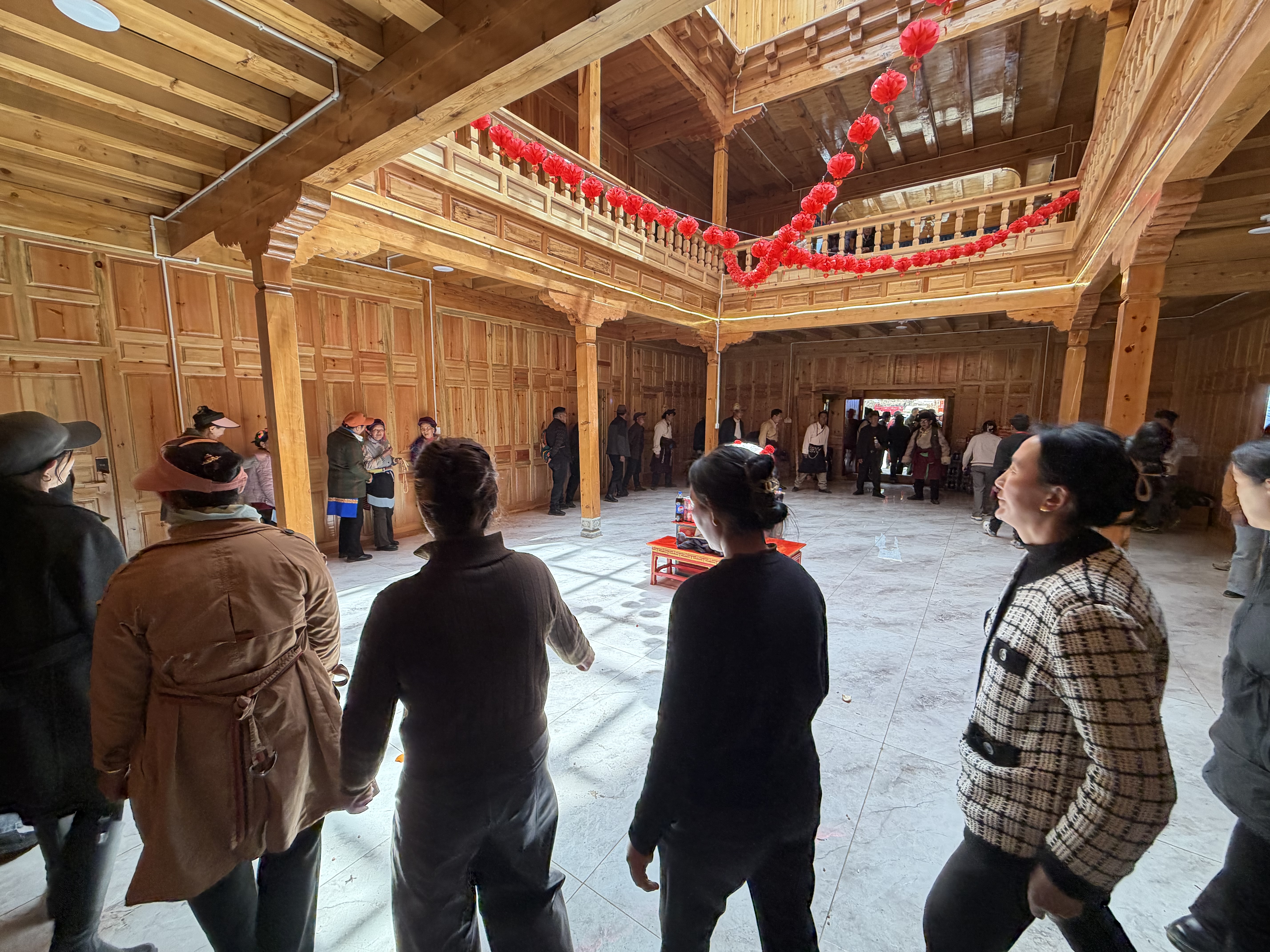
On our first evening in Deqin, we were eating at a fish restaurant. Halfway through the meal, the winery owner arrived. He brought two bottles of wine, brought several friends, and turned dinner into something else entirely.
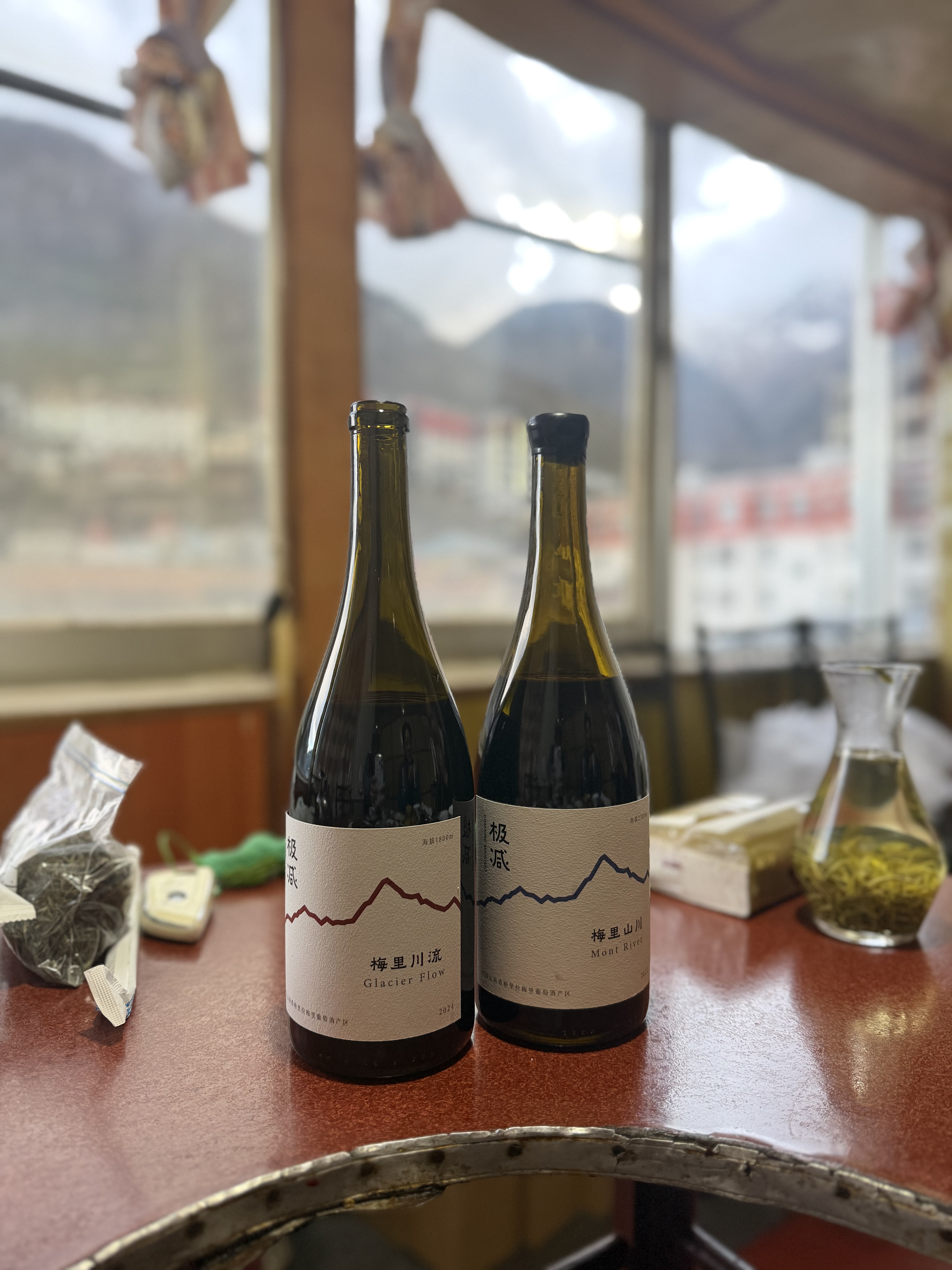
The two bottles were from 極減's flagship range: 極減川流 and 極減峰鳥山上. The label design is the ridge silhouette of Meili Snow Mountain — fine lines, quiet, like a topographic signature. Drinking them, I tried to imagine that ridge. We would not see it until morning, but the wine already held some part of it.
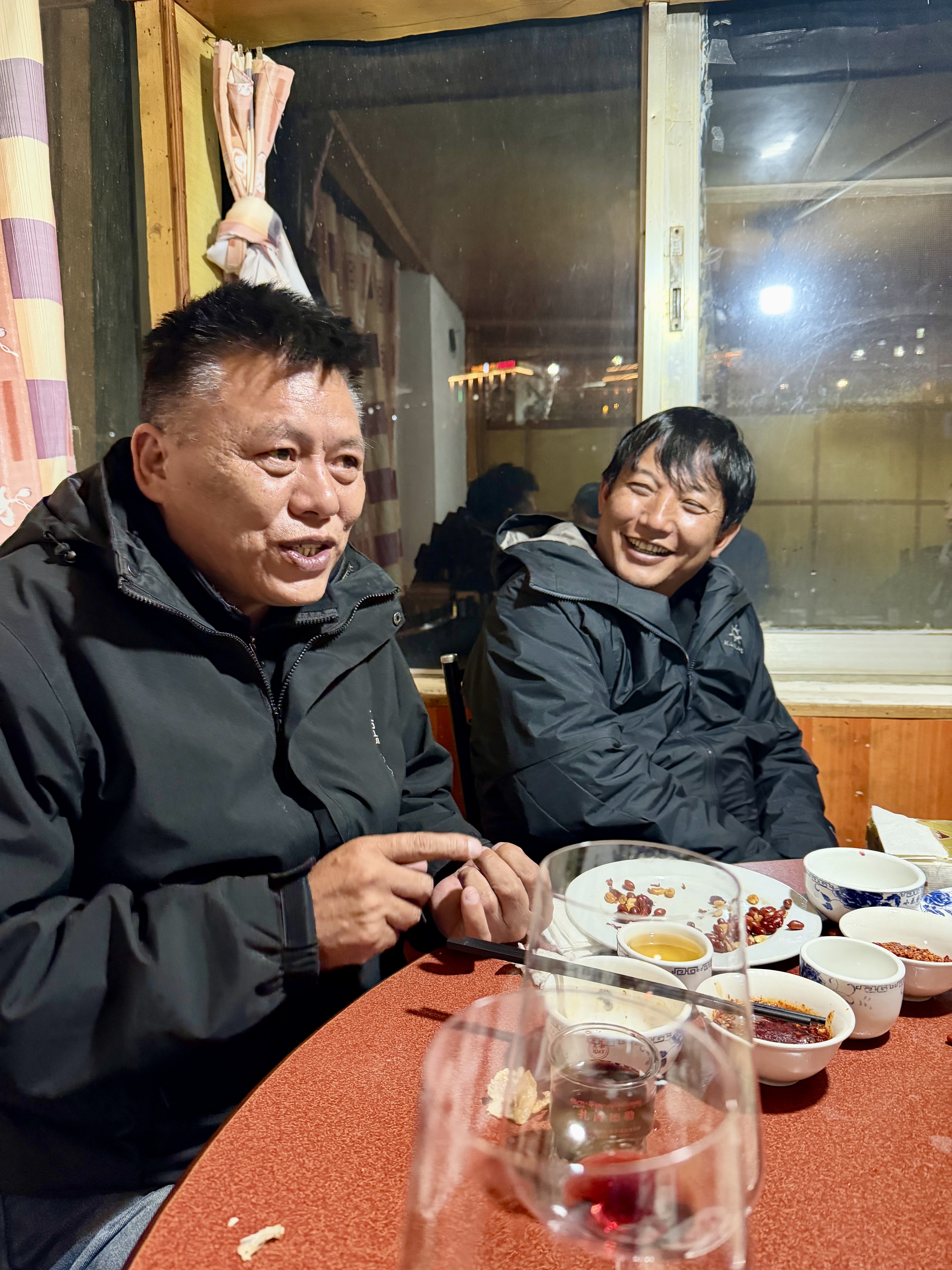
At the table were several people I did not know. One of them was a man who had just retired from the Deqin County Cultural Bureau. Someone introduced him as a poet. I asked what he wrote. He said: mountains, Tibetan history, the relationship between people and land. His name was Kawagebo Zhaxi Nima. He had been trained at a Tibetan literary academy. Since retirement, he had given his full attention to poetry and music.
We talked for a long time. He said he was a native of Deqin, had lived on this land for decades, had seen it change and seen it not change in certain ways. He said the most important characteristic of Tibetan civilisation was that it had never been closed — it had historically absorbed influences from India, the Chinese interior, Central Asia, digested them, made them its own, and continued. He said the current challenge was speed: the rate of change had exceeded the rate of digestion.
In this man I found something I had been looking for: a person who could help me reach the deeper cultural layers of Tibetan civilisation. Not a tour guide, not an academic, but someone who lived it from inside and thought about it systematically at the same time. We exchanged contacts at the table. I believe this conversation will have a continuation.
Before leaving, the winery owner said something: "There is a pattern here. After heavy rain, the next day is always clear." He said it with certainty, as one states a physical law. That night there was heavy rain.
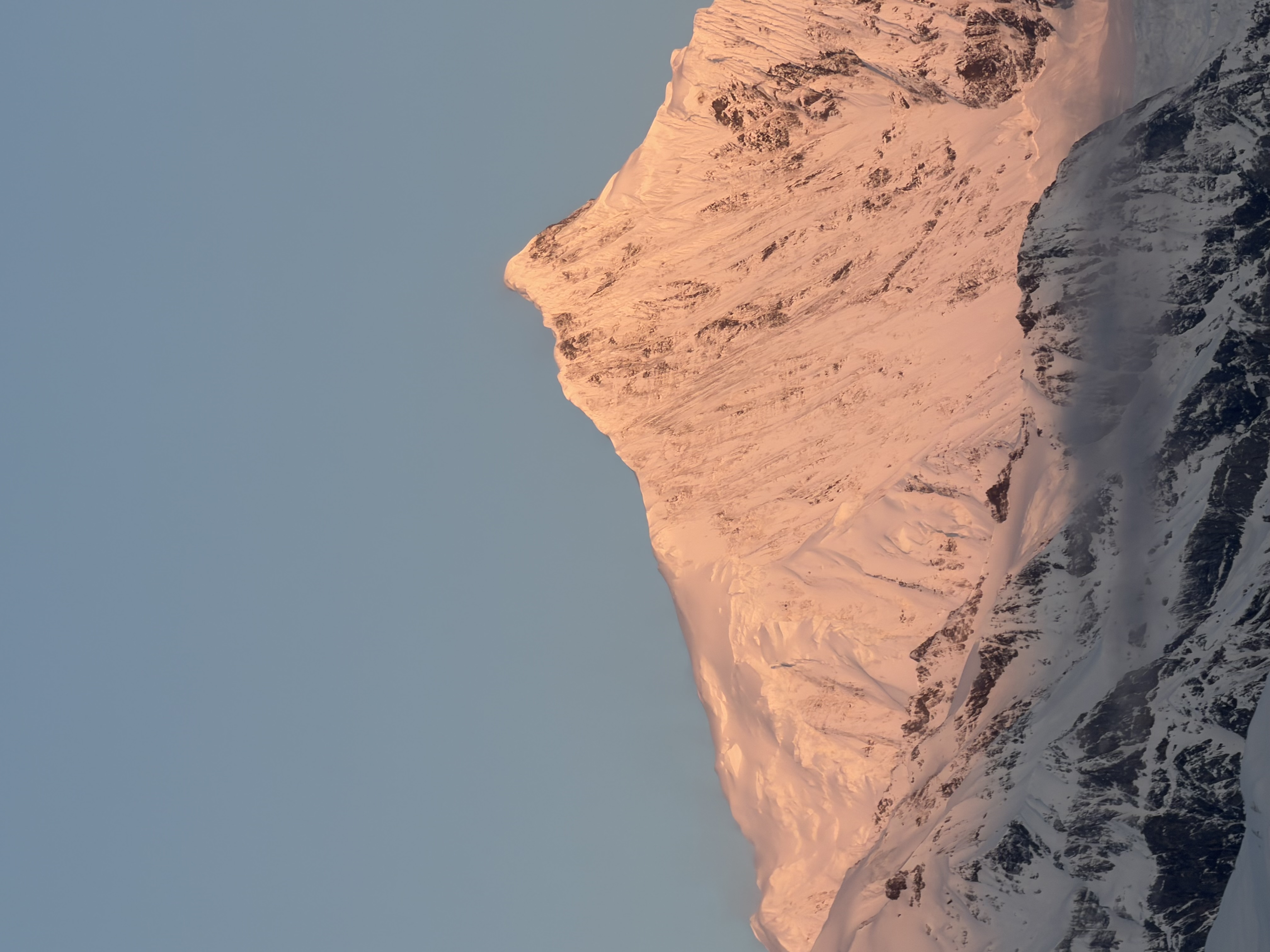
Just after five in the morning, I stood at the window. No cloud. Then the light arrived.
Kawagebo, the main peak of Meili Snow Mountain, stands at 6,740 metres. It is one of the most sacred peaks in Tibetan culture, and one of the few major peaks in China that has never been summited. The 日照金山 phenomenon — sunrise on the snow — occurs when the first light strikes the snowface at a specific angle, turning it from white to deep gold, then to orange-red, then pink, then back to white. The whole process lasts about twenty minutes.
For those twenty minutes, neither Hwan nor I spoke. At that altitude, in that light, speaking seemed like the wrong thing to do.
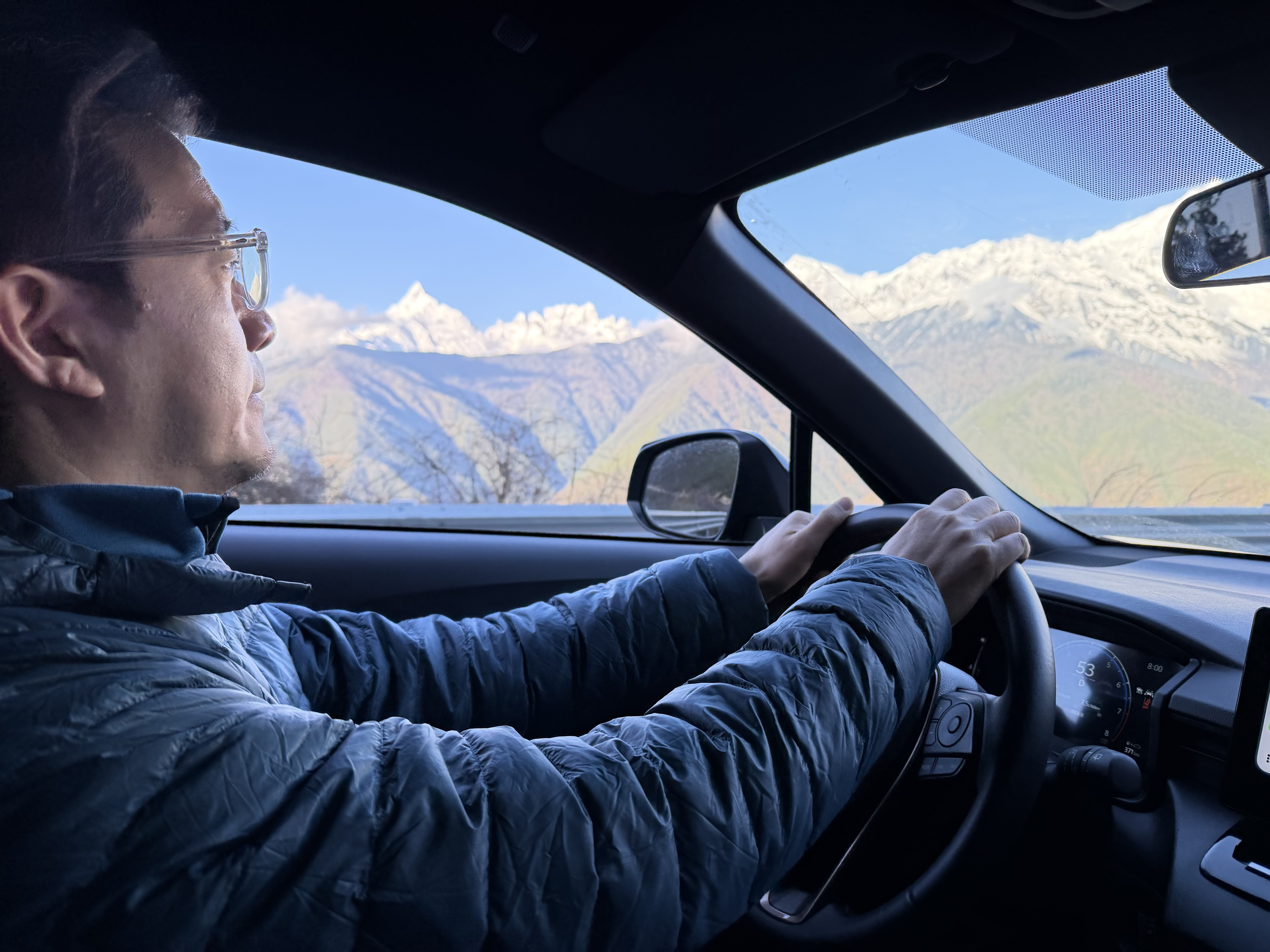
After daybreak, we drove toward Mingyong Glacier. Hwan was at the wheel, the Meili peaks filling the windshield, hundreds of metres of cliff on the left, rock wall on the right. His second phone was on a Teams call. I chose not to think about this.
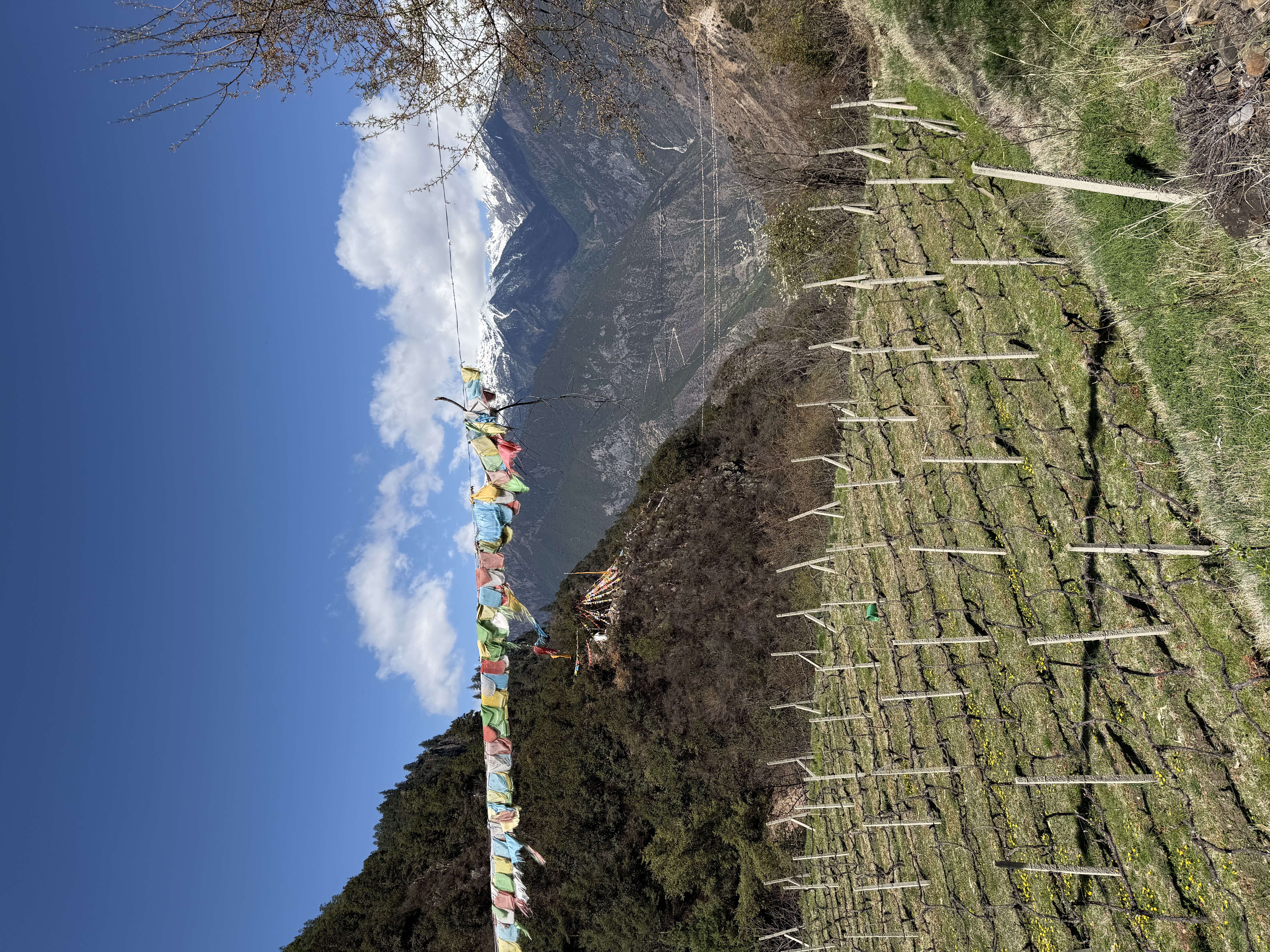
The vineyard near Mingyong Glacier is one of the strangest agricultural landscapes I have seen. Prayer flags hung from wooden stakes, the vines growing beneath them. One slope face was arid, almost desert-like; the other was lush with glacier meltwater, intensely green. The same location, two worlds adjacent.
The grape skins growing at this altitude, near a glacier, under intense UV, accumulate compounds that lowland vines cannot form. But more important are the wild yeast communities on those grape skins. These yeasts are shaped by the altitude, temperature, vegetation, soil of this land, and by centuries of Tibetan agricultural culture around them. When you drink a glass of wine from here, you are drinking the work of a microbial ecosystem — one that cannot be manufactured in a factory and cannot be reproduced elsewhere.
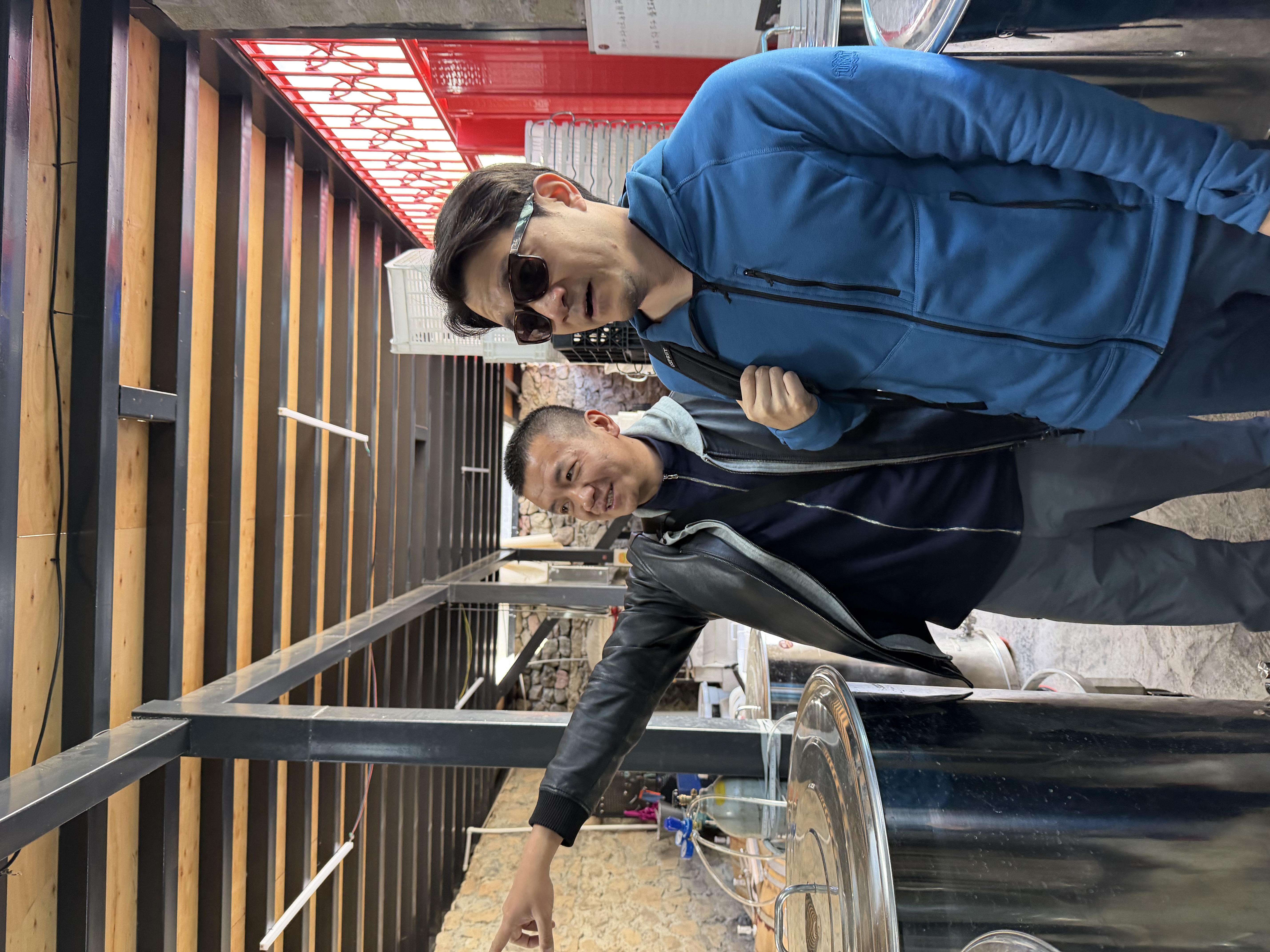
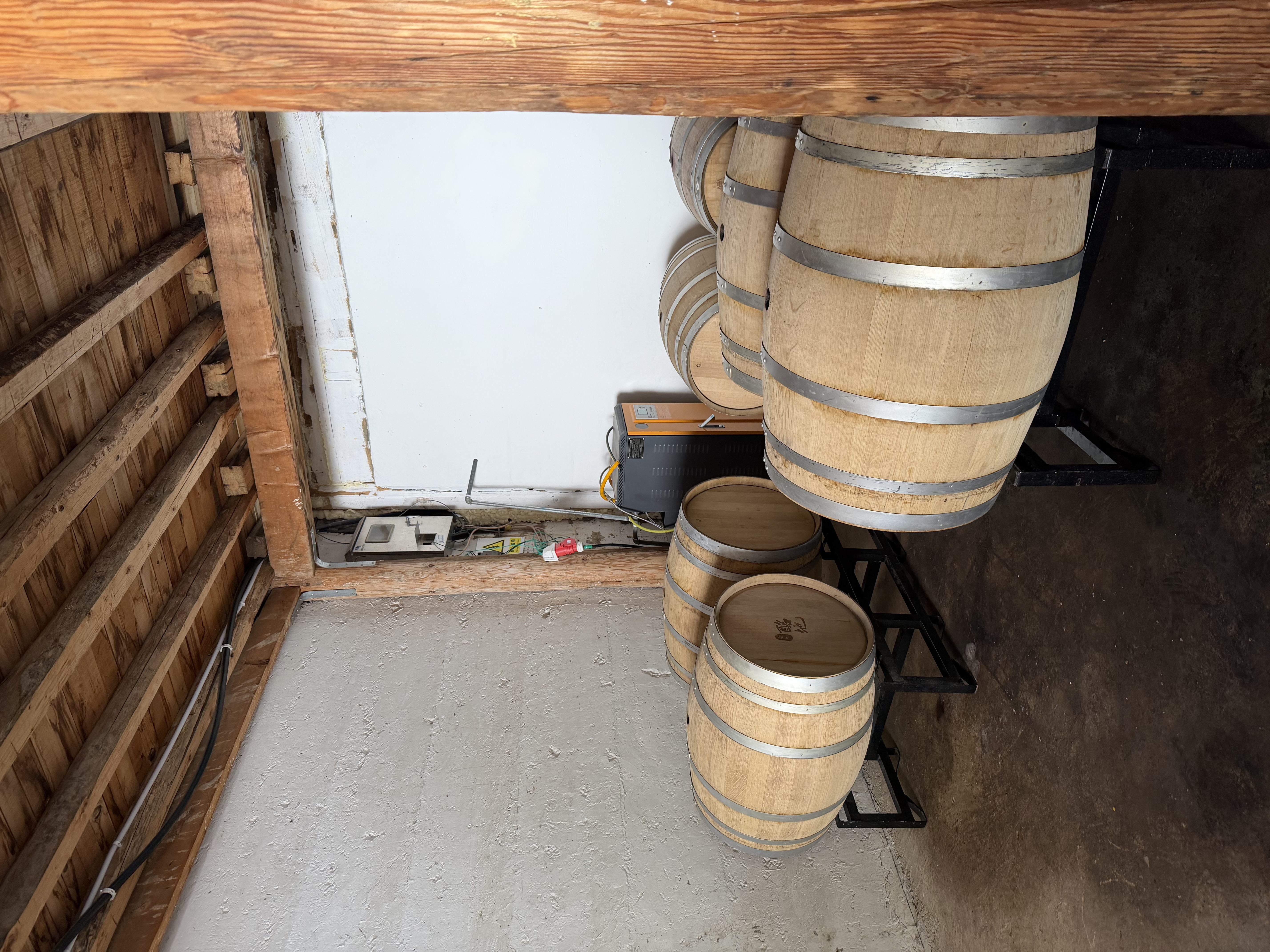
The interior of 極減酒莊 looks like a laboratory. Metal railings, industrial floor, precise temperature controls. It is a winery that has chosen the visual language of science — it does not try to wrap itself in nostalgia, it tries to tell you it is doing something serious. The oak barrels in the cellar are quietly completing their work: converting grapes grown in a place it took a decade to find into something that carries that place.
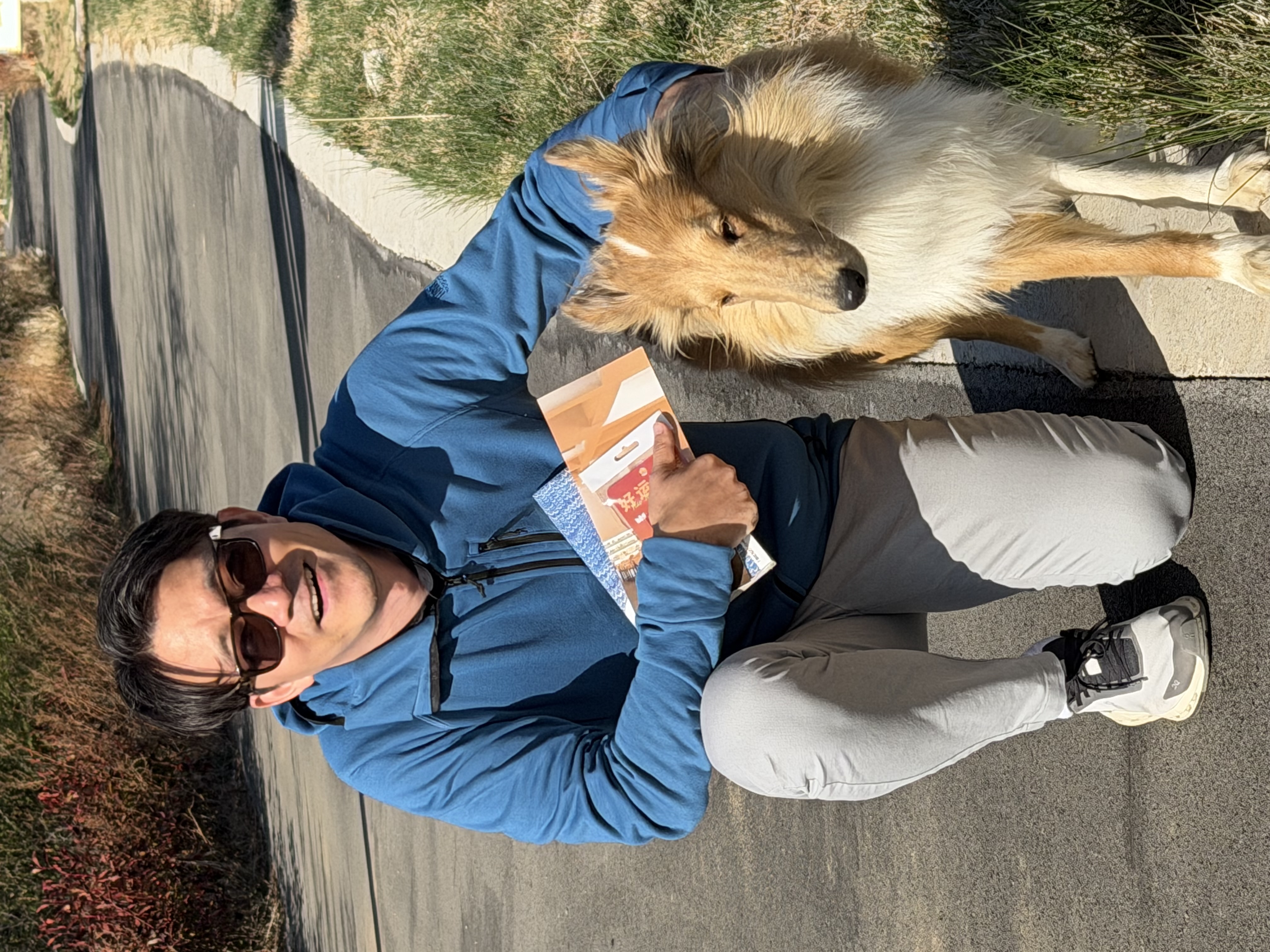
That afternoon, we drove to another winery. I cannot tell you where it is — not because I was asked to keep it secret, but because reaching it requires an hour and a half of mountain road beyond the main route, and no description of its location would help you find it. At the roadside stop on the way, there was a dog. It looked at us the way a dog looks at people it knows are going somewhere worth going. That feeling reminded me of the first time I came to Shangri-La in 2002 — the world suddenly compressed to the place you were in, and that place was whole. To learn more about what GutCommon does, read our story.