On the fourth day of our Nuodeng trip, we headed north along 215國道, following the Bi River upstream. The destination on the map read "Ancient Bridge Museum" — but it was no museum. It turned out to be a series of 300-year-old wooden bridges still standing along the Bi River, quietly holding their ground without preservation efforts or demolition orders.
I hadn't expected anything like this to still exist here. I had always assumed that ancient wooden covered bridges survived only in places like Kyoto or Nara. Yet here they stood, framed by spring peach blossoms, petals drifting down into the Bi River. The beauty of it was hard to put into words — real, and entirely unlooked-for.
Further north, our final destination was a place name I had spotted on a map: 順蕩村, Yunlong County, Yunnan. Almost nothing was written about it — just the name and a suspiciously sparse handful of reviews. We decided to go.
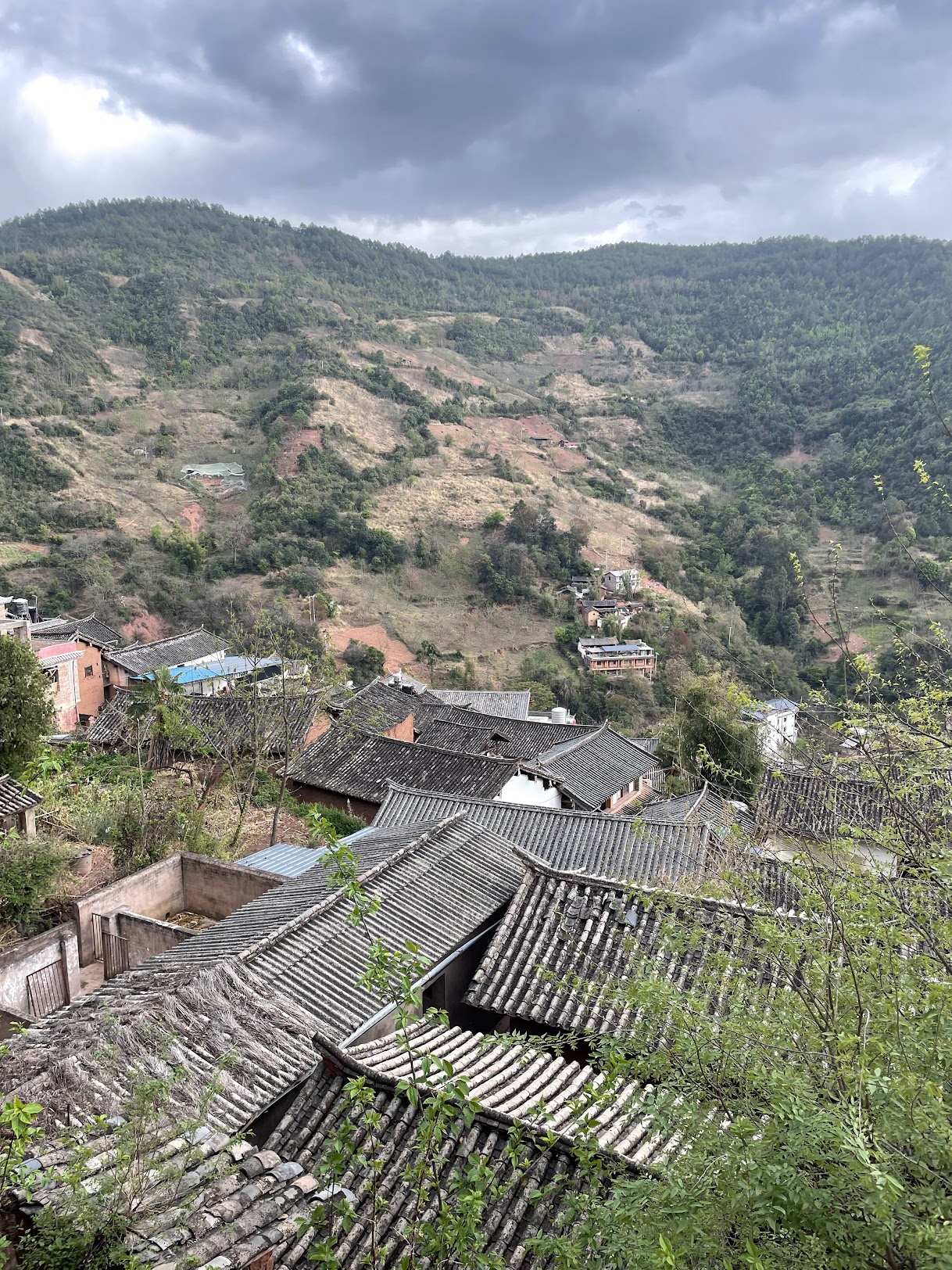
When we arrived, the village was still as a painting. An ancient bridge crossed a small stream; two old temples stood at the foot of the hills. The whole place had been preserved by poverty — no renovation, no maintenance, nothing touched. Only two or three elderly residents still lived there. Peach blossoms fell in the breeze, moss covered the temple tiles, and the beauty of it was what the Japanese call wabi-sabi: imperfect, impermanent, exactly right.
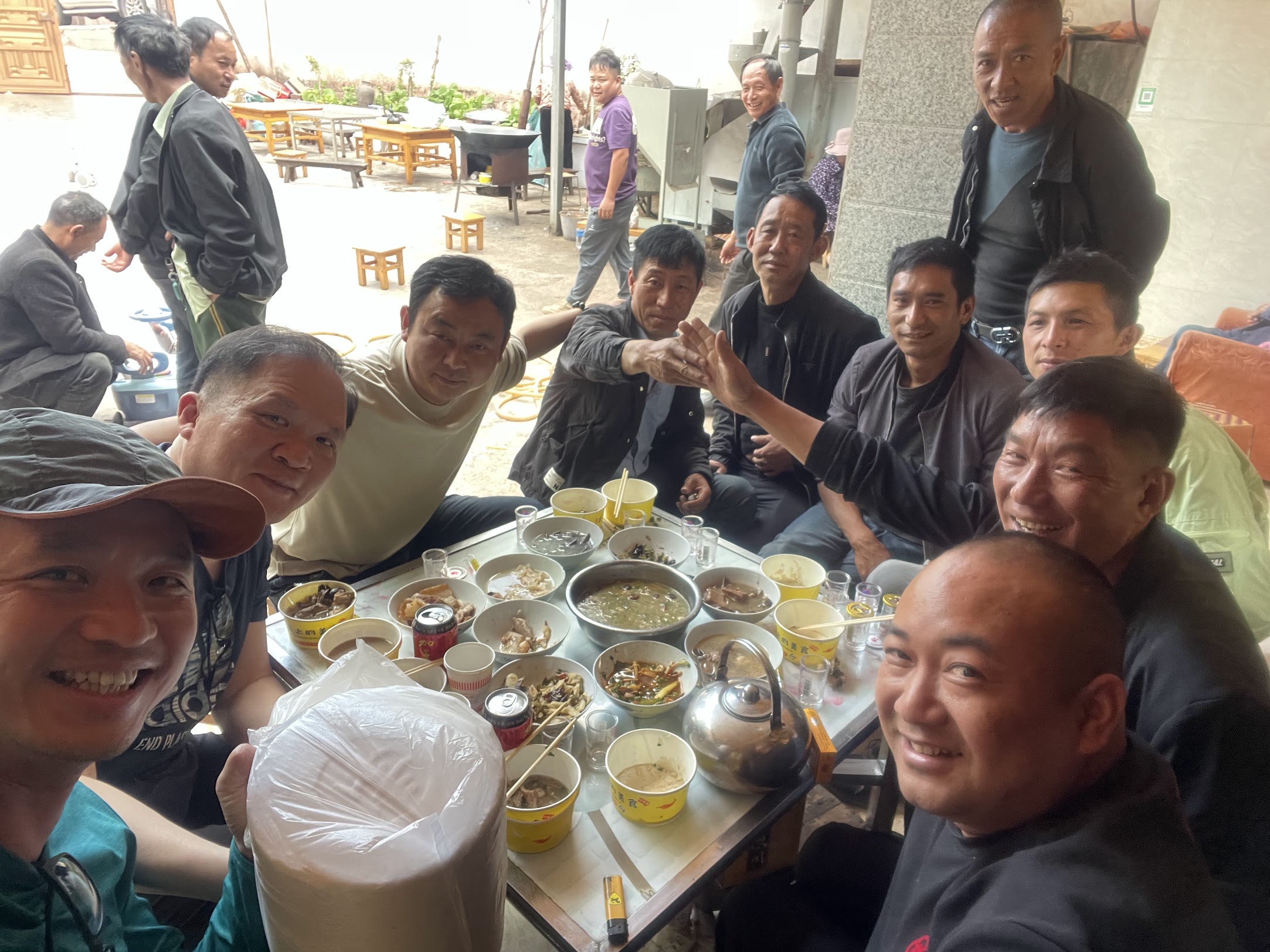
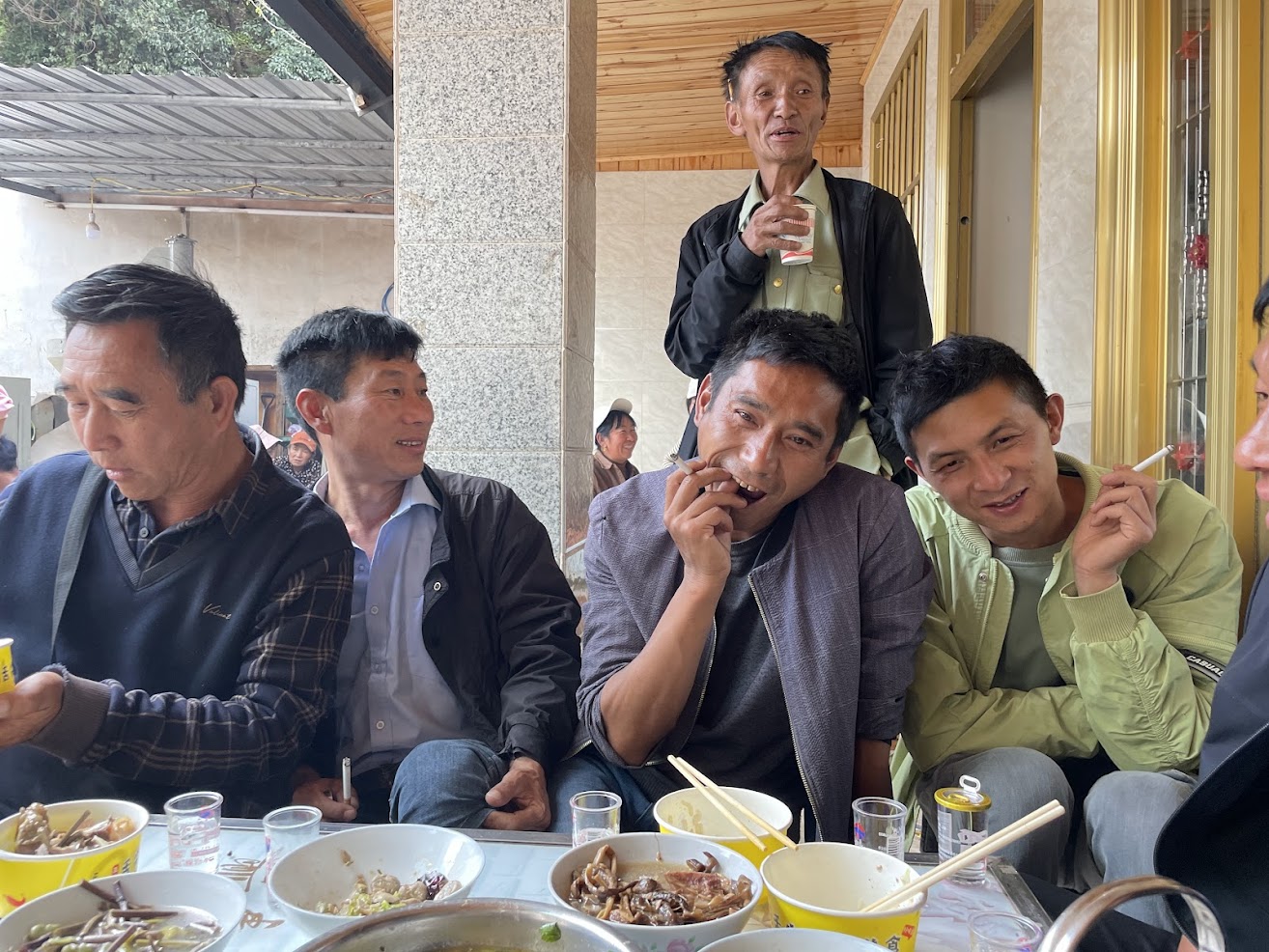
Near the village committee office, something was clearly going on — tables were set up in the courtyard, steam rising from large pots. We had stopped only to ask directions and learn a little about the village. Before we had finished the question, the villagers were already pulling out chairs for us. Just like that, we were accidental guests.
We later learned that it was Qingming — the tomb-sweeping festival. On ordinary days, most of 順蕩's residents have already moved to Yunlong County to live and run businesses, and the village stands nearly empty. But Qingming brings everyone home: people returning with food, with liquor, with children. That we happened to arrive that day was pure luck.
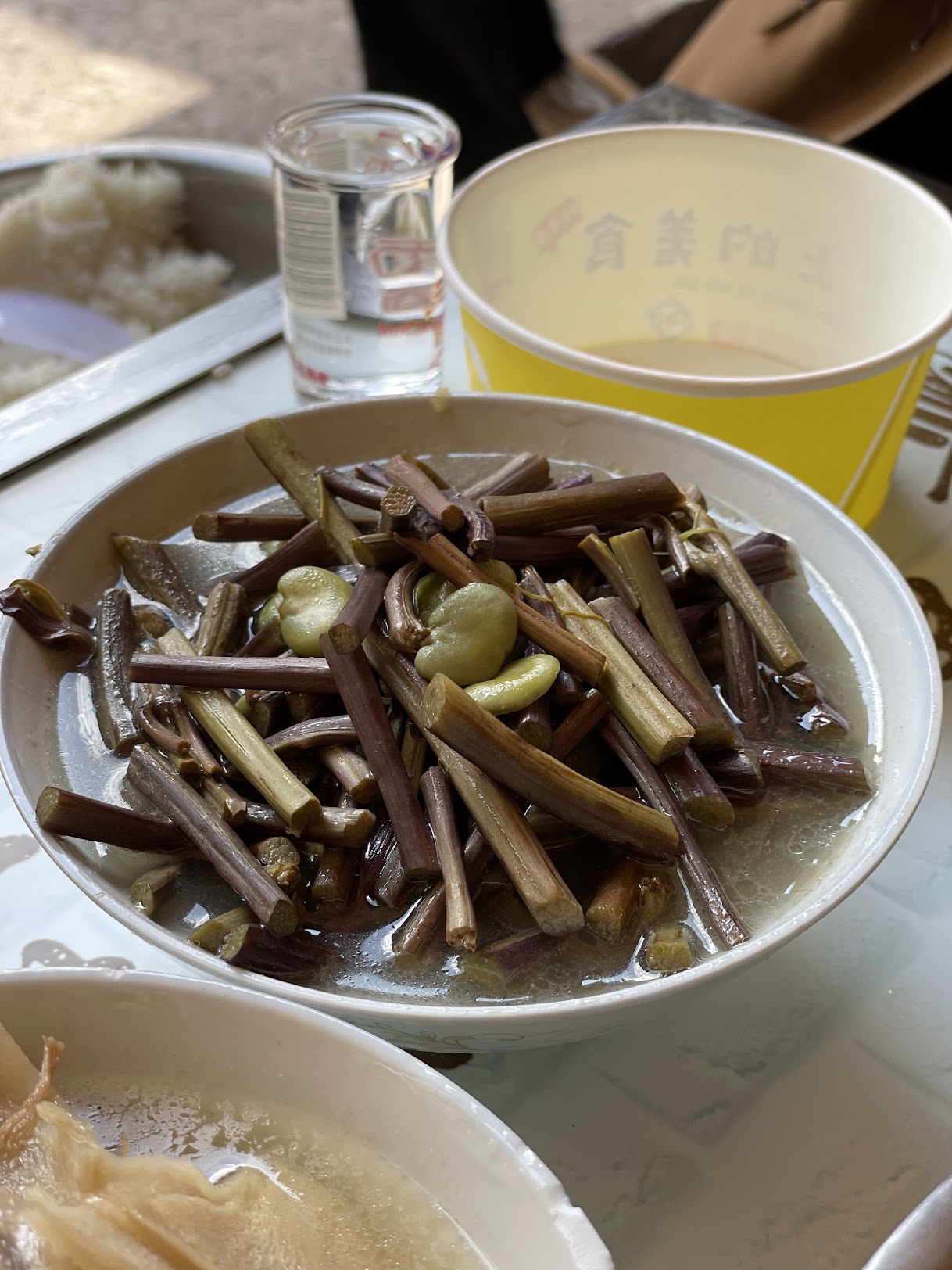
Nothing on the table had been bought in advance. The vegetables were wild greens picked fresh from the mountain that same morning, dressed simply. The Bai receive guests openly: what is in the house goes on the table. No ceremony, only warmth.
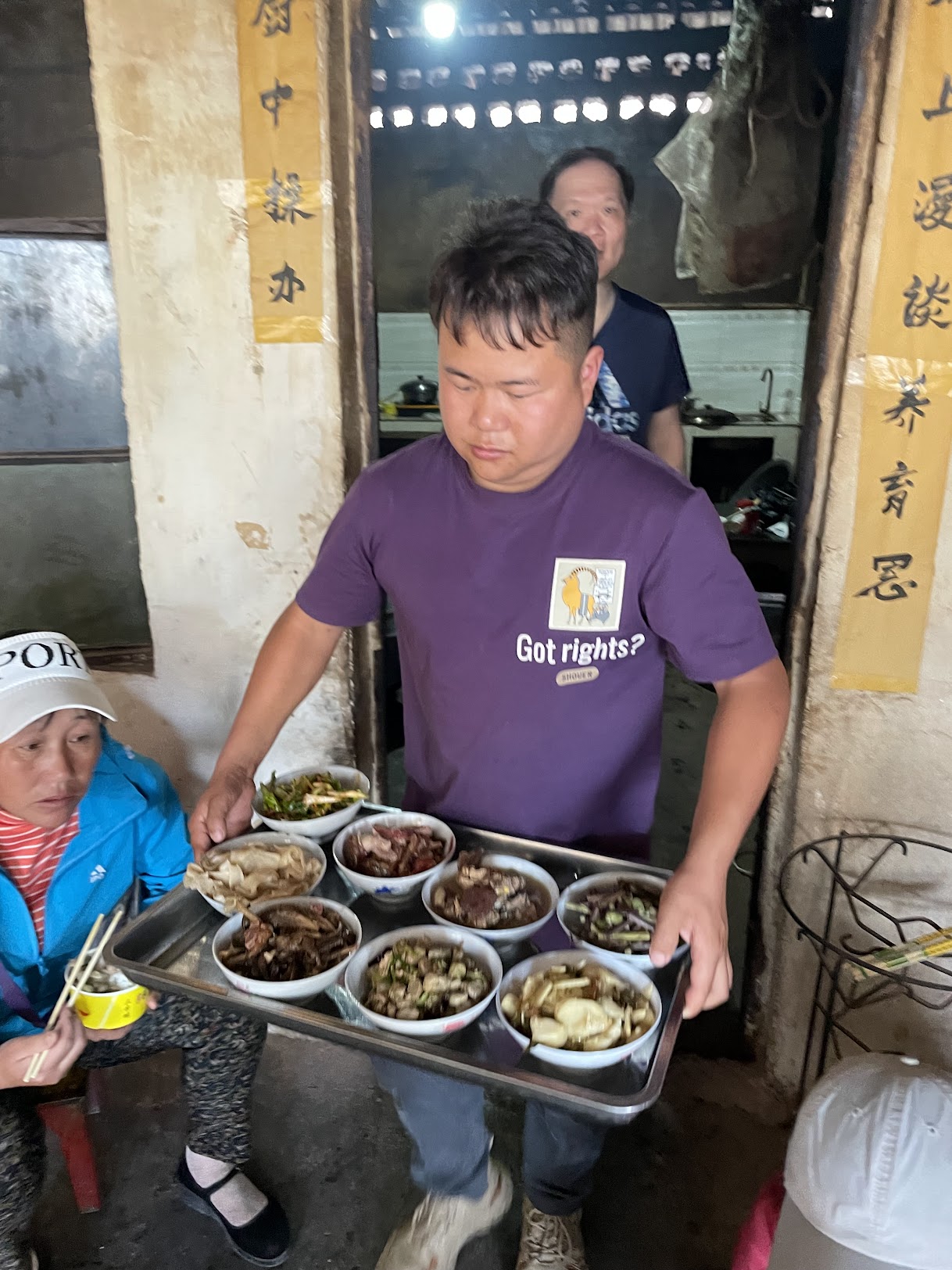
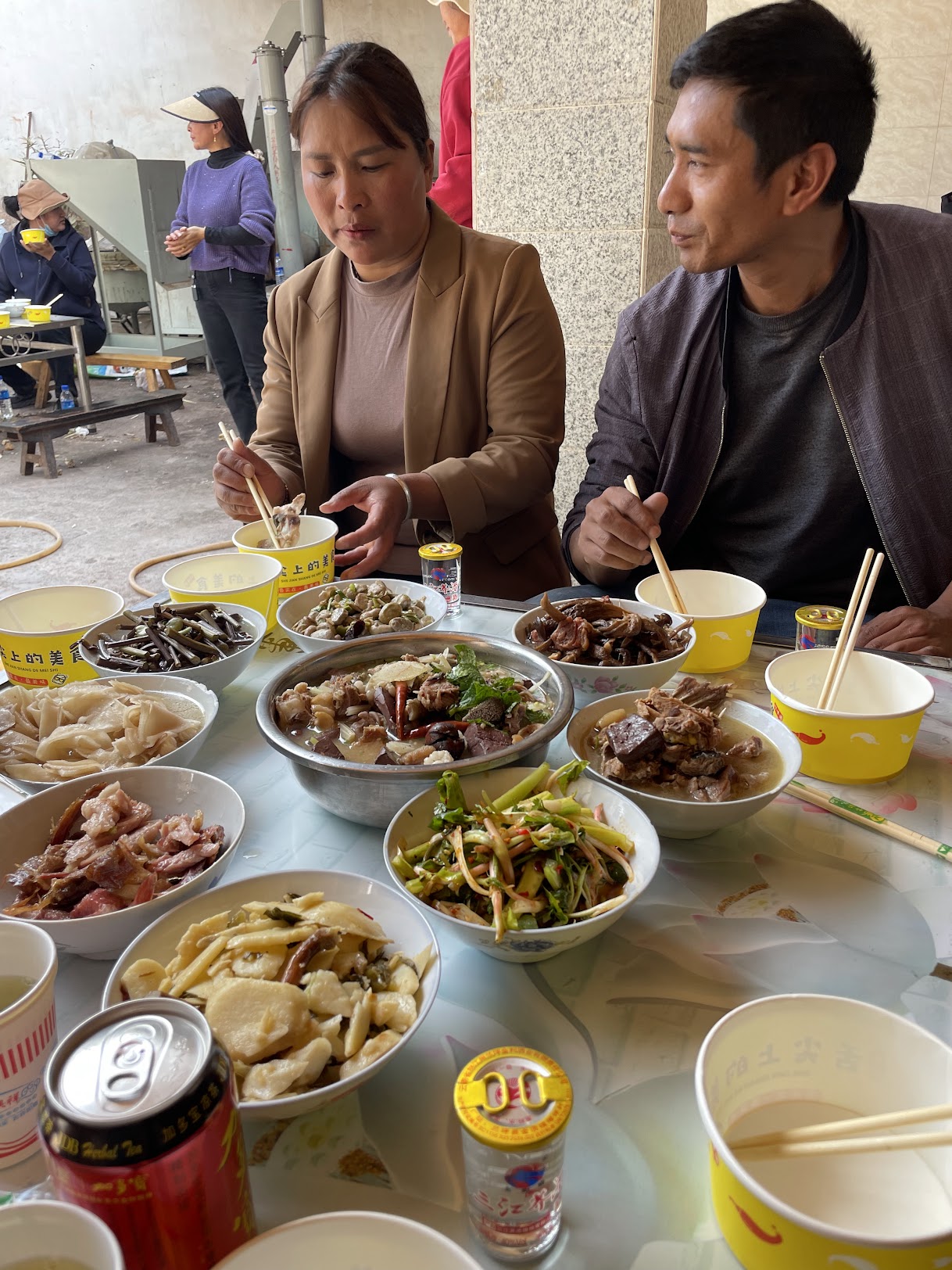
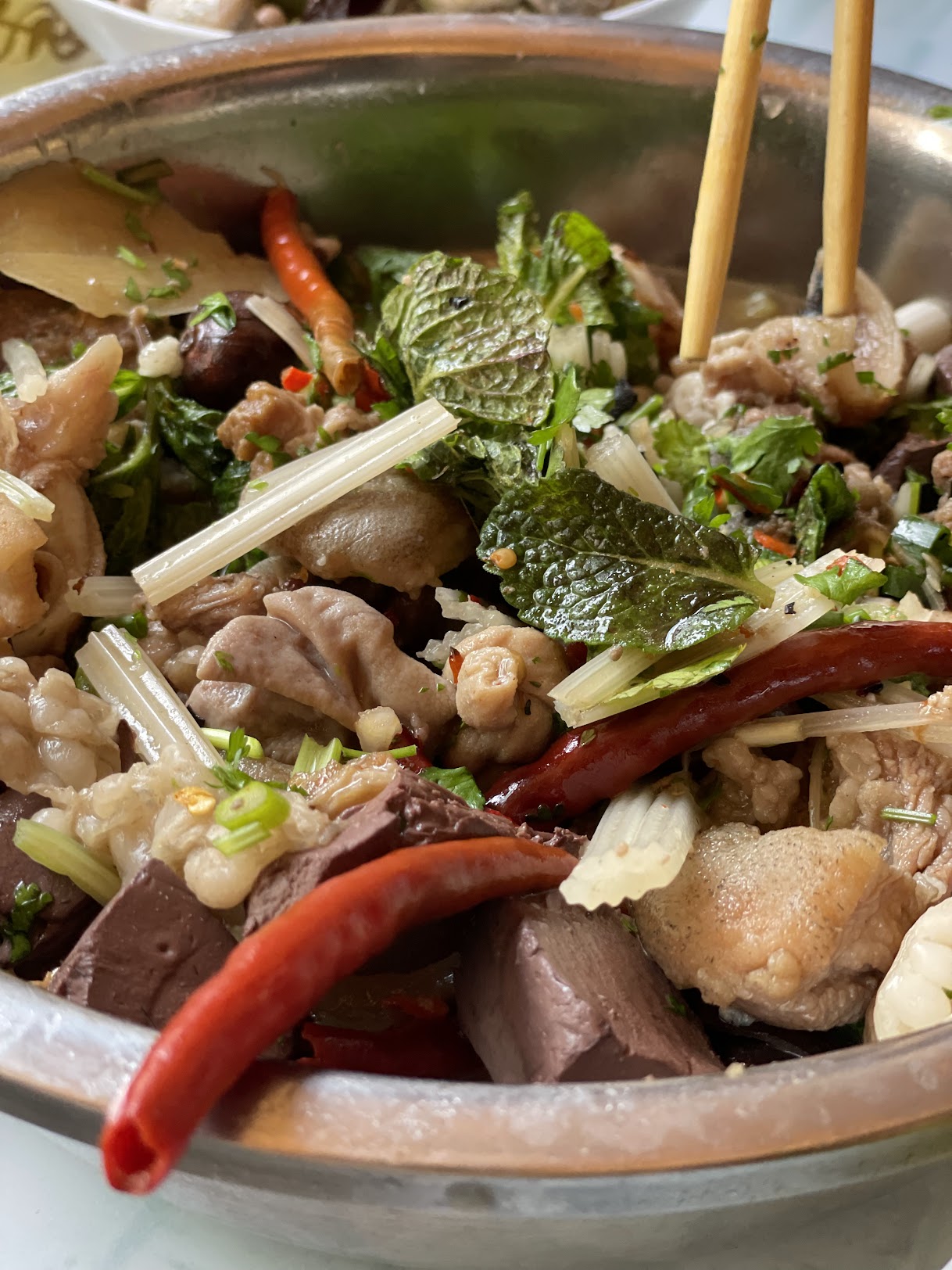
The most eye-catching dish was a wok of chicken stir-fried over high heat with fresh mint, dried chili, and Sichuan pepper — a fragrance that punched clean through the mountain air. This is the most domestic Bai cooking: nothing refined, just absolute freshness. Beside it sat a bowl of slow-braised mountain roots, soft and yielding: the philosophy of the unhurried, made edible.
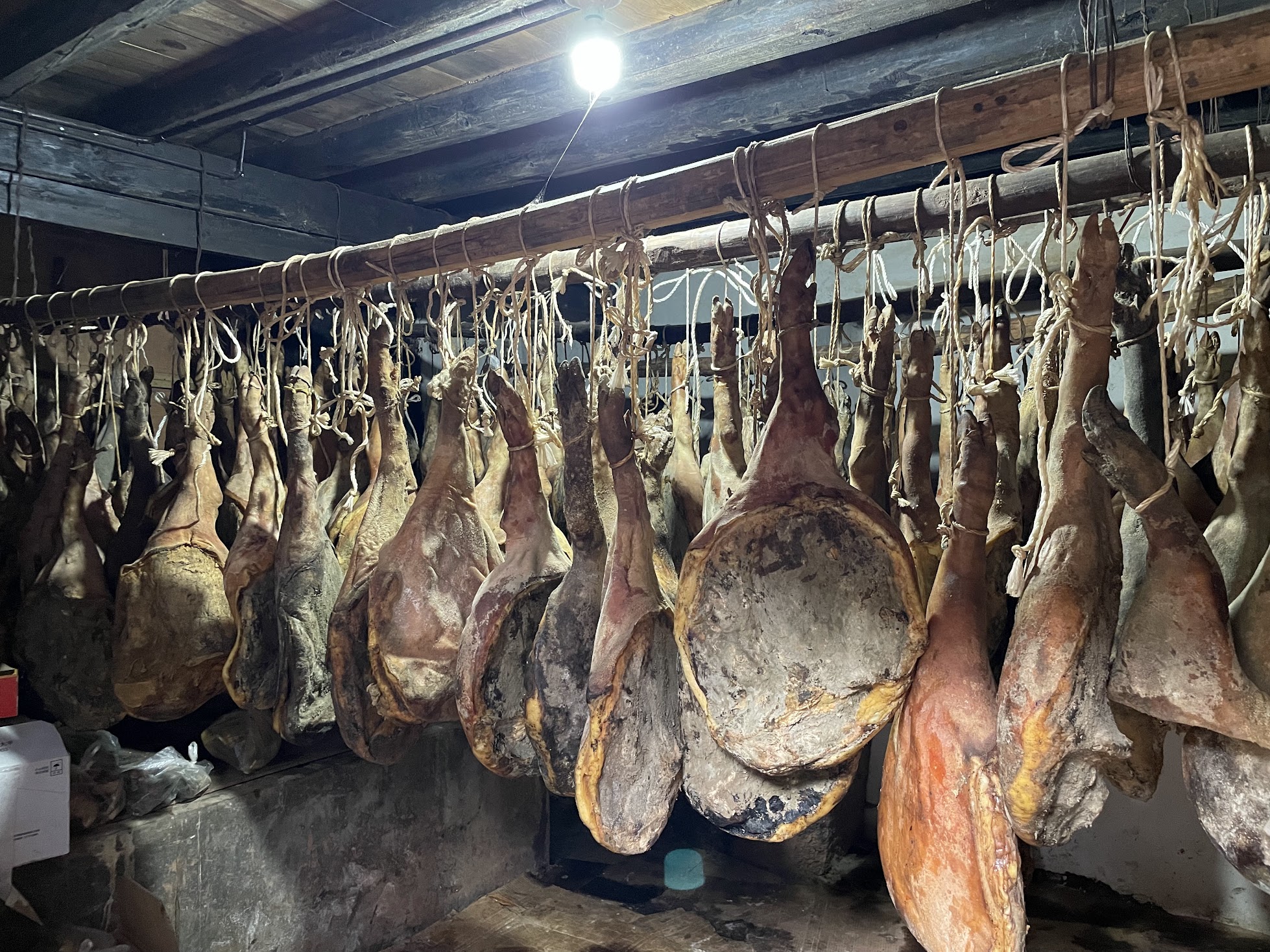
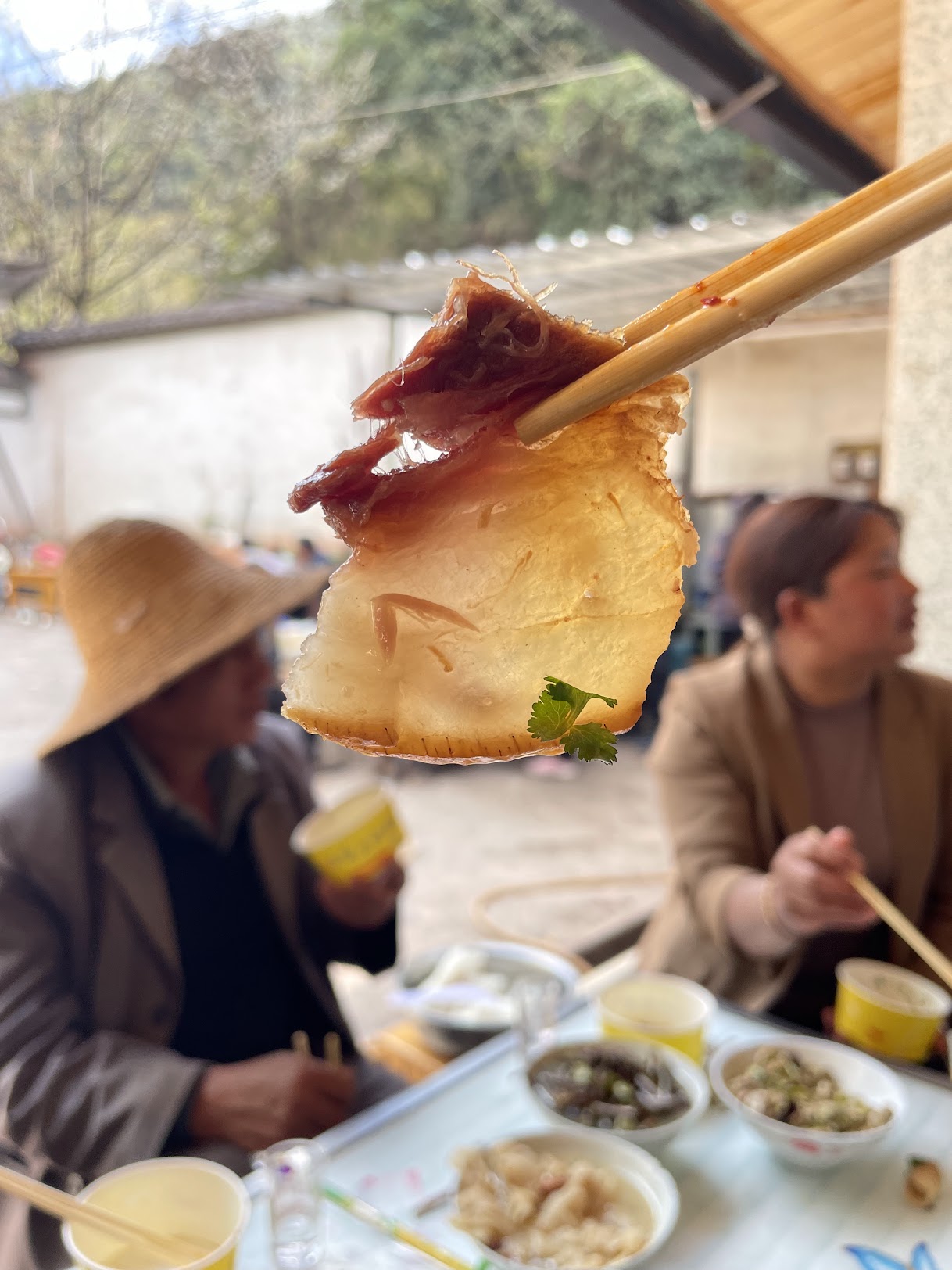
Midway through the meal, someone brought out a plate of 諾鄧火腿 — cut razor-thin, nearly translucent, the crimson just catching the light, the fat crystalline and translucent, white as frozen light. This was not a formal course; someone had simply gone home, taken down one of their own legs, and sliced a few pieces for the table. Almost every household has one aging somewhere. I put a slice in my mouth: deep, salty-savoury, with a nutty finish that only years of curing can produce, dissolving slowly on the tongue.
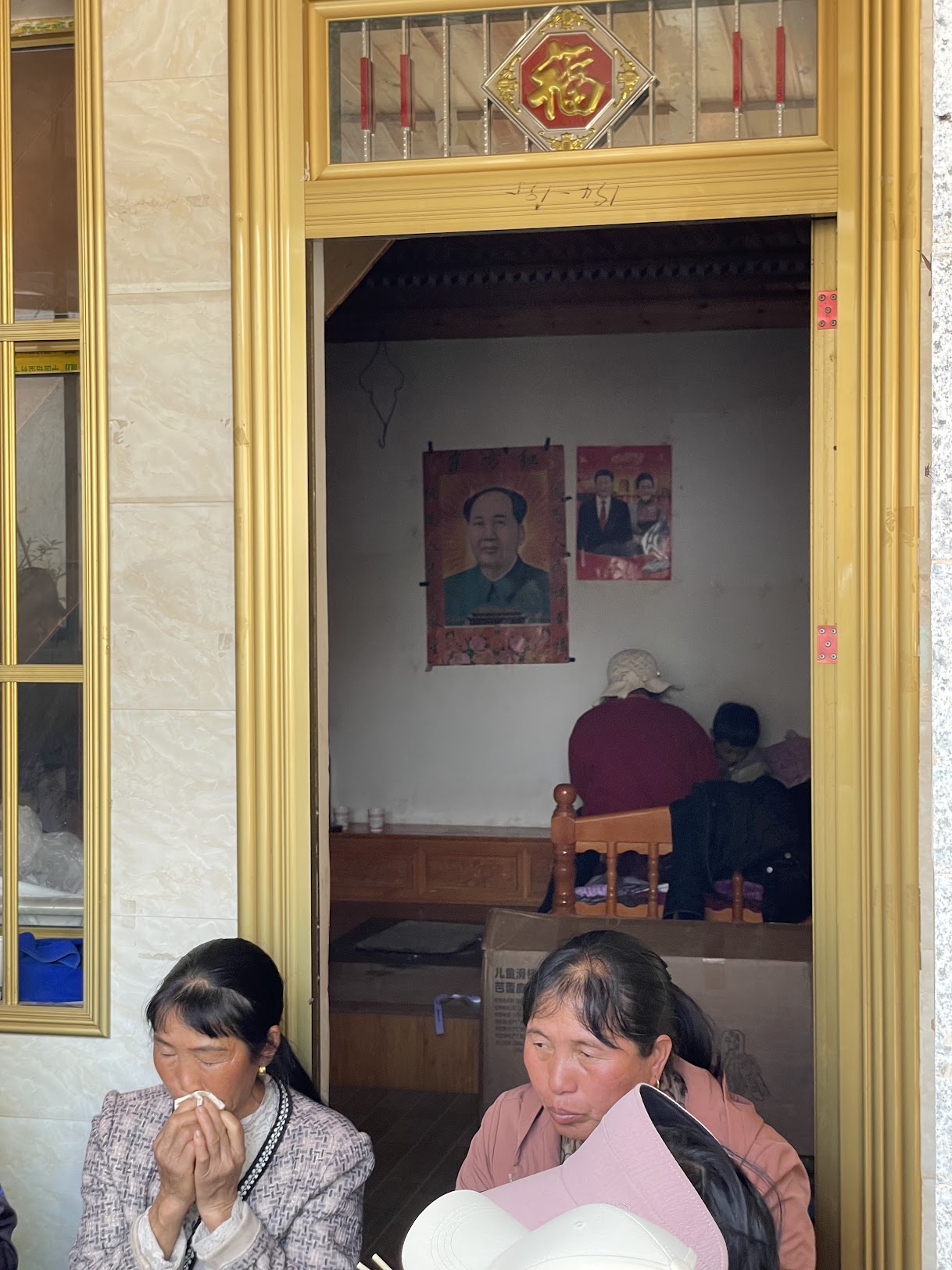
After the meal, I sat in a corner of the courtyard with the village head — the 村長 — talking slowly in Mandarin with a lot of gesturing. He told me of the hardships of the ancient salt-horse road: mules heavy-laden, crossing mountain after mountain for months at a time, carrying Nuodeng salt to distant places. Then the paved road came and the mules retired. Then state salt regulations stopped the well salt for decades. He recounted all of this without complaint, the way you state the weather.
The road opening is good, he said — at last the young could leave. But then: now that the young have left, who will make the ham? What I heard was the crack in a whole era.
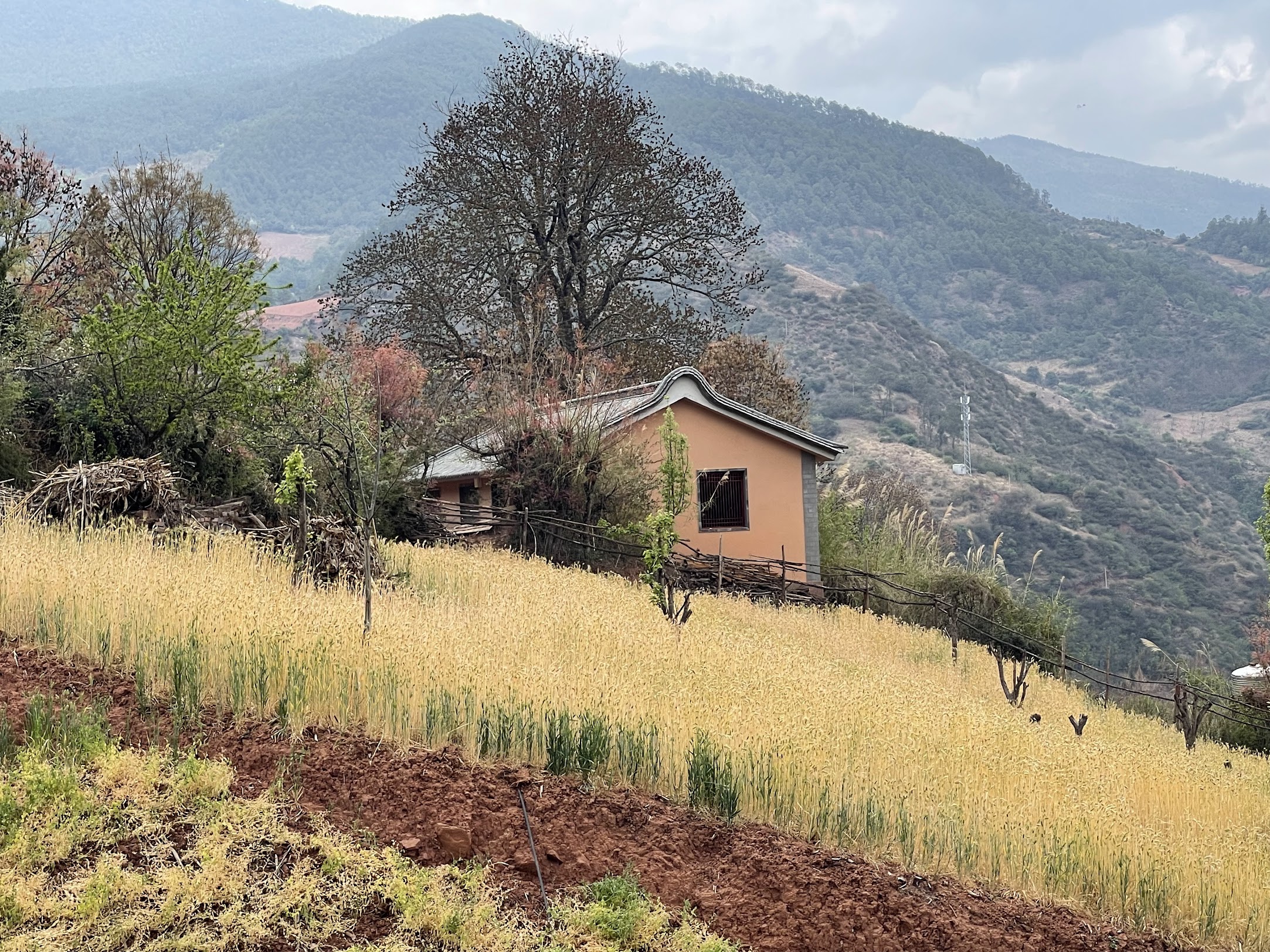
The village committee secretary — 村委書記 — had also been talking with us throughout, sharing the ongoing effort to find a way to lift the village out of poverty. He took us first to the traditional salt-making workshop — 古法造鹽 — and then out beyond the village to a wide open meadow. Behind it, the hillside was thick with walnut trees, dense and quiet, as if they had been waiting for something.
He told us he also made ham himself, and hoped we would try it — and perhaps help bring it to a wider market. We said yes almost without hesitation.
(In reality, that yes opened a much longer road. We ran into many problems along the way — differences in production philosophy, inconsistent hygiene standards — each requiring its own solution. That summer I also made a dedicated trip to Spain, visiting a family-run traditional organic ham producer, talking at length with the third-generation owner, who was genuinely fascinated by Yunnan ham. Every step proved harder than expected, and more worthwhile.)
But it was standing before that hillside of walnut trees that something clicked: for GutCommon's first batch of ham — the one we would oversee ourselves — we would feed the pigs on walnuts.
Tradition does not survive on nostalgia. It needs a market, income, a reason for the people who stay to keep staying. That day in 順蕩, we stopped to ask for directions — and found, instead, an answer.