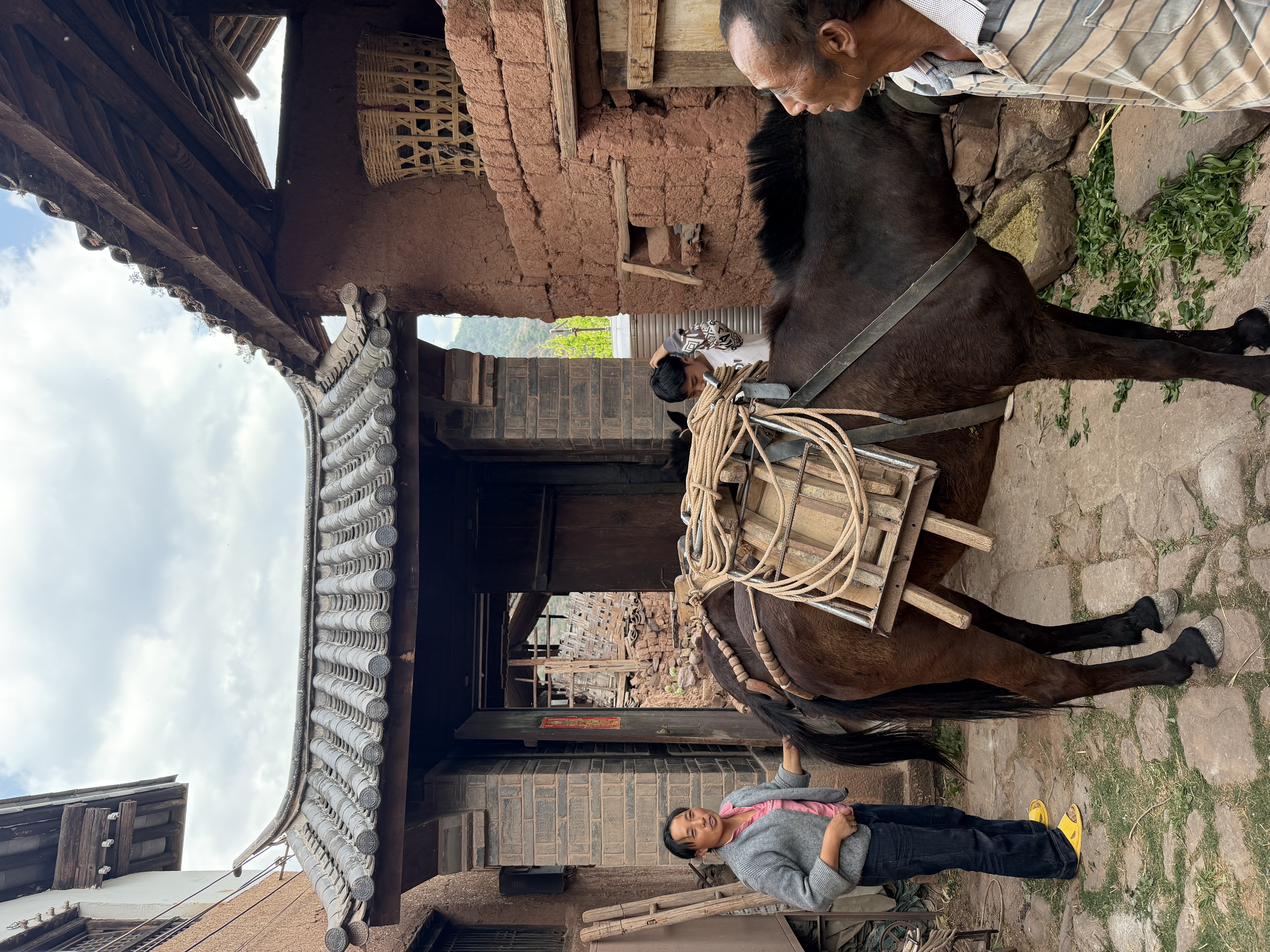
The stone paths of Nuodeng follow a particular logic: they do not lead to a square. They lead upward. The entire village is built in terraces along the hillside — the higher you climb, the older the buildings, the fewer the people, the quieter the air. I wandered the village for half a day, then followed a path that was nearly vertical, and reached the highest point.
Nuodeng sits at roughly 1,700 metres. Walking this village is not tourism — the stone paths are the infrastructure. To reach the market, visit a neighbour, get to the temple at the top, everyone climbs. The older villagers I passed on those paths moved with a matter-of-fact ease you don't expect. Populations living at altitude, walking this kind of terrain daily and eating seasonal local food, consistently show different metabolic profiles from urban counterparts. The stone steps are not incidental. They are the exercise programme.
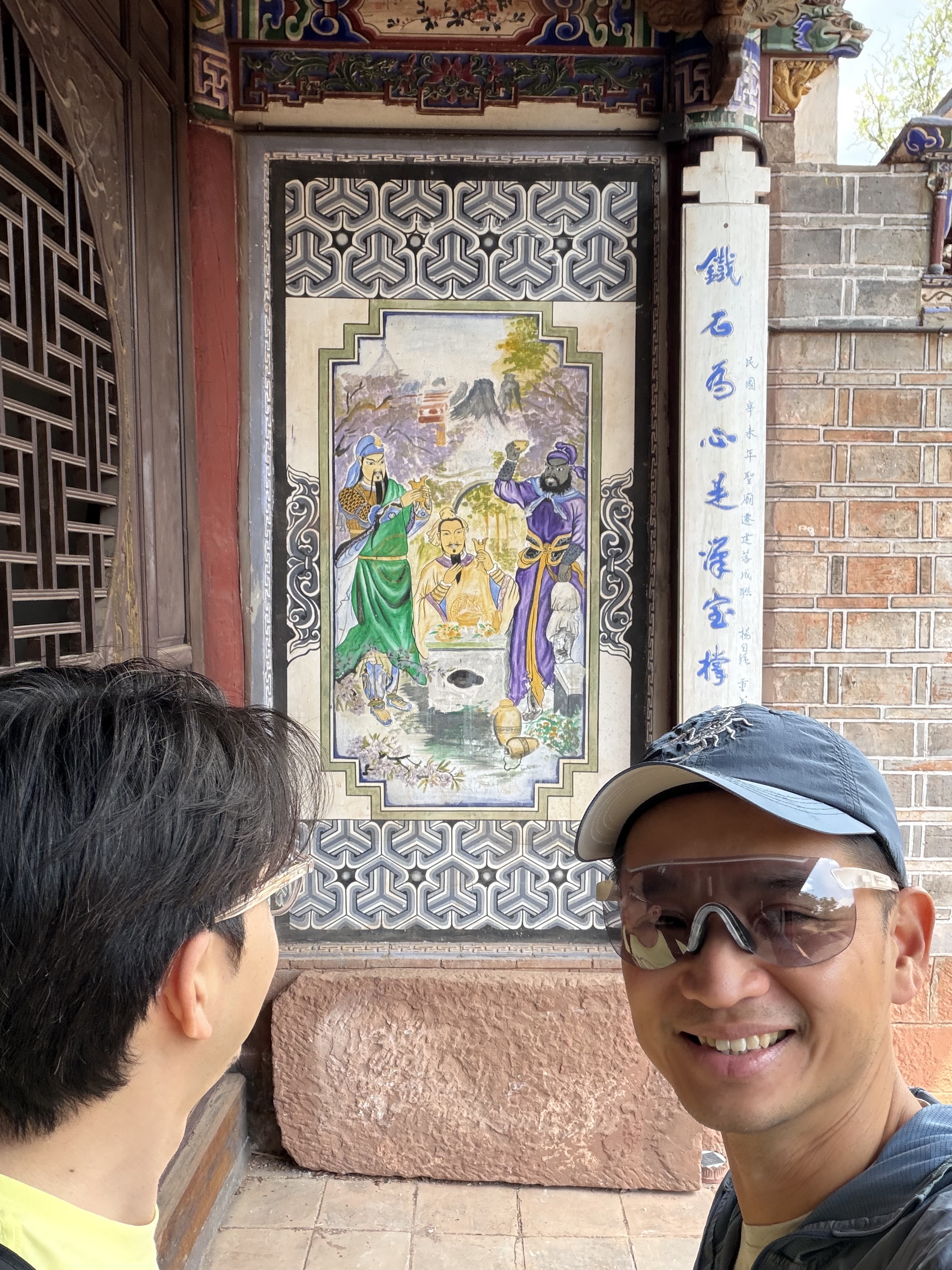
There was a temple. More accurately: a temple complex — the 玉皇閣, Yuhuang Pavilion. My first impression was of an ordinary Taoist shrine. Then I walked the perimeter of the compound and understood that this place was something else entirely: within a single enclosing wall stood shrines to the Jade Emperor (Taoist), the Civil and Martial Confucian halls (Confucian), and the Maitreya Hall (Buddhist). Three traditions, one roof. The architectural arrangement has been described as 前佛後道、儒分左右 — "Buddha in front, Taoism behind, Confucianism flanking left and right." Six characters that contain a very sophisticated theological arrangement.
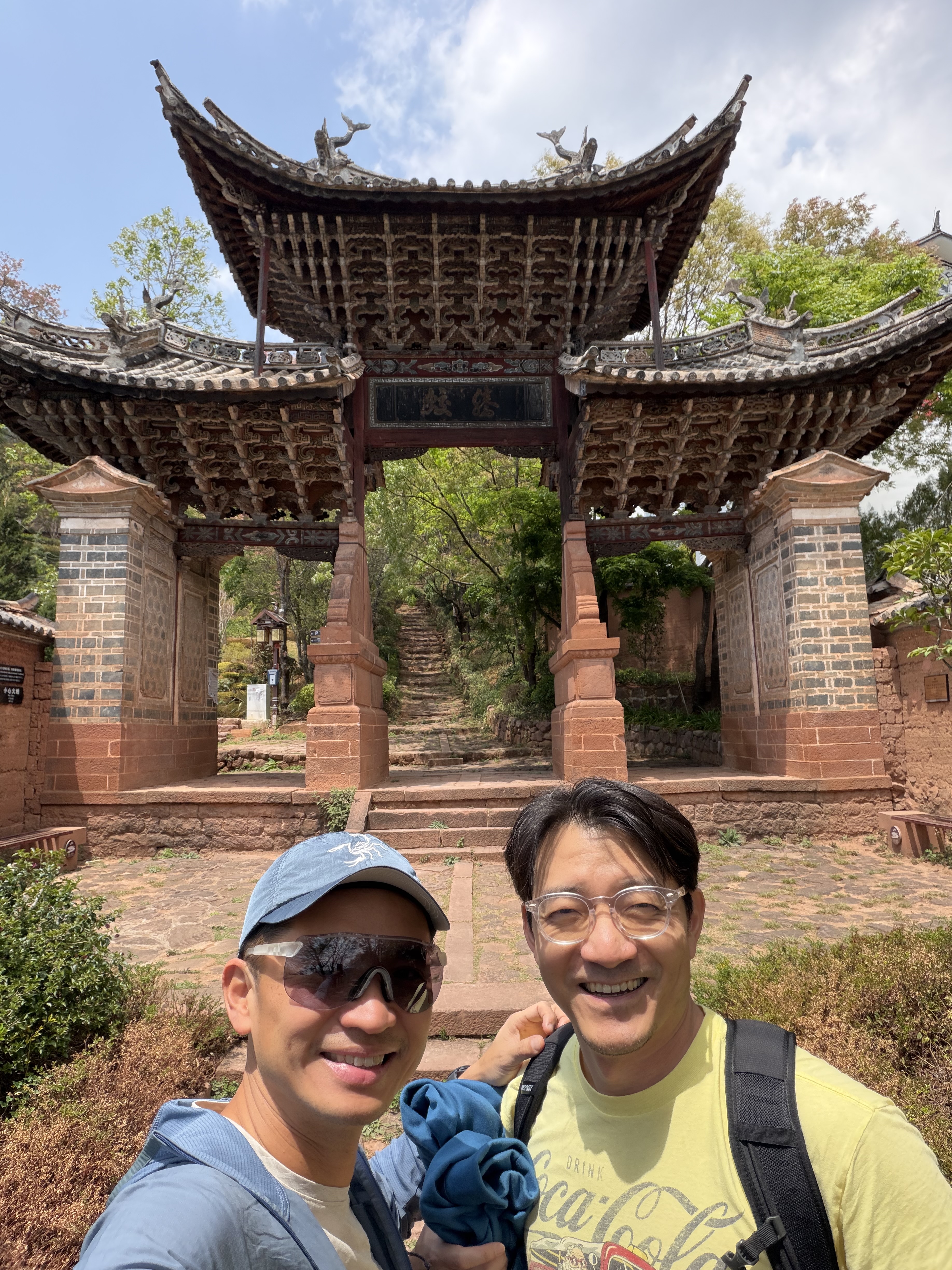
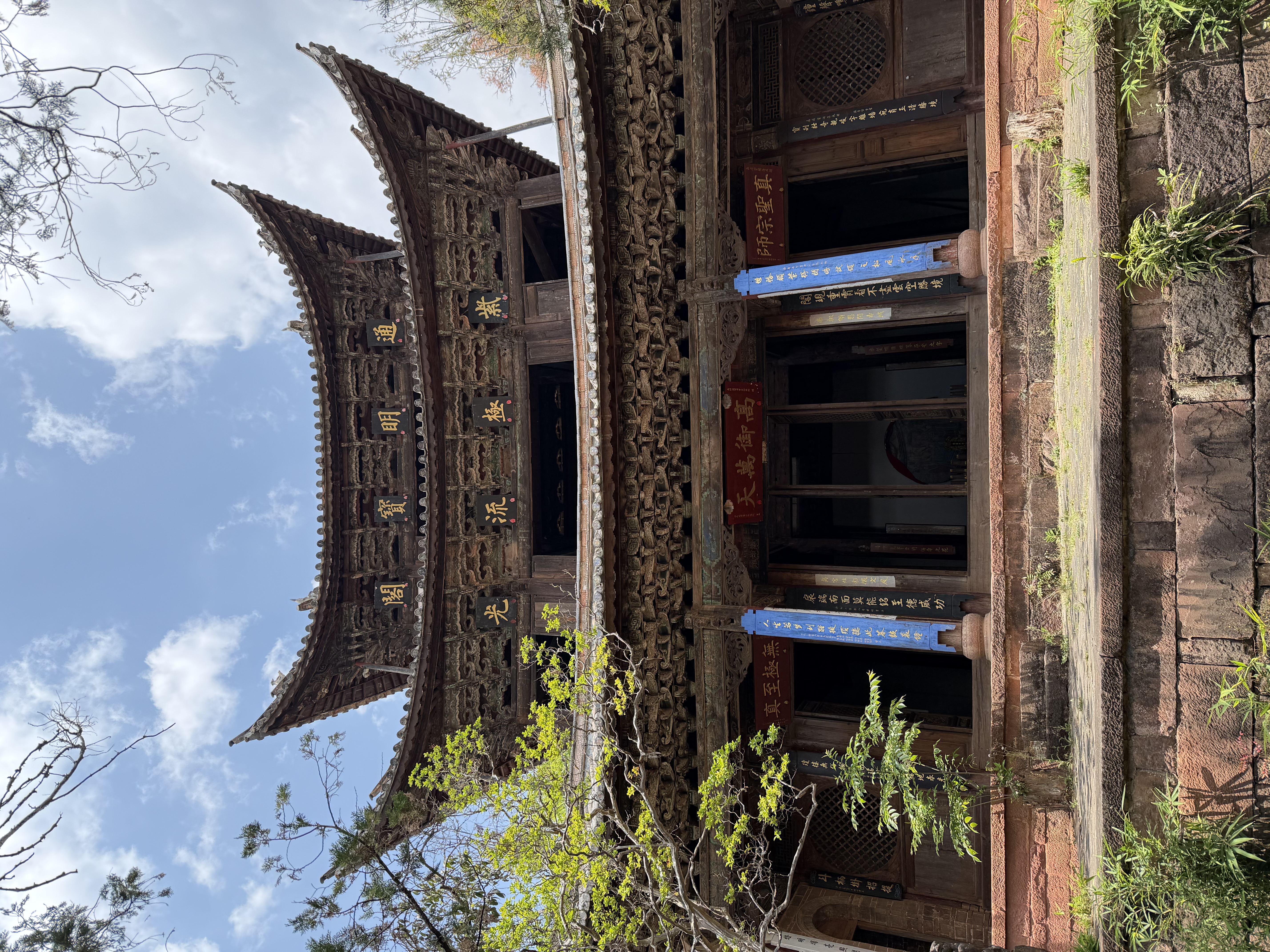
In Chinese history, the concept of Three Teachings syncretism — 三教合一 — is not unusual. Confucianism, Buddhism, and Taoism have long been intertwined at the level of folk belief. But to find this synthesis so deliberately expressed in architecture, preserved from the Jiajing period of the Ming dynasty with almost no alteration, is what makes Yuhuang Pavilion genuinely rare. It is not just a place of worship. It is an architectural argument about how to coexist.
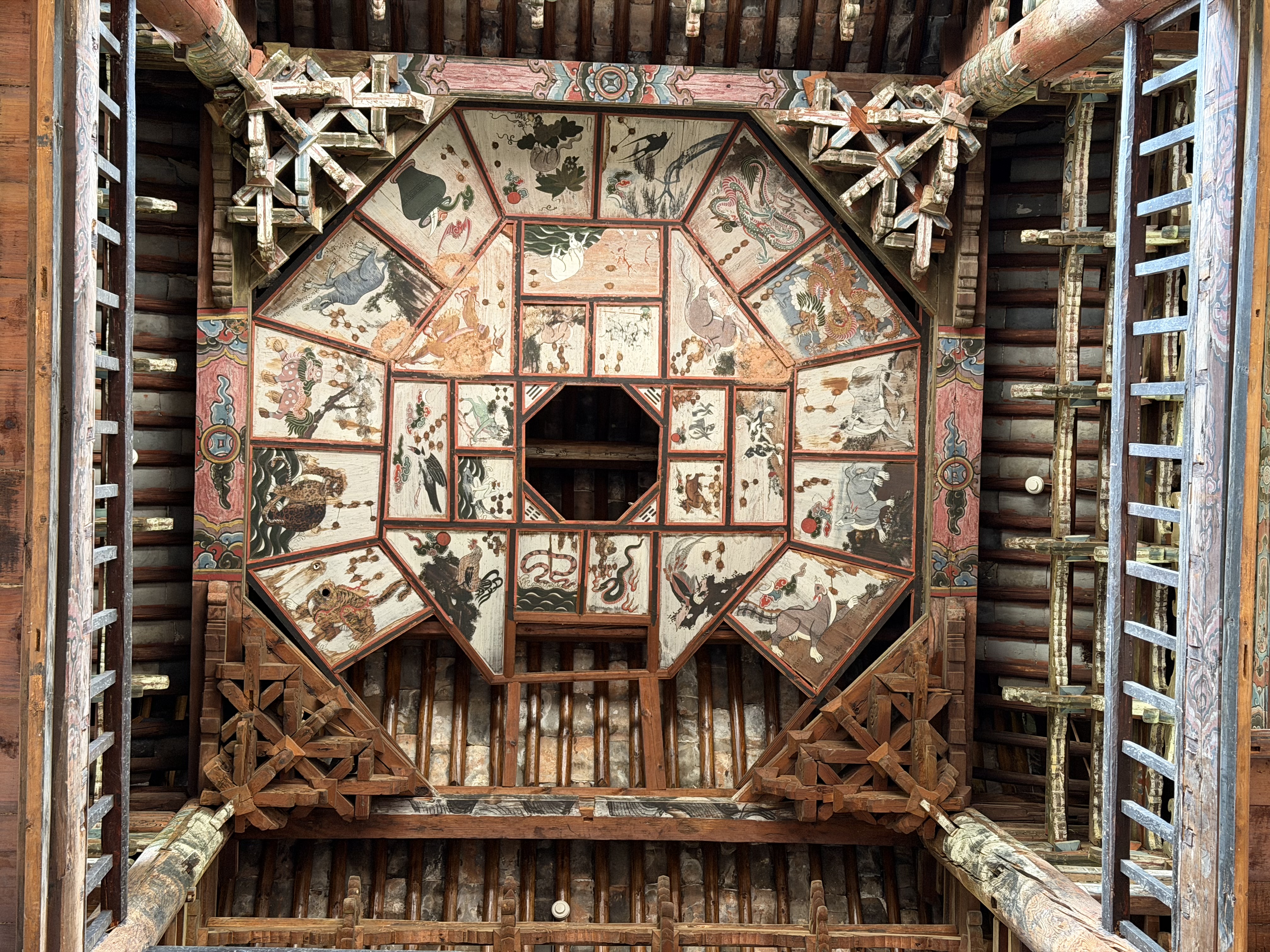
The ceiling of the main hall was the detail that stopped me longest. A wooden coffered ceiling, painted with all twenty-eight lunar mansion constellations of traditional Chinese astronomy — each constellation with its associated divine beast, name, and symbolic correspondence to the human realm. The pigments have survived five hundred years. Some are faded, but the structure remains intact. I stood in the centre of the hall, neck tilted back, trying to identify each figure. I recognised perhaps half of them.
The twenty-eight lunar mansions are the foundational framework of Chinese astronomy, traceable to the fifth century BCE or earlier. Unlike the Western zodiac, which tracks the sun's path, this system maps the moon's nightly movement across the sky — the moon passing through roughly one mansion per night. The system served simultaneously as a calendrical tool, an astrological framework, and a repository of agricultural knowledge. Which mansion is rising predicts when to plant, when to harvest, when rain is coming. The cosmic diagram painted on this temple ceiling was, for an agrarian society, both science and faith at once.
I looked it up afterward: the coffered ceiling of Yuhuang Pavilion has a specific name and a formal record — it appears in Yunlong County's heritage protection registry as a significant object. But I did not know this at the time. I was simply an outsider standing in a place that almost no one visits, facing five hundred years of a craftsman's work — a craftsman who believed that every brushstroke he made mattered. To the people living in this valley. To the farmers who worked by reading the stars. To a civilisation that held that the order of the universe was comprehensible, and worth painting on a ceiling.
Looking down from Yuhuang Pavilion, the full panorama of Nuodeng village opens below: grey roof tiles cascading down the hillside in overlapping layers, all the way to the small river at the valley floor. I stood there for a long time, almost no other visitors. Occasionally a breeze came up from the valley, carrying the scent I had begun to recognise — salt, and faintly, from somewhere below, the aroma of aging ham.
This detail stayed with me. The entire identity of the village — its reason for existing, its place in Chinese history — is bound to two things: salt and faith. Nuodeng's ancient brine well made this place prosperous for a thousand years; and the temple at the hilltop is the cultural fruit that prosperity produced. Perhaps three religions could coexist within one wall because the people of Nuodeng had learned something else: people who share a well do not need to argue whose god is greater.
The Bai people hold a particular historical position on this question. As an ethnic group that had established its own political order during the Nanzhao and Dali kingdoms, the Bai developed early a flexible posture toward plural belief systems. Across different historical periods, they absorbed the philosophical framework of Buddhism, the social ethics of Confucianism, and the naturalism of Taoism — without ever fully abandoning their indigenous Benzhu faith: the tradition of venerating local protective deities. The architectural arrangement of Yuhuang Pavilion is the material expression, in built space, of that long historical flexibility.
I kept thinking about how what we call "inclusivity" in modern cities is sometimes just a banner and a policy document. But in Nuodeng, three faiths sharing one wall was a decision made centuries ago by people who had to climb steep stone steps to reach this place every day — people who had no such vocabulary, but who practised the thing itself. That practice did not descend from any decree. It grew, organically, from the logic of a shared well.
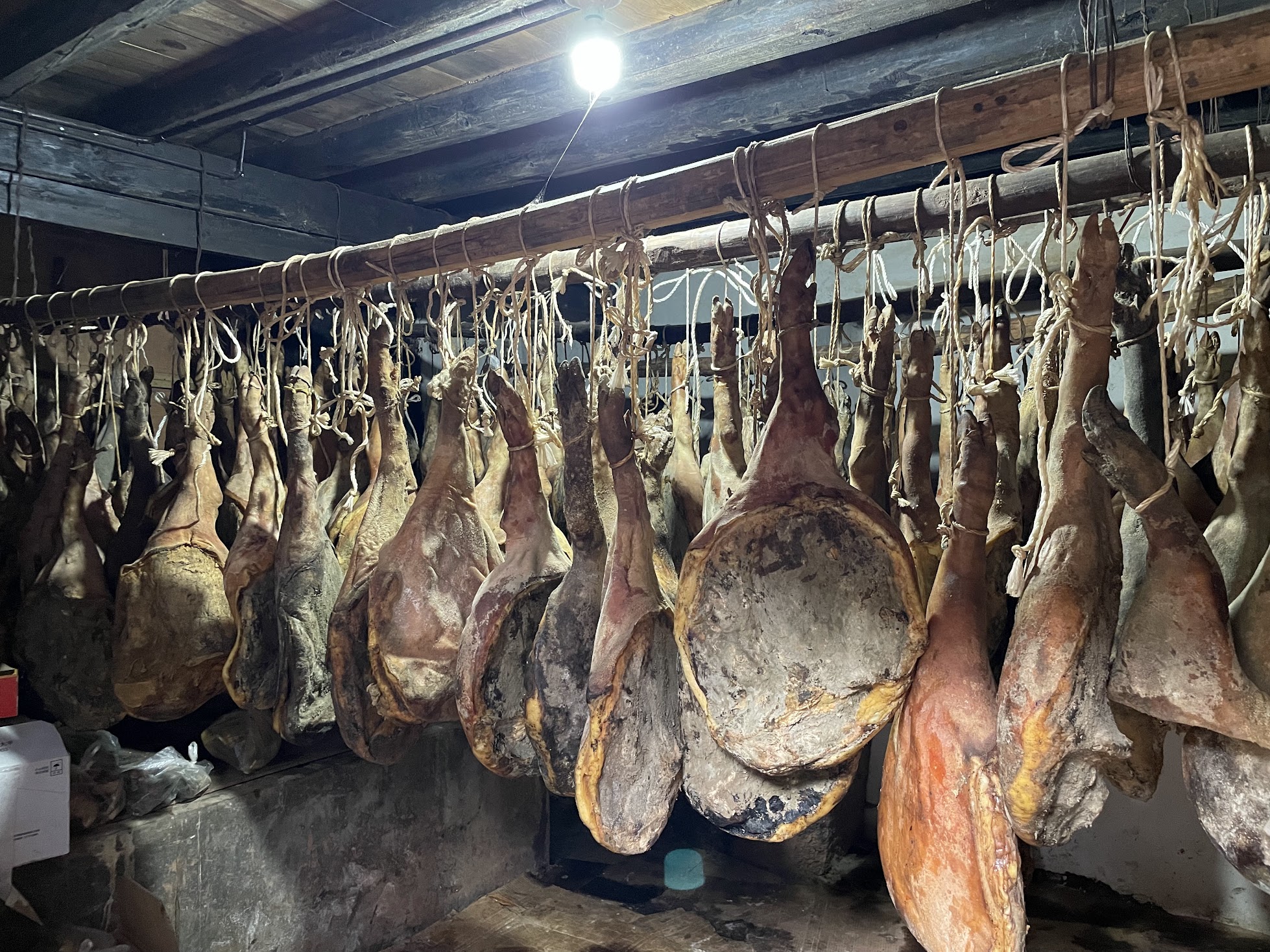
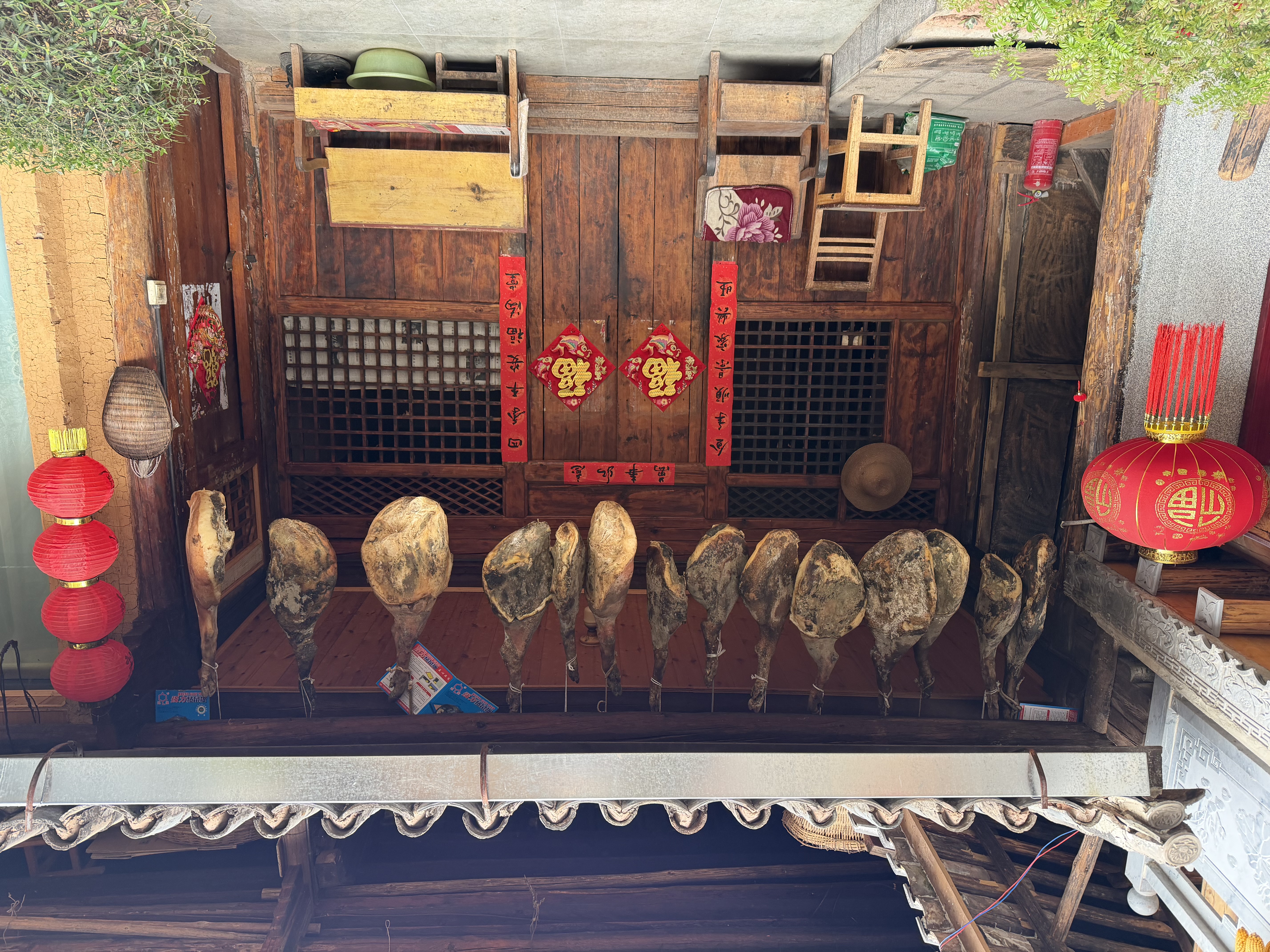
Nuodeng's ancient brine well is not just a historical footnote. For over a millennium it was the economic foundation of the entire valley. Unlike the refined sodium chloride that fills most modern kitchens, this brine carried trace minerals — magnesium, calcium, potassium — absorbed from rock formations over thousands of years. It is the same salt that flavours Nuodeng ham. The pigs eat it. The people eat it. And the microorganisms that transform pork into aged ham over thirty-six months thrive in the specific mineral environment that this salt creates. This is what terroir actually means: not a marketing concept, but a geological and microbial reality.
Most villages preserve one tradition. Nuodeng preserved three — and never saw a contradiction.
Walking back down, I passed an old man sweeping the stone path with a bamboo broom — slow, careful strokes through the fallen leaves. I asked: does someone sweep this path every day? He said: every day. Then went back to sweeping, nothing more to add.
Heritage doesn't preserve itself. The temple at the summit of Nuodeng is swept every day by one old man with a bamboo broom. The same logic holds for traditional food cultures, for farming knowledge passed between generations, for the microbial communities in the soil around this village and in the cellars where the ham ages. None of it persists without someone showing up, day after day, to do the unglamorous maintenance work. GutCommon's sourcing visits to Nuodeng are our version of that broom.
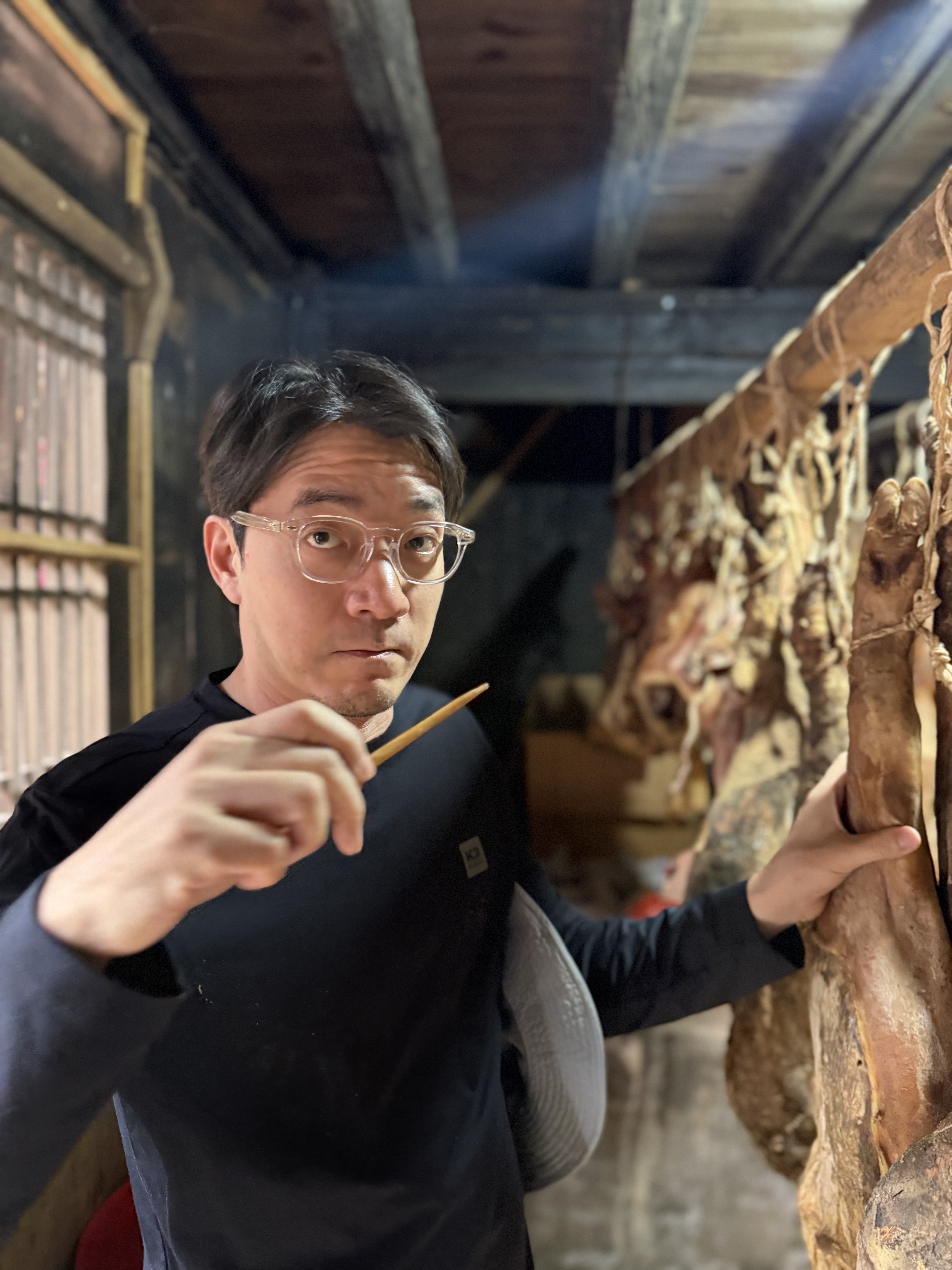
The microbial community of Nuodeng is a scientific reality worth taking seriously, not a metaphor. The microbial environment of the ham-ageing cellars is the result of centuries of accumulation — specific fungi, bacteria, and yeasts, propagating across generations in this particular combination of minerals, humidity, and temperature. These microorganisms are not merely participants in the ham's fermentation; they are themselves the memory of this place. When you eat a piece of authentic Nuodeng ham, the microbial diversity you encounter is a biological expression of this land's history across hundreds of years. The same logic applies to the ancient timber of Yuhuang Pavilion, the crevices of the stone paths, the steps that someone sweeps with a bamboo broom each day — every corner is the dwelling of a microbial community. To understand the ham that these conditions produce, read about Nuodeng ham here.
The story of Nuodeng — the salt, the temple, the ham — are different faces of the same story: how a place, under the weight of time, finds its own quiet way to persist. To explore another part of Nuodeng's story, visit our ham page.