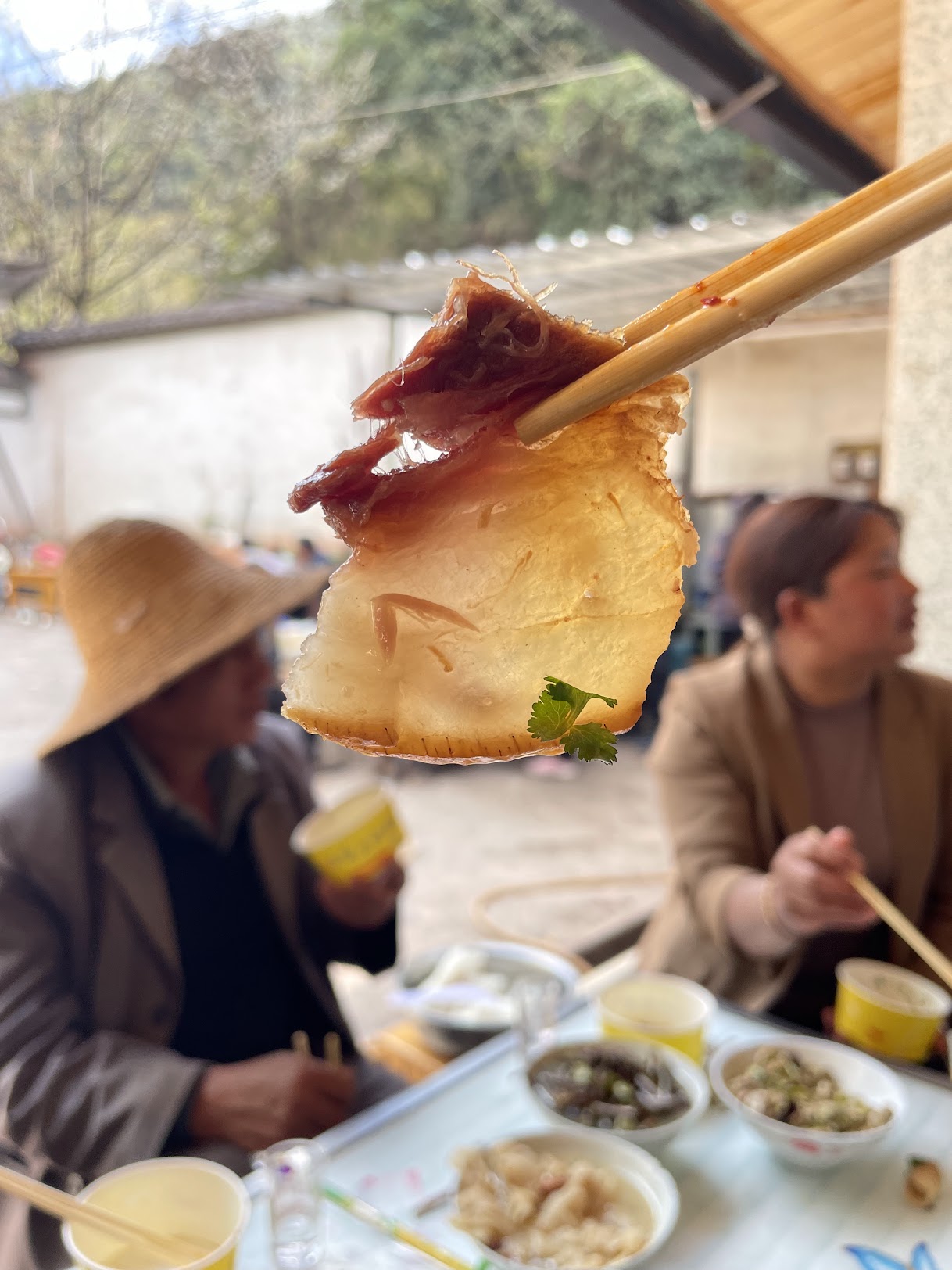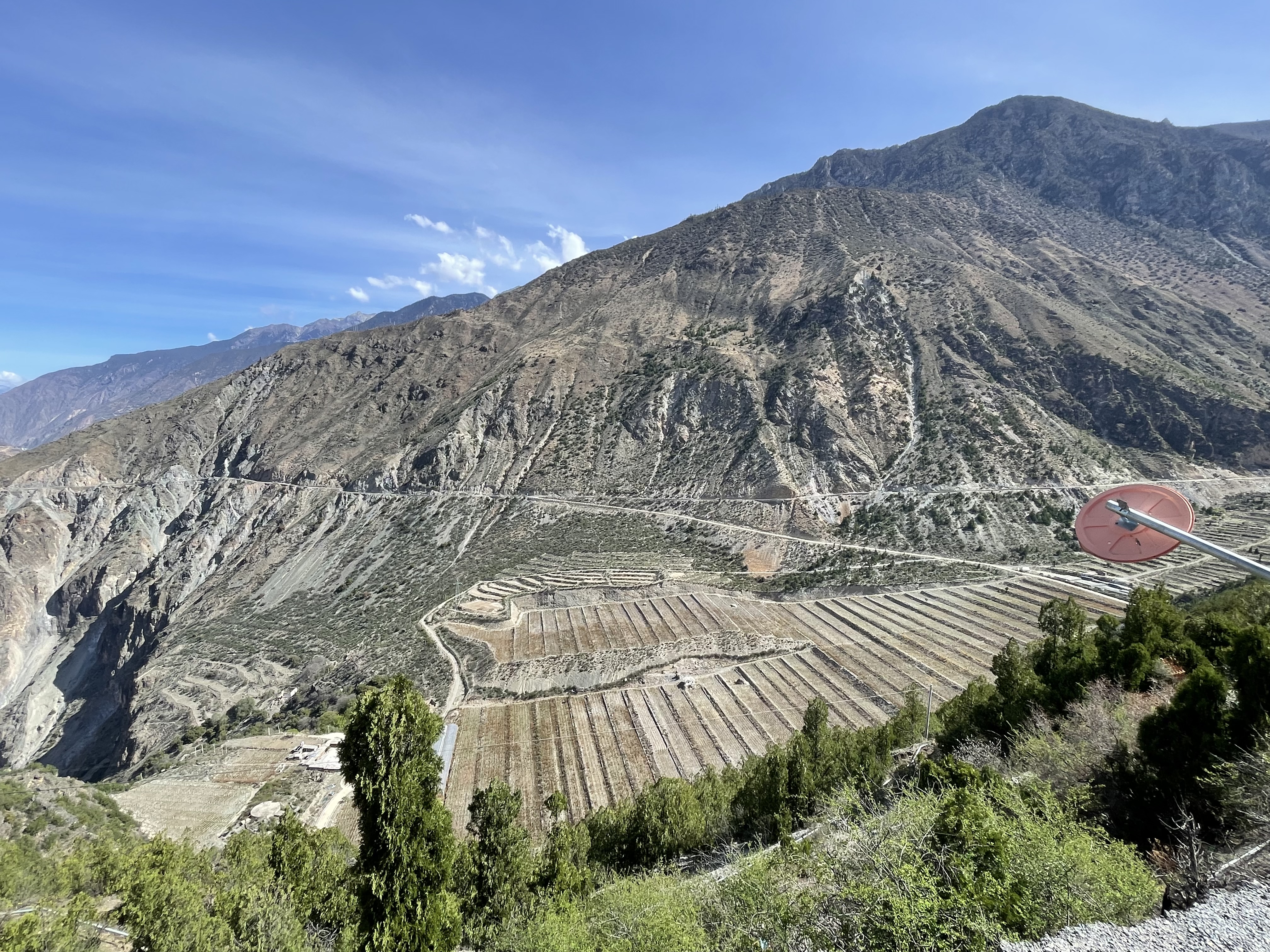
Yunlong County, Dali, sits tucked into the folds of the Hengduan Mountains. A river called the Bijiang runs through it, north to south, across the entire county. Bi — in the Bai language, the word means salt. That single character already tells you everything about the relationship between this land and its mineral history. The first time you cut open an authentic Nuodeng ham — rose-red flesh, glistening white fat, a flavour that opens fresh, then rich, then slowly sweet — you start to understand: this taste was never accidental.
Most people who know Yunlong ham attribute its quality to good climate and good pigs. But the question that experts ask is more specific: which well's salt was used? The Bijiang valley is home to five historically important brine wells — Nuodeng, Shundang, Baofeng, Dajing, and Shijing. Each well's salt has a different mineral composition. Each, combined with its own elevation and microclimate, produces a ham of a distinctly different character. This is the story of that ignored terroir secret.
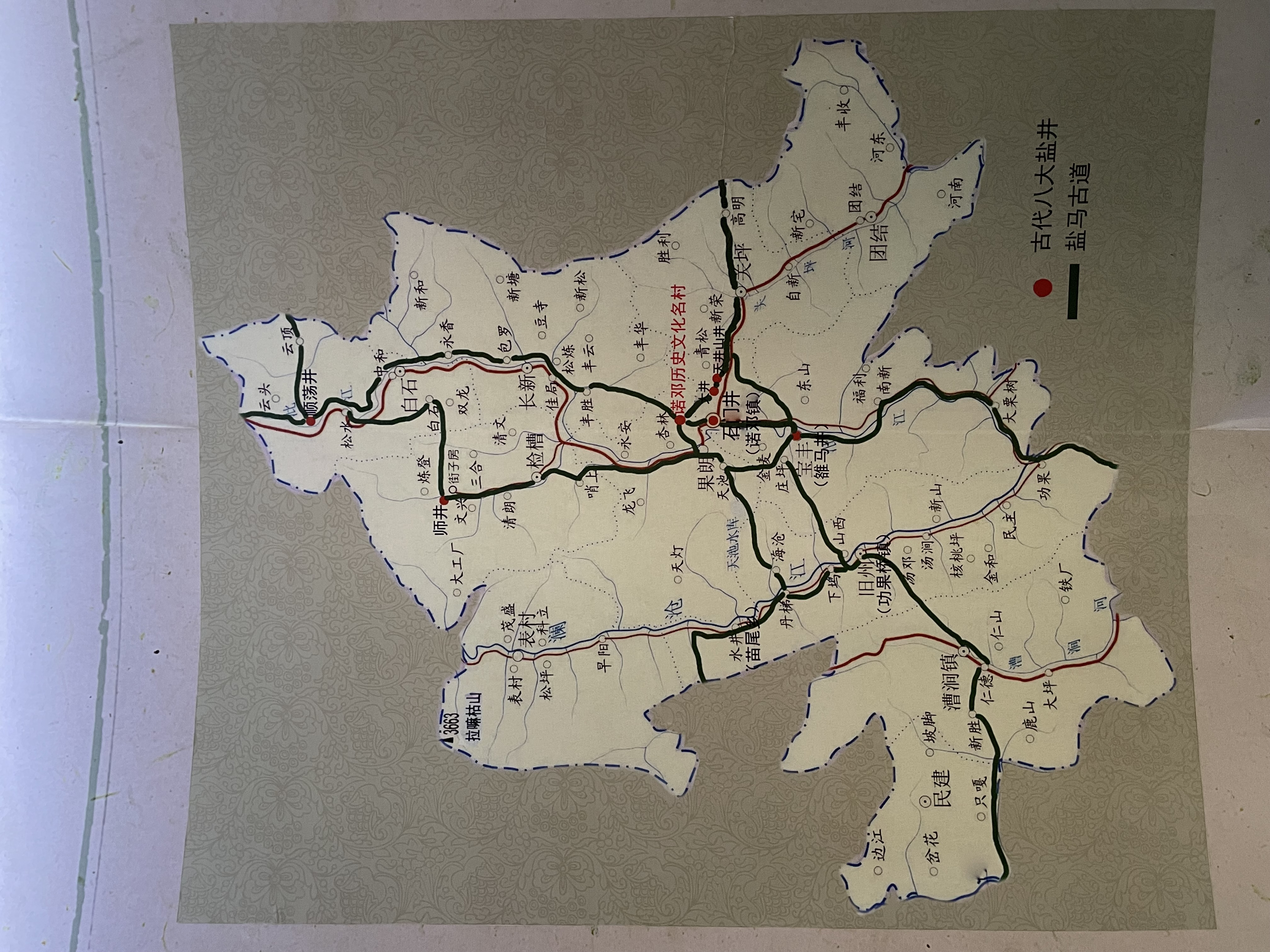
五井全覽:沿沘江的鹽業版圖
The core of Yunlong's salt industry is five wells arranged along the Bijiang valley. Tang Dynasty records already mention the Nuodeng well by name; during the Nanzhao Kingdom period, Yunlong was known as the "salt capital." The five wells run north to south, descending from 2,200 metres elevation to 1,500 metres — a significant range of microclimatic variation that directly determines how each well's salt interacts with its local terroir.
Nuodeng Well (1,900–2,100m) is the foremost of the five. It has been worked since the Han dynasty and appears in Tang dynasty documents. The deep rock brine has a sodium chloride content of only 82–85%, with potassium at 3.8–4.2% and magnesium at 1.2–1.5%, and contains no iodine. Its loose crystal structure penetrates muscle fibre evenly, and the valley's accumulated microbial ecology over a millennium creates conditions impossible to replicate elsewhere. Of the five wells, it is the only one capable of producing ham to sashimi-grade standard.
Shundang Well (2,000–2,200m), opened in the late Yuan dynasty, produces pure salt at 88–90% NaCl. Its high elevation and dry air produce a ham with clean, balanced flavour. Baofeng Well (1,600–1,800m), the seat of Yunlong's regional government for 300 years, has higher salinity and strong preservative properties; combined with the warmer, more humid lower-valley climate, it produces hams with pronounced cured character suited to long ageing. Dajing Well (1,600–1,800m), the highest-volume producer, has historically supplied the surrounding townships for everyday cooking. Shijing Well (1,500–1,700m), the southernmost and lowest, has the highest salinity (92–94% NaCl) and lowest mineral content — historically a utility-grade salt source for local households.
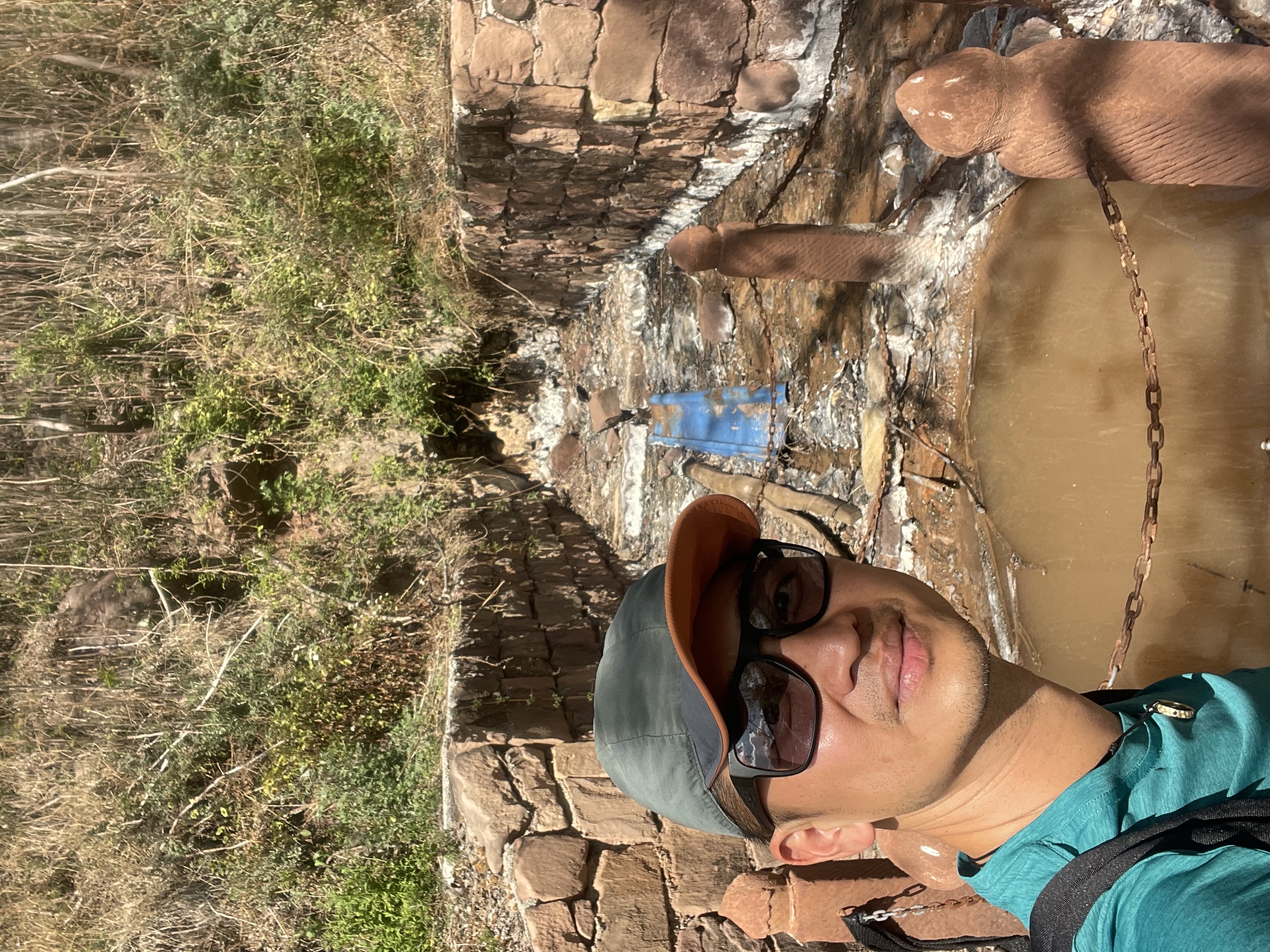
風土決定底色:海拔如何改變一條火腿
The key to understanding flavour differences across Yunlong hams is a simple geographical rule: for every 100 metres of elevation gain, air temperature falls by approximately 0.6°C and relative humidity drops by 2–3%. The two upper-valley wells — Nuodeng and Shundang, above 2,000 metres — have consistent, even conditions year-round that naturally favour slow fermentation and the gradual accumulation of complex flavour compounds. The three lower-valley wells — Baofeng, Dajing, and Shijing — operate in warmer, more humid conditions that require higher salinity to suppress spoilage quickly. The result is a faster fermentation and a more pronounced cured flavour. This is geography, not craft. It cannot be reversed.
諾鄧井之所以無可複刻,在於它的鹽質剛好完美契合當地的海拔、溫濕度、天然菌相——三者達成了閉環的完美發酵體系。哪怕把諾鄧鹽拿到寶豐去醃,溫濕度不匹配,也永遠做不出諾鄧火腿的風味。
In the wine world, this phenomenon has a name: terroir. Burgundy is not Bordeaux — not because the winemakers differ in skill, but because soil, slope, and microclimate leave an irreplicable imprint in every grape. The relationship between Nuodeng ham and other Yunlong hams is precisely this. Same pig breed, similar craft, but the mineral profile of a single well and the elevation microclimate of a single valley determines whether the final flavour reaches that astonishing depth — or merely approaches it.
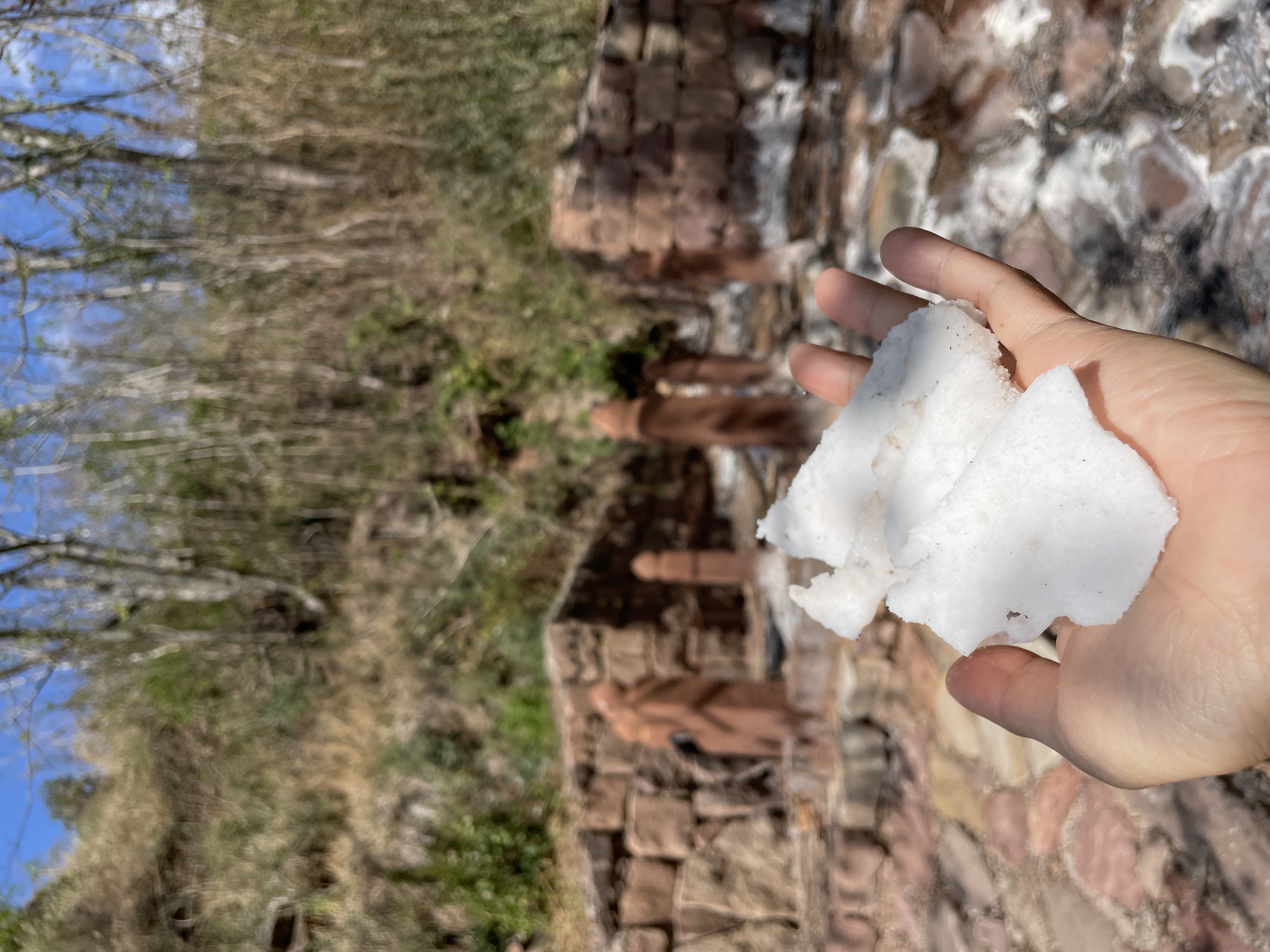
鹽井與風味:礦物組成對照
Mineral composition is the core code of flavour difference. Higher potassium and magnesium produce a softer, rounder salinity and support richer beneficial fermentation; higher sodium chloride purity gives stronger preservation but flatter flavour. The table below compares the five wells against modern refined salt:
| 鹽井來源 | 海拔 / NaCl% | 風味特徵 | 最佳食法 |
|---|---|---|---|
| 諾鄧井 ★ | 1,900–2,100m / 82–85% | 鹹溫和回甘、玫瑰紅肉色、油潤不膩、層次豐富 | 生食、清蒸、白切 |
| 順蕩井 | 2,000–2,200m / 88–90% | 鹹鮮平衡、香氣純粹清爽、肉質緊實 | 清蒸、涼拌、清炒 |
| 寶豐 / 大井 | 1,600–1,800m / 90–92% | 鹹香濃郁、臘味突出、耐嚼、保存期長 | 煲湯、燉煮、爆炒 |
| 師井 | 1,500–1,700m / 92–94% | 鹹味偏重、風味單一、大眾實用 | 烹飪調味、加工食品 |
| 現代精製鹽 ✗ | — / 99%+ | 鹹味尖銳、無層次、肉質硬黑、香氣缺失 | 不建議醃製火腿 |
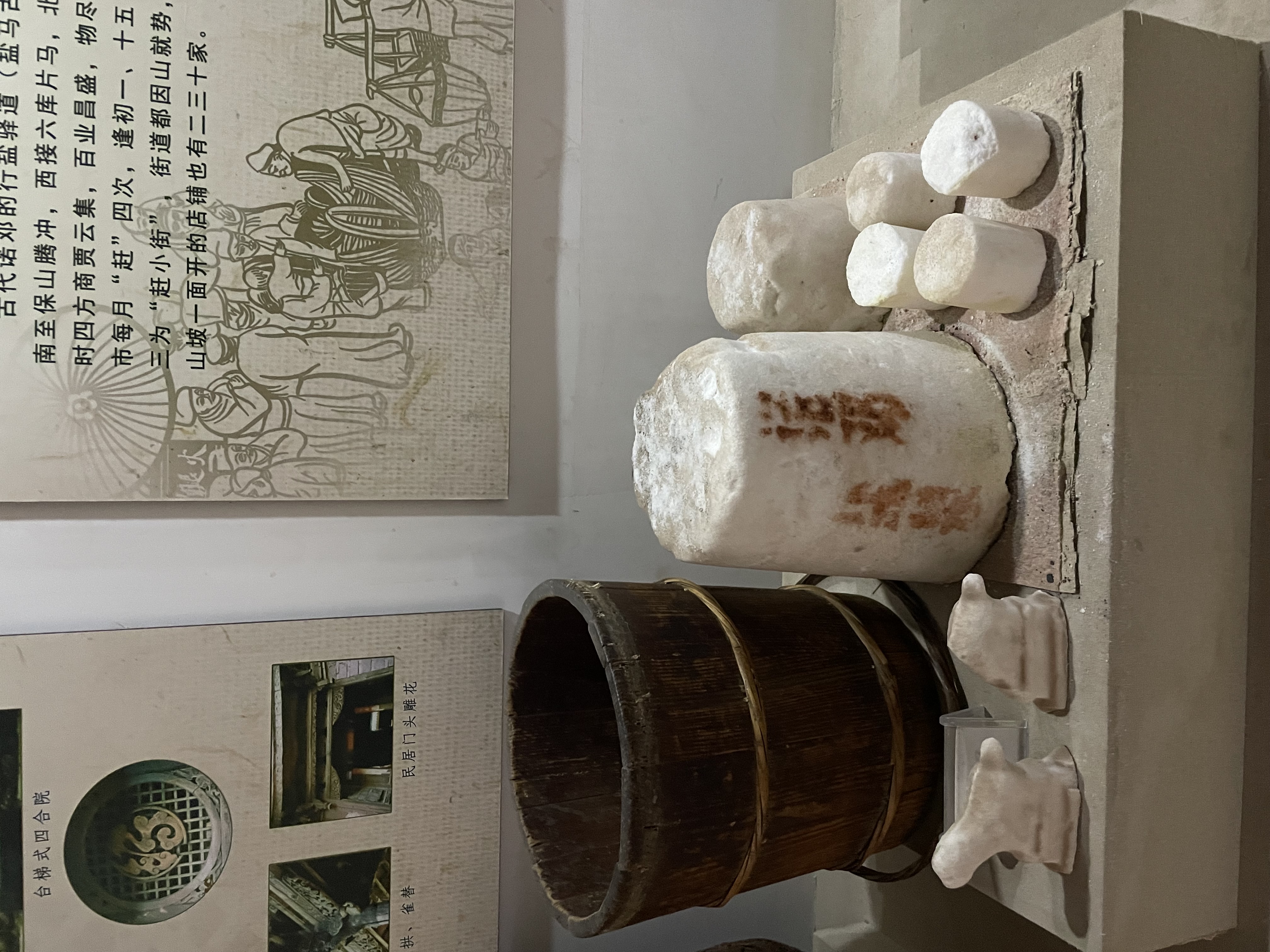
工藝:鹽只是第一步
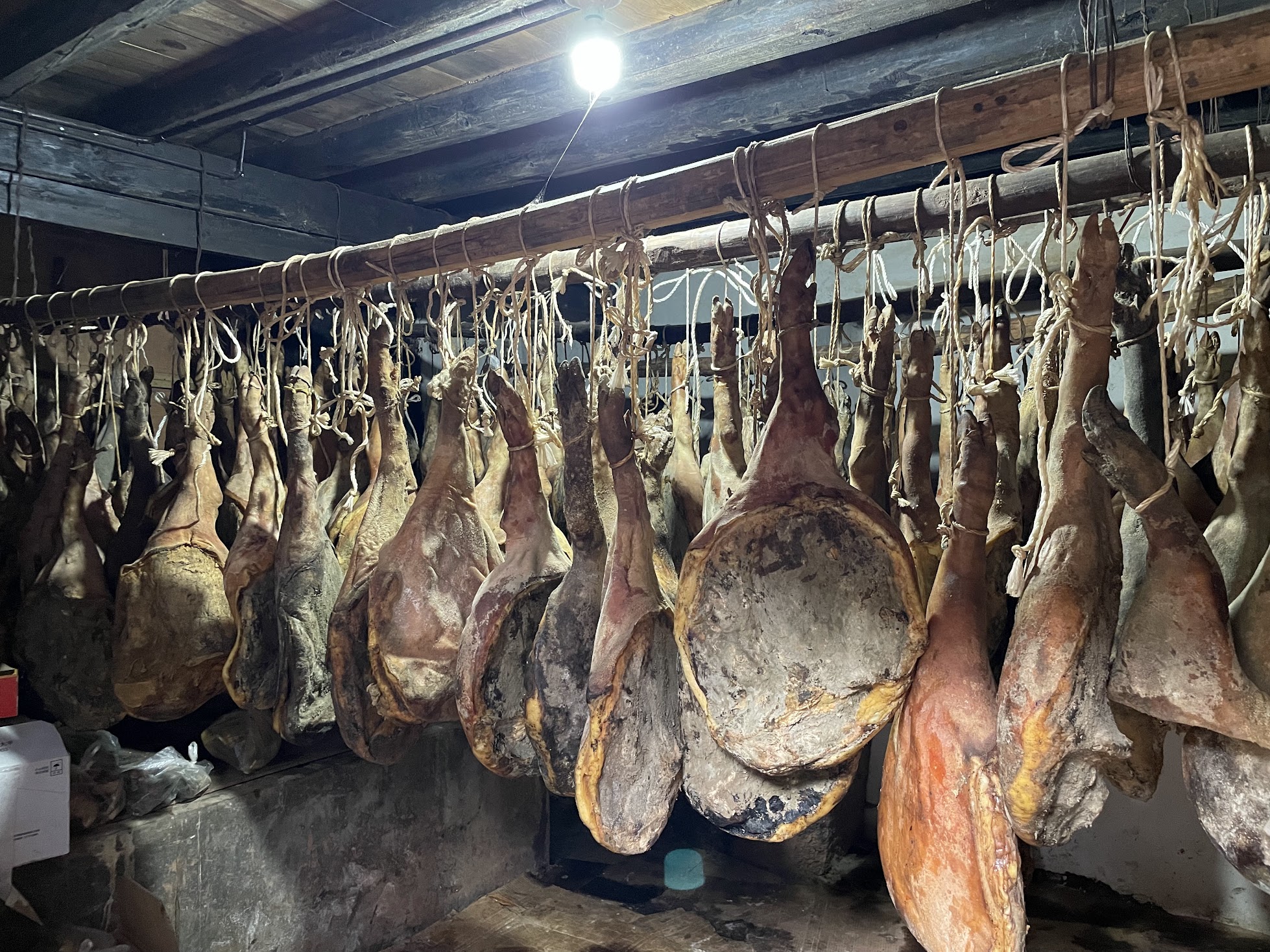
The making of top-grade Nuodeng ham follows a precise seasonal schedule. The optimal curing window falls between the winter solstice and the Beginning of Spring — temperatures low, air dry. The process: first, spray the leg with local corn spirit (baijiu distilled from maize), which serves as both disinfectant and penetration aid. Then hand-rub Nuodeng well salt into every surface, stack and press the legs, and allow the salt to penetrate each fibre — a process requiring 40–60 days. (Other well areas require only 20–30 days, which itself reflects Nuodeng salt's slow, even penetration characteristic.) The cured legs are then washed, dried, and hung to age in the high-altitude, low-temperature mountain air — a minimum of two years, reaching flavour peak at three to five.
A Nuodeng ham aged 24–36 months has completed extensive protein hydrolysis and fat oxidation internally, producing large quantities of glutamic acid (the source of its sweetness), oleic acid (its richness), and complex ester aromatics — reaching sashimi-grade quality for direct consumption without cooking. Of all five well areas in Yunlong, this is the only one capable of this standard. A ham that requires three years of waiting before it can be cut is not extravagance. It is the natural timeline of biochemistry.
選購指南:如何辨別哪口井的鹽
Products sold under the name "Yunlong ham" vary enormously in quality. What determines quality is not the packaging, but the answers to three questions: which well's salt was used? How long was it aged? What breed of pig?
Top grade: Explicitly labelled as from Nuodeng village (not simply "Yunlong County"), cured with Nuodeng well salt by traditional method, aged 24–36 months. Suitable for direct consumption without cooking; mild salt character; rose-red flesh. Clean and elegant: Shundang well salt, aged 12–18 months; pure aroma, suited for steaming or cold preparations. Everyday cooking: Baofeng or Dajing salt, aged 12+ months; pronounced cured character, excellent for soups and stir-fry. Caveat: Any product labelled only as "Yunlong ham" without specifying the well source or ageing duration is likely cured with industrial refined salt — a different category entirely.
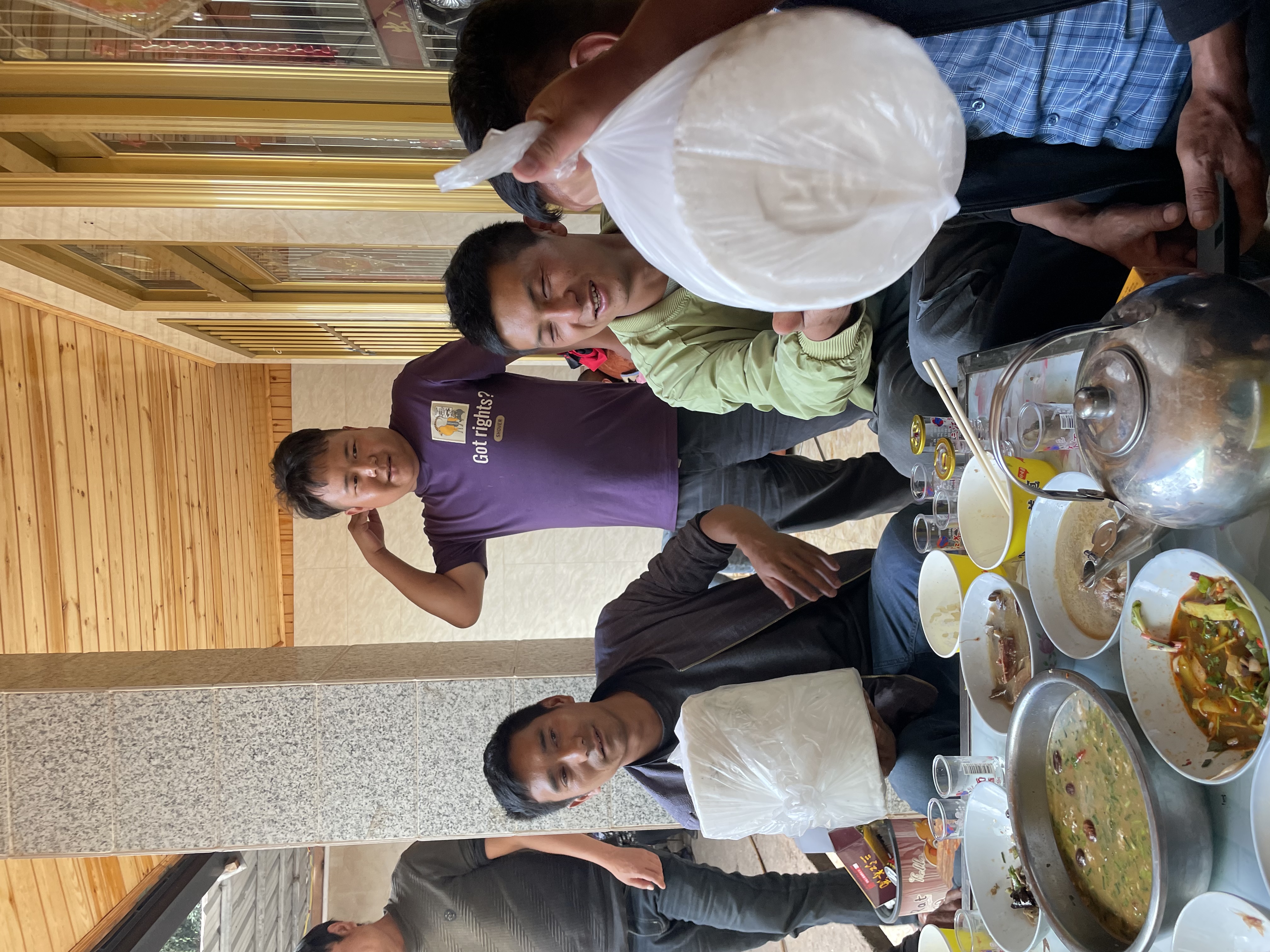
The Nuodeng ham GutCommon sources is explicitly from Nuodeng village, cured with Nuodeng well salt, and aged 36 months. Every time we visit Yunlong, we eat at the producer's table — not for the photograph, but because that table is where you truly understand where this ham comes from. To learn more, visit our Nuodeng ham page, or read our deep-dive on Nuodeng terroir.