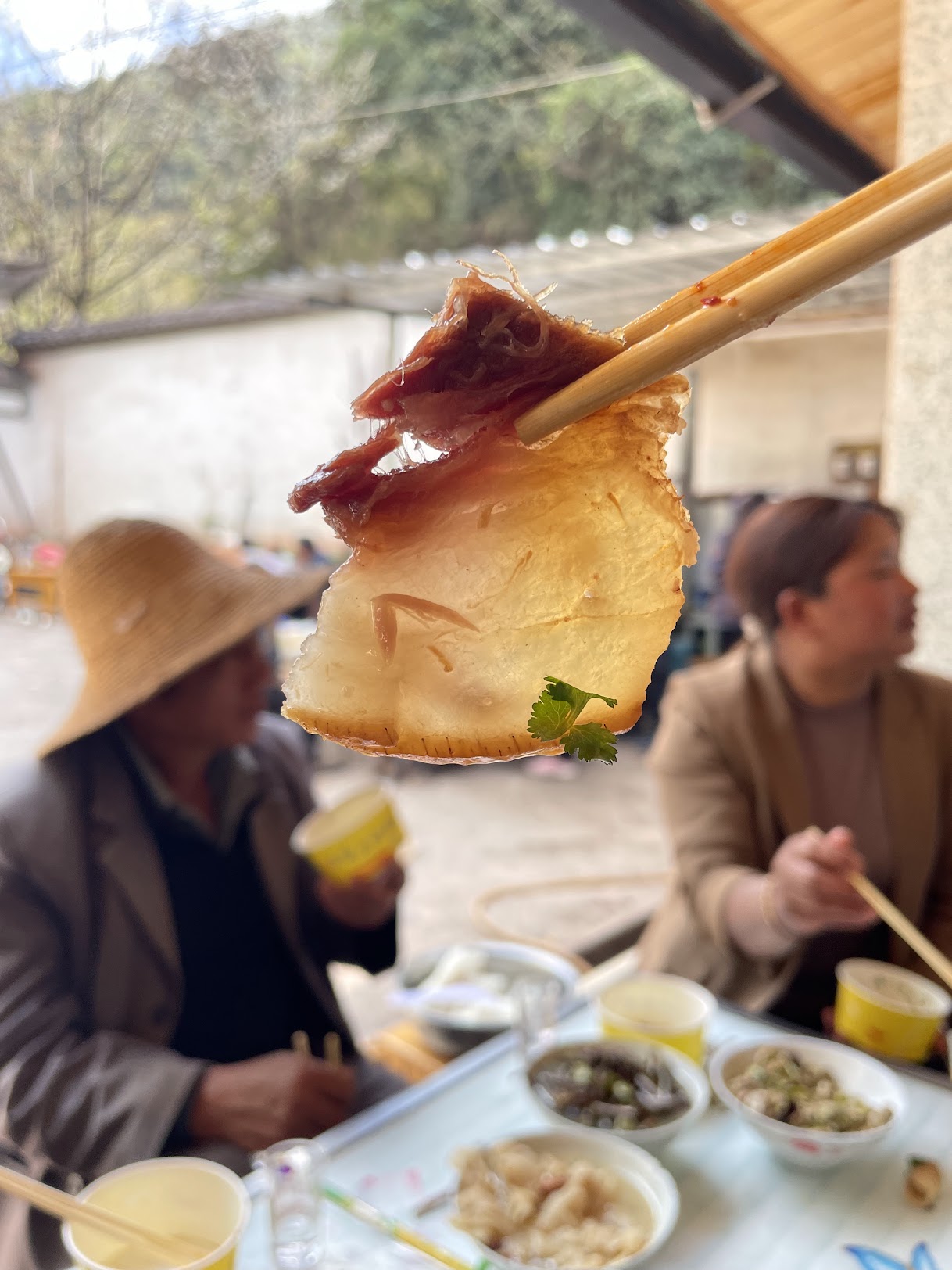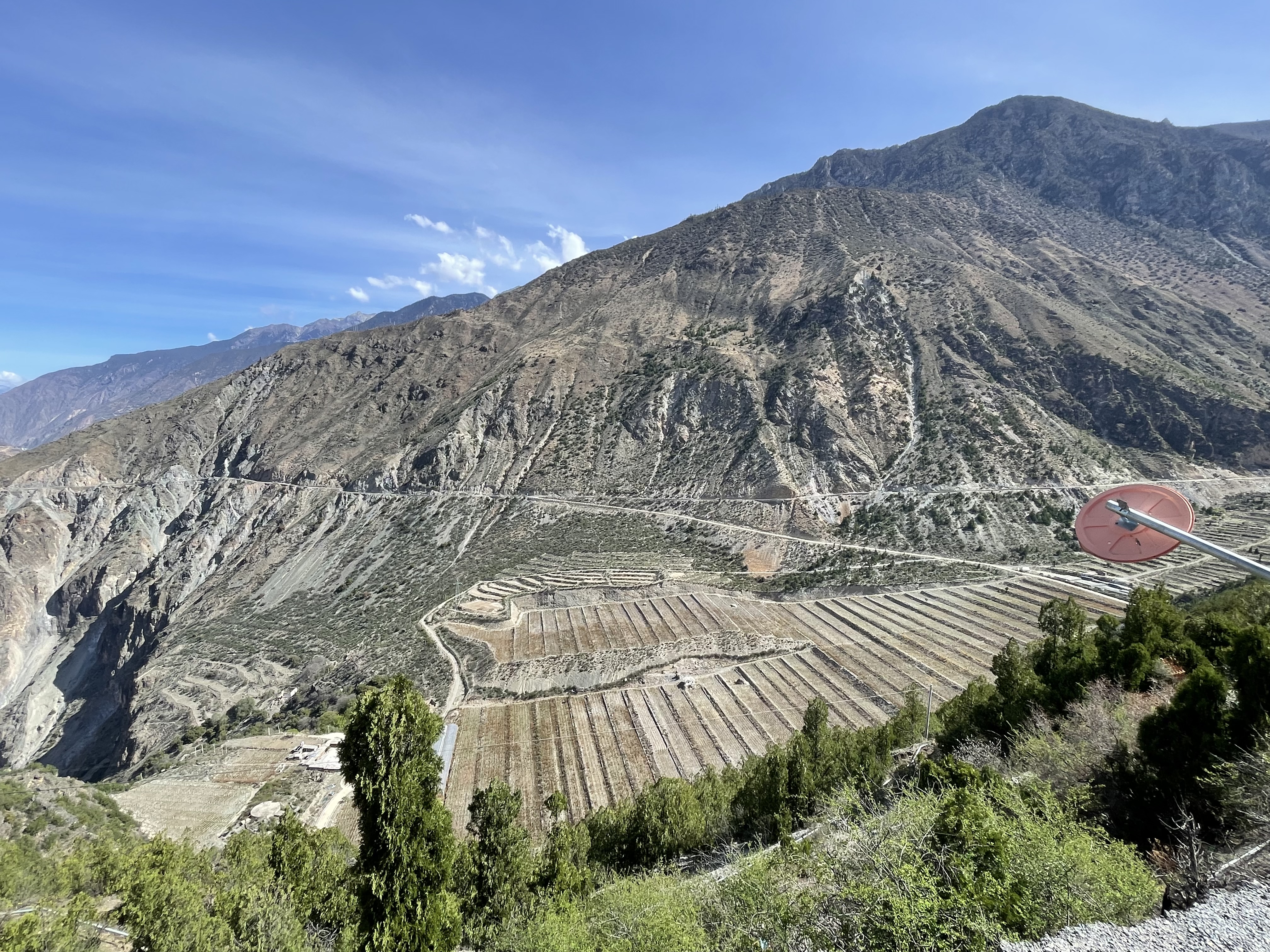
大理雲龍,藏在橫斷山脈的褶皺裡,一條叫做沘江的河流,由北至南貫穿整個縣境。沘,白族語意為「鹽」——光是這個字,已經道盡了這片土地與鹽的千年情緣。當你第一次切開一條正宗的諾鄧火腿,肉色呈玫瑰紅,油脂雪白晶瑩,入口先鮮、後潤、再回甘,層次豐富到令人愕然,你會開始明白:這個滋味,從來不是偶然。
Yunlong County, Dali, sits tucked into the folds of the Hengduan Mountains. A river called the Bijiang runs through it, north to south. Bi — in the Bai language, the word means salt. That single character already tells you everything about this land's thousand-year relationship with its mineral history. The first time you cut open an authentic Nuodeng ham — rose-red flesh, glistening white fat, a flavour that opens fresh, then rich, then slowly sweet — you start to understand: this taste was never accidental.
大多數人知道雲龍火腿靠的是好氣候、好豬種。但真正令行家發問的問題是:用了哪口井的鹽?沘江流域保存著歷史上最著名的「五井」——諾鄧、順蕩、寶豐、大井、師井——每一口井的鹽,礦物組成各異,配合各自的海拔微氣候,孕育出截然不同風格的火腿。這篇文章,就是要把這個被忽略的風土秘密,一次說清楚。
Most people attribute the quality of Yunlong ham to good climate and good pigs. But the question experts ask is more specific: which well's salt was used? The Bijiang valley holds five historically important brine wells — Nuodeng, Shundang, Baofeng, Dajing, and Shijing. Each has a different mineral composition. Each, combined with its elevation microclimate, produces a ham of a distinctly different character. This article tells that overlooked story in full.
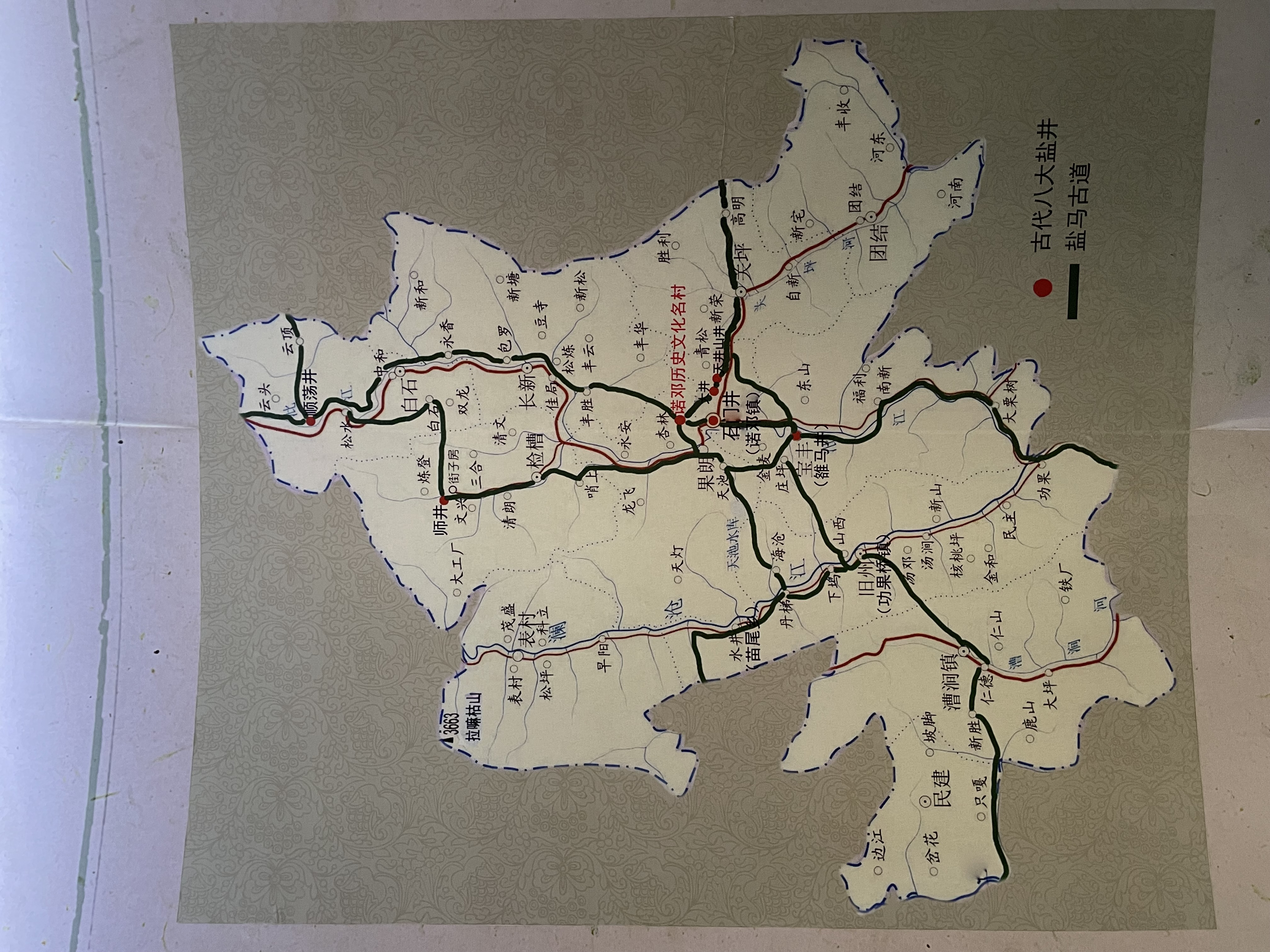
五井全覽:沿沘江的鹽業版圖
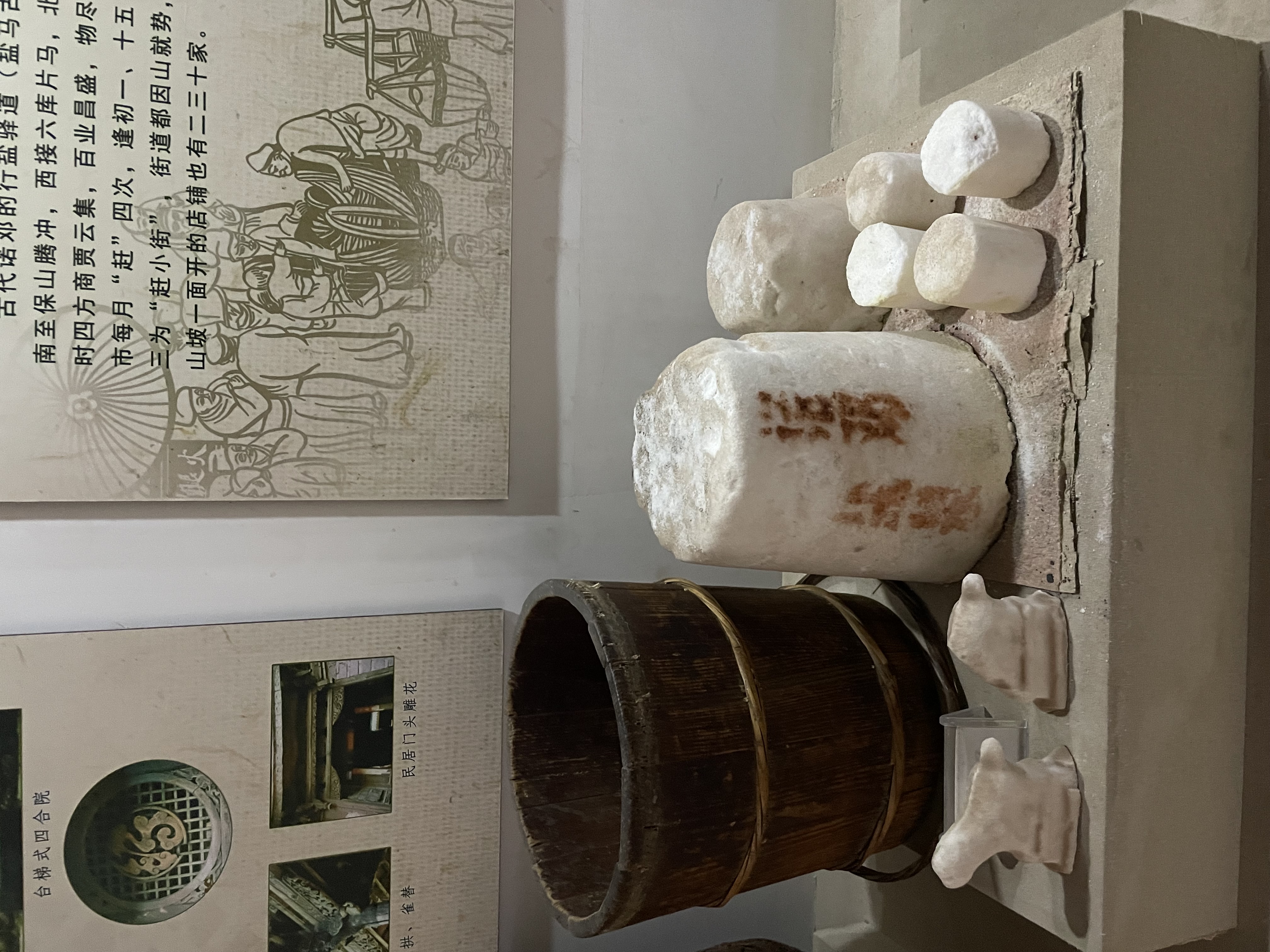
雲龍鹽業的核心,是沿沘江河谷一字排開的「五井」。唐代史料已有「細諾鄧井」的記載,南詔時期雲龍更被稱為「鹽都」。五井由北至南,海拔由2,200米降至1,500米,微氣候差異顯著,直接決定了每口井的鹽如何與當地風土協同作用。
The five wells are arranged along the Bijiang valley. Tang dynasty records already mention Nuodeng well by name; Yunlong was called the "salt capital" during the Nanzhao Kingdom. Running north to south, the wells descend from 2,200 metres to 1,500 metres — a significant microclimate range that directly determines how each well's salt interacts with its local terroir.
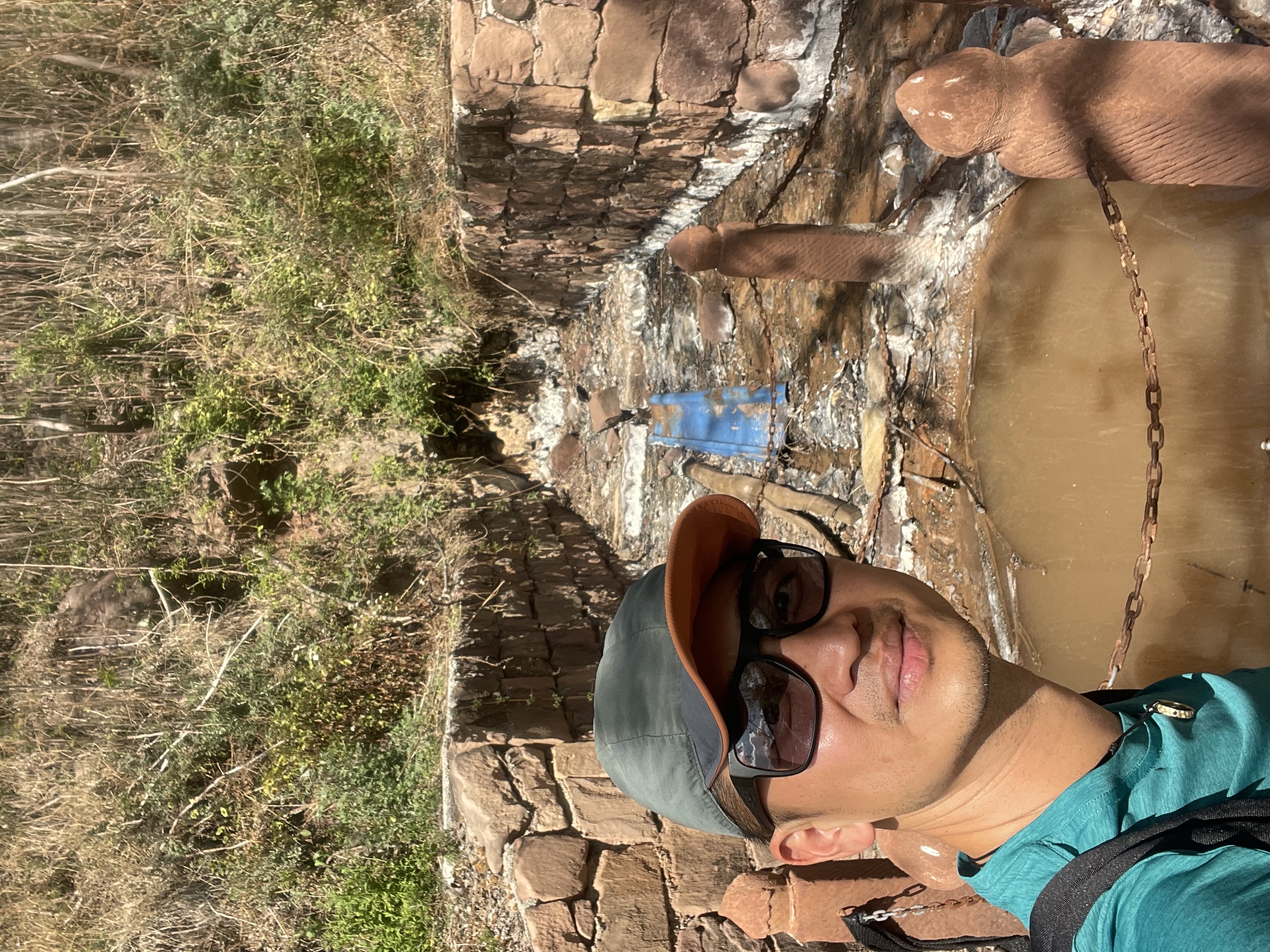
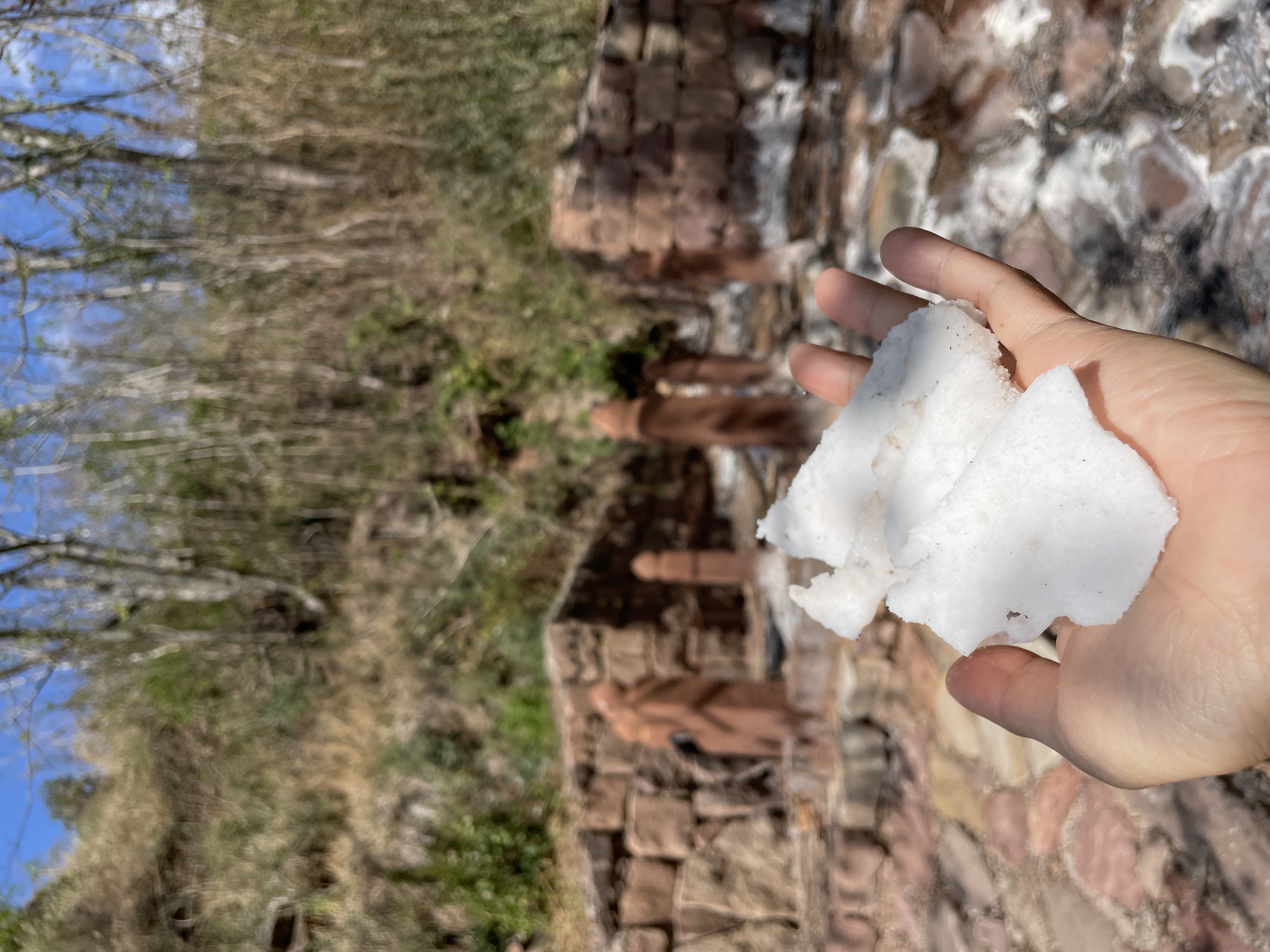
諾鄧井(海拔1,900–2,100米)是五井之首,漢代已開採,唐代已有文獻記載。深井岩鹽,氯化鈉含量僅82–85%,鉀含量高達3.8–4.2%,鎂含量1.2–1.5%,完全不含碘。晶體疏鬆,滲透壓均勻,能均勻滲透豬腿每一縷肌纖維。其所在河谷盆地積累千年的特有有益菌相,是不可複刻的核心優勢。這是五井中唯一可達到頂級生食標準的產區。
Nuodeng Well (1,900–2,100m) is the foremost of the five, worked since the Han dynasty, documented in Tang records. Its deep rock brine has sodium chloride of only 82–85%, with potassium at 3.8–4.2% and magnesium at 1.2–1.5%, and no iodine. Its loose crystal structure penetrates muscle fibre evenly. The valley's accumulated microbial ecology over a millennium creates conditions impossible to replicate. It is the only one of the five capable of producing ham to sashimi-grade standard.
順蕩井(海拔2,000–2,200米)元末開鑿,鹽質純淨,氯化鈉88–90%,成品香氣清爽純粹,鹹鮮平衡出色。寶豐井(海拔1,600–1,800米)曾為雲龍州治所在地長達300年,鹽度偏高,防腐能力強,配合中下游高溫濕熱環境,成品臘味濃郁。大井(海拔1,600–1,800米)明代開鑿,產量最大,是雲龍本地日常烹飪用腿的主要來源。師井(海拔1,500–1,700米)五井中海拔最低,鹽度最高(氯化鈉92–94%),礦物質含量最低,歷史上作為周邊鄉鎮的民用食鹽補充點。
Shundang Well (2,000–2,200m): pure, clean salt at 88–90% NaCl; balanced flavour, excellent for steaming or cold preparations. Baofeng Well (1,600–1,800m): higher salinity, strong preservation; the warmer lower-valley climate produces hams with pronounced cured character. Dajing Well (1,600–1,800m): highest volume, historically the main source for local everyday cooking. Shijing Well (1,500–1,700m): highest salinity at 92–94% NaCl, lowest mineral content; historically a utility salt source for surrounding townships.
風土決定底色:海拔如何改變一條火腿
理解雲龍火腿風味差異的關鍵,是一條簡單的地理規律:海拔每升高100米,氣溫下降約0.6℃,相對濕度下降2–3%。上游諾鄧、順蕩兩井(海拔2,000米以上),全年恆溫恆濕、通風均勻,天然適合「慢發酵積累頂級風味」;中下游寶豐、大井、師井(海拔1,500–1,800米),溫度偏高、濕度偏大,必須依賴高鹽度快速抑菌,只能走「快發酵、重臘味」路線。這個底層邏輯,是地理環境決定的,無法人為逆轉。
The key to understanding flavour differences across Yunlong hams is a simple geographical rule: every 100 metres of elevation gain reduces temperature by ~0.6°C and humidity by 2–3%. The upper-valley wells — Nuodeng and Shundang, above 2,000 metres — have consistent, even conditions that naturally favour slow fermentation and complex flavour development. The lower-valley wells — Baofeng, Dajing, Shijing — require higher salinity to suppress spoilage in warmer, more humid conditions, producing faster fermentation and more pronounced cured character. This is geography, not craft. It cannot be engineered away.
諾鄧井之所以無可複刻,在於它的鹽質剛好完美契合當地的海拔、溫濕度、天然菌相——三者達成了閉環的完美發酵體系。哪怕把諾鄧鹽拿到寶豐去醃,溫濕度不匹配,也永遠做不出諾鄧火腿的風味。
鹽井與風味:礦物組成對照
礦物質組成是風味差異的核心密碼。鉀鎂含量越高,鹹味越溫和圓潤,有益菌發酵越充分,風味層次越豐富;氯化鈉純度越高,防腐能力越強,但風味越單一。以下是五井加現代精製鹽的關鍵對照:
Mineral composition is the core code of flavour difference. Higher potassium and magnesium produce a softer salinity and richer beneficial fermentation; higher sodium chloride purity gives stronger preservation but flatter flavour:
| 鹽井來源 | 海拔 / NaCl% | 風味特徵 | 最佳食法 |
|---|---|---|---|
| 諾鄧井 ★ | 1,900–2,100m / 82–85% | 鹹溫和回甘、玫瑰紅肉色、油潤不膩、層次豐富 | 生食、清蒸、白切 |
| 順蕩井 | 2,000–2,200m / 88–90% | 鹹鮮平衡、香氣純粹清爽、肉質緊實 | 清蒸、涼拌、清炒 |
| 寶豐 / 大井 | 1,600–1,800m / 90–92% | 鹹香濃郁、臘味突出、耐嚼、保存期長 | 煲湯、燉煮、爆炒 |
| 師井 | 1,500–1,700m / 92–94% | 鹹味偏重、風味單一、大眾實用 | 烹飪調味、加工食品 |
| 現代精製鹽 ✗ | — / 99%+ | 鹹味尖銳、無層次、肉質硬黑、香氣缺失 | 不建議醃製火腿 |
工藝:鹽只是第一步
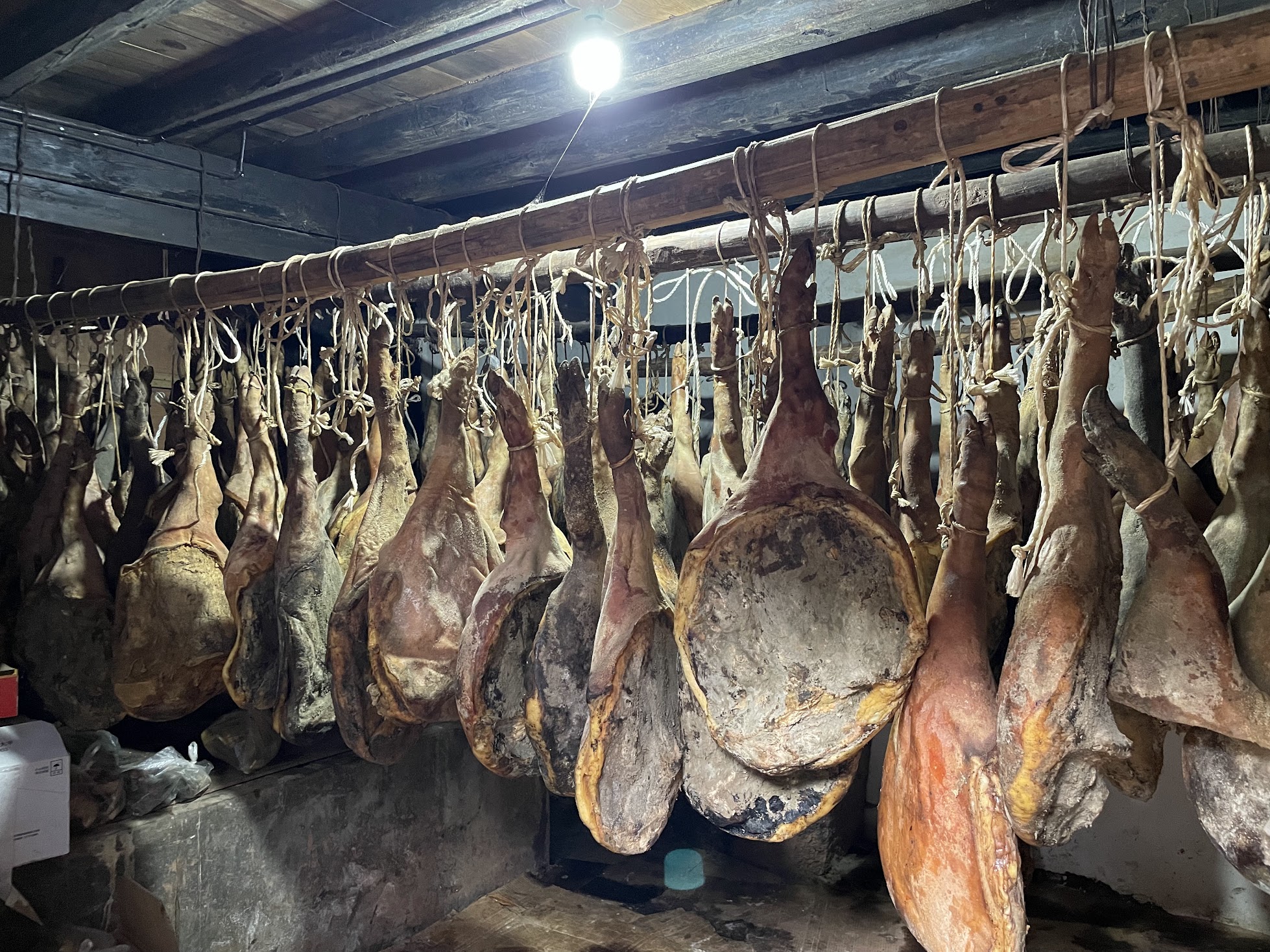
頂級諾鄧火腿的製作,有嚴格的時序講究。農曆冬至至立春之間,氣溫低、空氣乾燥,是最佳醃製窗口。工序是:先噴灑當地苞谷酒(玉米蒸餾酒),利用酒精消毒並輔助滲透;然後用手抹上諾鄧井鹽,再堆碼翻壓,讓鹽分均勻滲入每一縷肌纖維,需時40–60天。完成後經清洗、晾曬、風乾,在高海拔低溫乾燥環境中陳化,需時2–5年方達風味頂峰。
Top-grade Nuodeng ham follows a precise seasonal schedule. The optimal curing window falls between the winter solstice and the Beginning of Spring. The process: spray with local corn spirit (baijiu distilled from maize) for disinfection and penetration aid; hand-rub Nuodeng well salt into every surface; stack and press, allowing penetration of each fibre over 40–60 days. Then wash, dry, and hang to age in the high-altitude mountain air — a minimum of two years, reaching flavour peak at three to five.
陳化24–36個月的諾鄧火腿,內部已完成充分的蛋白質水解和脂肪氧化,產生大量谷氨酸(帶來鮮甜感)、油酸(帶來油潤感)和複雜的酯類香氣,達到可直接生食的水平。這是整個雲龍五井中,唯一可以做到這個標準的產區。一條需要等待三年才能切開的火腿,不是奢侈,是生物化學的自然時序。
A Nuodeng ham aged 24–36 months has completed extensive protein hydrolysis and fat oxidation, producing glutamic acid (sweetness), oleic acid (richness), and complex ester aromatics — reaching sashimi-grade quality for direct consumption. Of the five well areas, this is the only one capable of this standard. A ham that requires three years of waiting is not extravagance. It is the natural timeline of biochemistry.
選購指南:如何辨別哪口井的鹽
市面上冠以「雲龍火腿」名義出售的產品,品質參差不齊。真正決定品質高下的,不是外包裝,而是三個問題的答案:用的是哪口井的鹽?陳化了多長時間?豬是什麼品種?
Products sold as "Yunlong ham" vary enormously in quality. What determines quality is not the packaging, but the answers to three questions: which well's salt was used? How long was it aged? What breed of pig?
頂級選擇:明確標示產地為「諾鄧村」(而非泛稱「雲龍縣」)、使用諾鄧井鹽古法醃製、陳化24–36個月。可直接生食,鹽味溫和,肉色玫瑰紅。清雅風味:順蕩井鹽醃製,陳化12–18個月,香氣純粹,適合清蒸涼拌。日常烹飪:寶豐或大井鹽醃製,陳化12個月以上,臘味濃郁,煲湯爆炒效果極佳。需要注意:凡只標「雲龍火腿」、不標鹽井來源和陳化時間者,大概率使用工業精製鹽,風味和古法井鹽款不在同一層級。
Top grade: Explicitly labelled as Nuodeng village (not "Yunlong County"), Nuodeng well salt, aged 24–36 months. Suitable for direct consumption; mild salt; rose-red flesh. Clean and elegant: Shundang well salt, aged 12–18 months; pure aroma, suited for steaming or cold preparations. Everyday cooking: Baofeng or Dajing salt, aged 12+ months; pronounced cured character, excellent for soups and stir-fry. Caveat: Any product labelled only as "Yunlong ham" without specifying the well source or ageing duration is likely cured with industrial refined salt — a fundamentally different product.
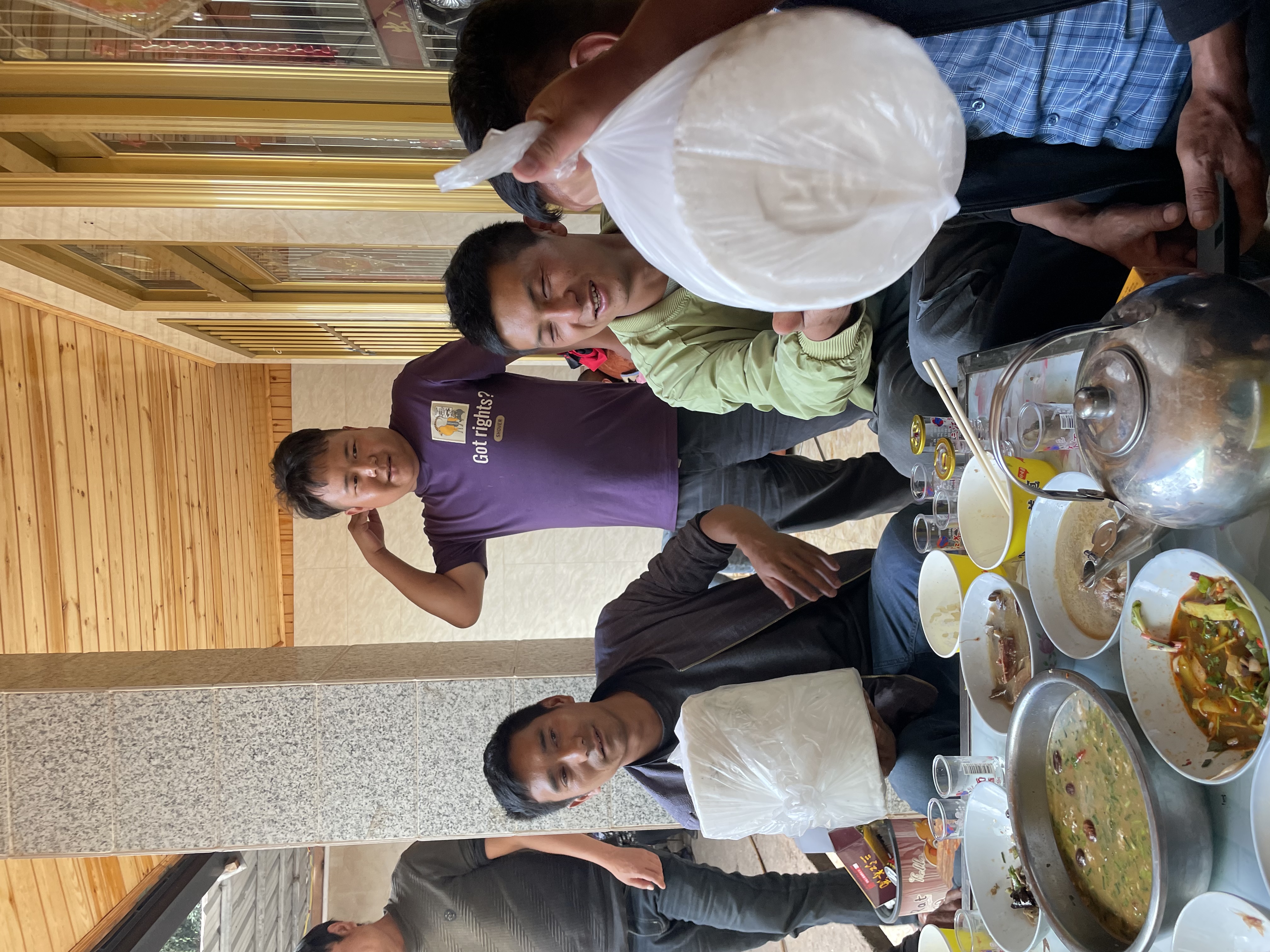
GutCommon採購的諾鄧火腿,明確來自諾鄧村、使用諾鄧井鹽、陳化36個月。我們每次到雲龍,都會坐在生產者家裡吃飯——不是為了拍照,而是因為在那張飯桌上,你才真正理解這條火腿從哪裡來。了解更多,請看我們的諾鄧火腿頁面,或閱讀關於諾鄧風土的深度文章。
The Nuodeng ham GutCommon sources is explicitly from Nuodeng village, cured with Nuodeng well salt, and aged 36 months. Every time we visit Yunlong, we eat at the producer's table — not for the photograph, but because that table is where you truly understand where this ham comes from. Learn more at our ham page, or read our piece on Nuodeng terroir.