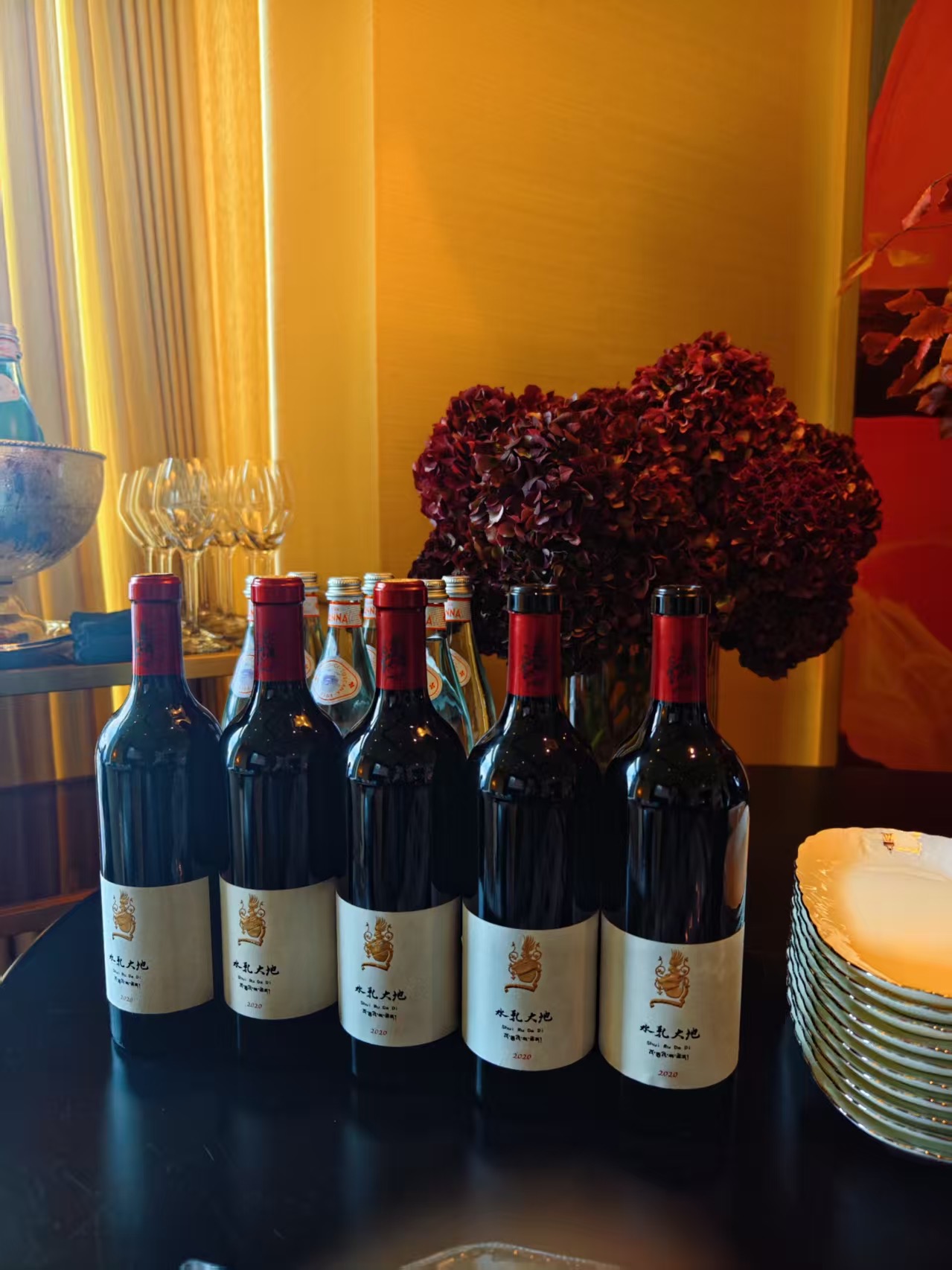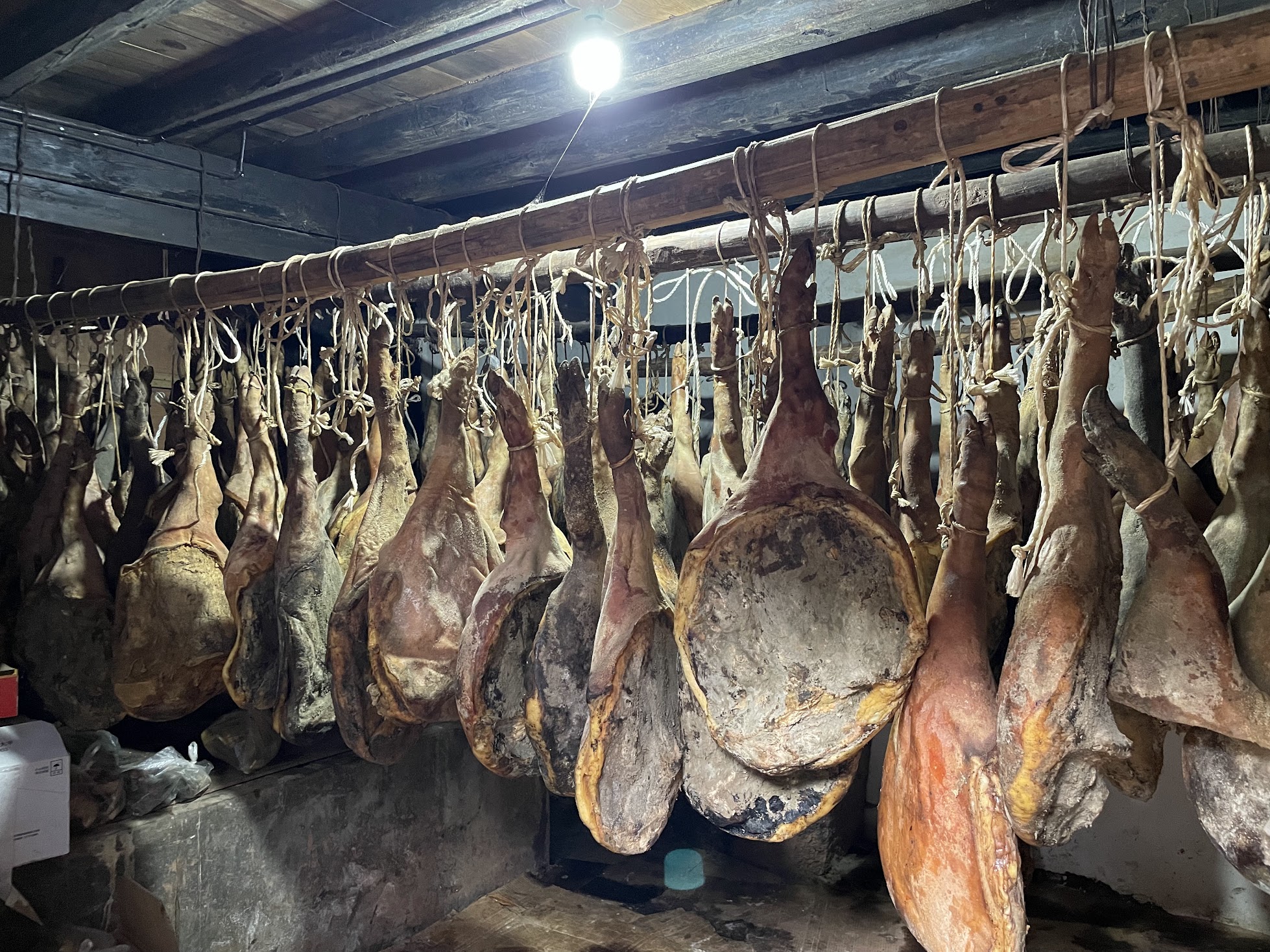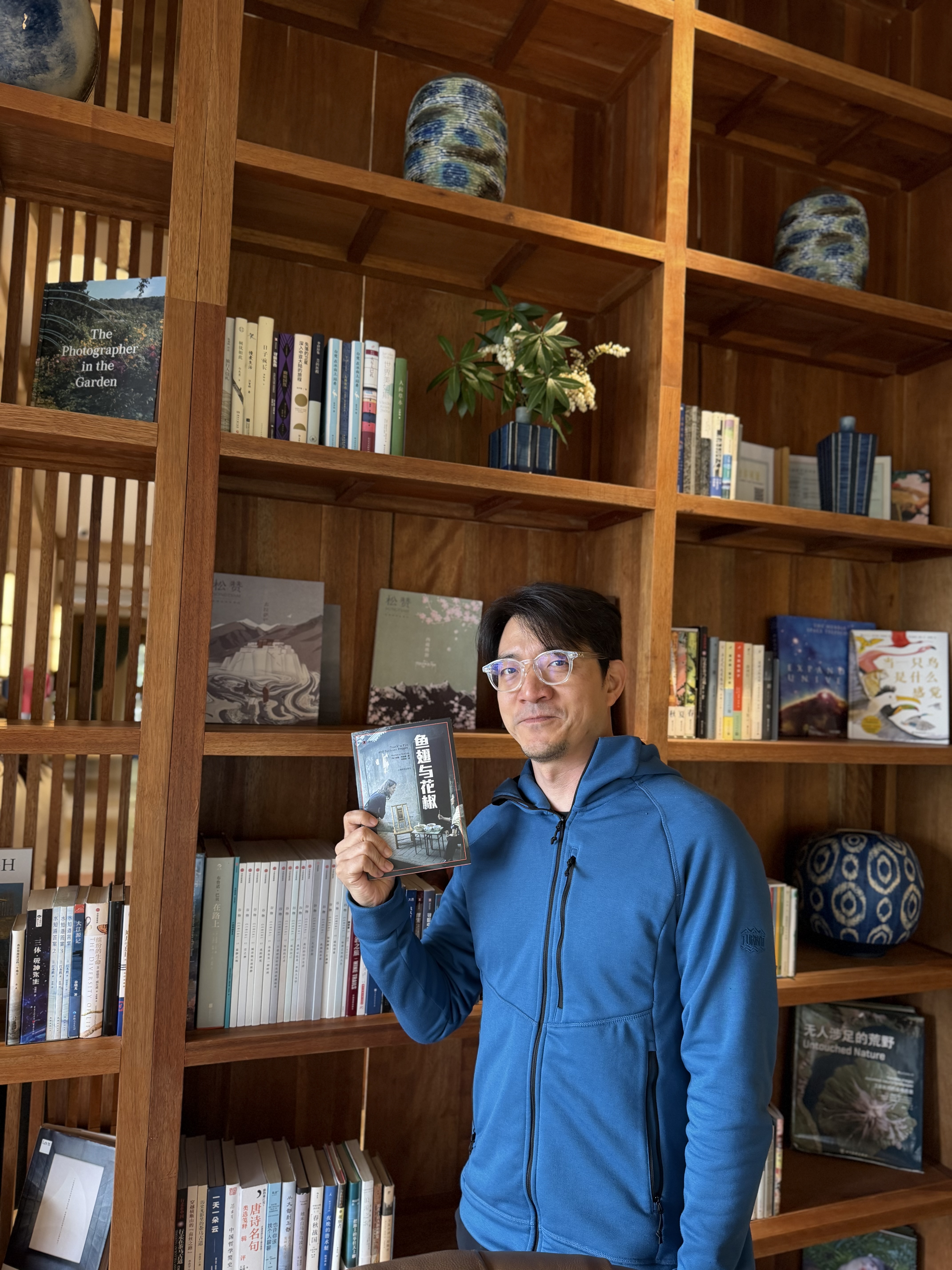
From the mystery winery we drove down toward Benzilan, destination 朵木杦庄. The full address is: Tongduo Group, Yujie Village, Benzilan Town, Deqin County, Diqing Tibetan Autonomous Prefecture, Yunnan. I read it aloud once to confirm I could pronounce it, then kept driving.
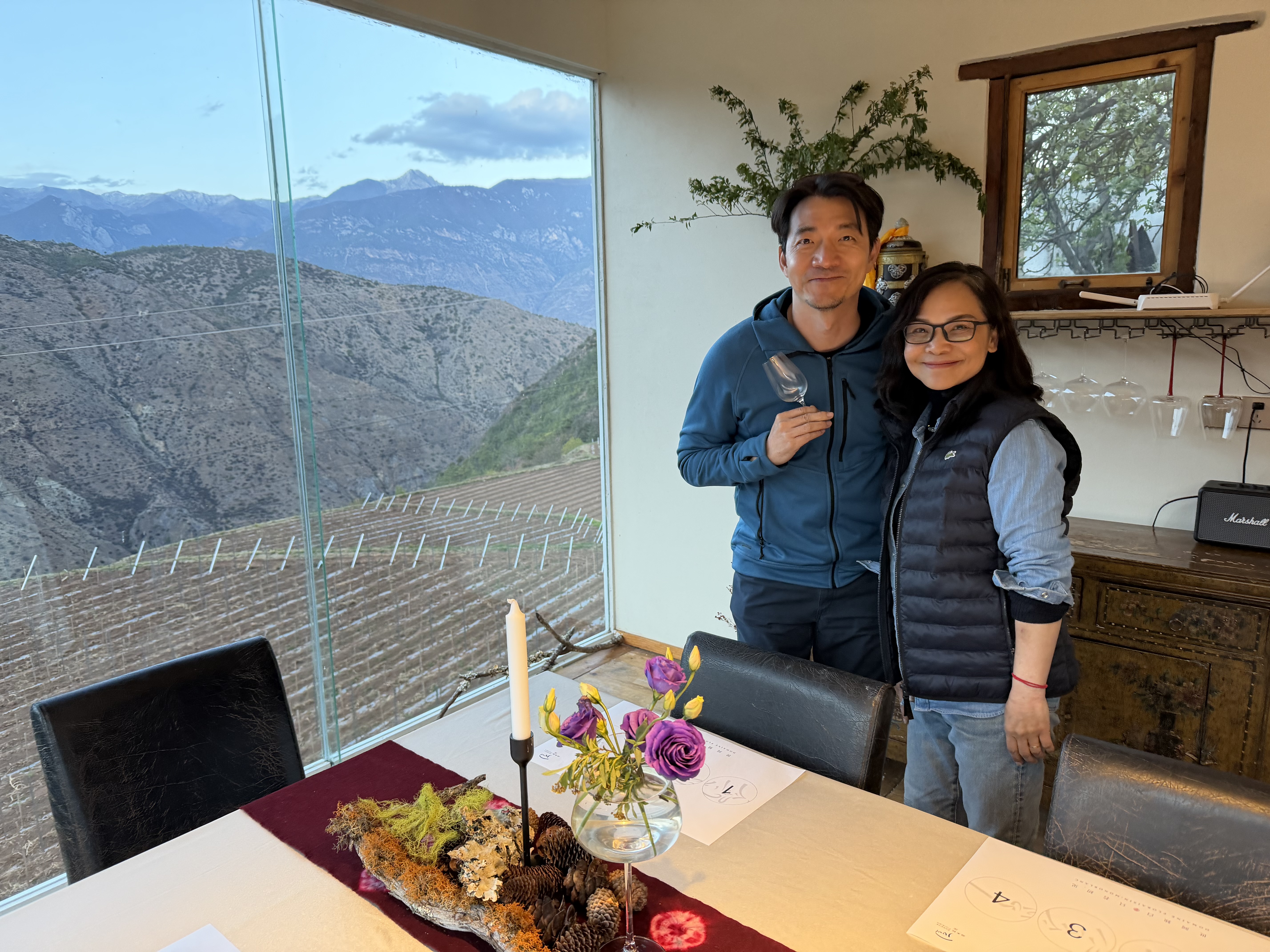
Lily and her partner 次姆 met us at the roadside. Lily is the founder of 朵木杦庄. She led us into the tasting room. One wall was almost entirely glass, facing the Benzilan valley — terraced fields, vineyard rows, snow peaks in the distance — the most complete landscape I had seen in the whole of Deqin County.
The Duomu story is a genuine bet. Lily found this abandoned ancient Tibetan house — one of the last well-preserved traditional timber structures in the Benzilan valley — and decided to convert it into a winery. Not a museum, not a homestay, but a place of production: a winery with its own winemaking logic rooted in this land. At the time, not everyone around her understood the decision.
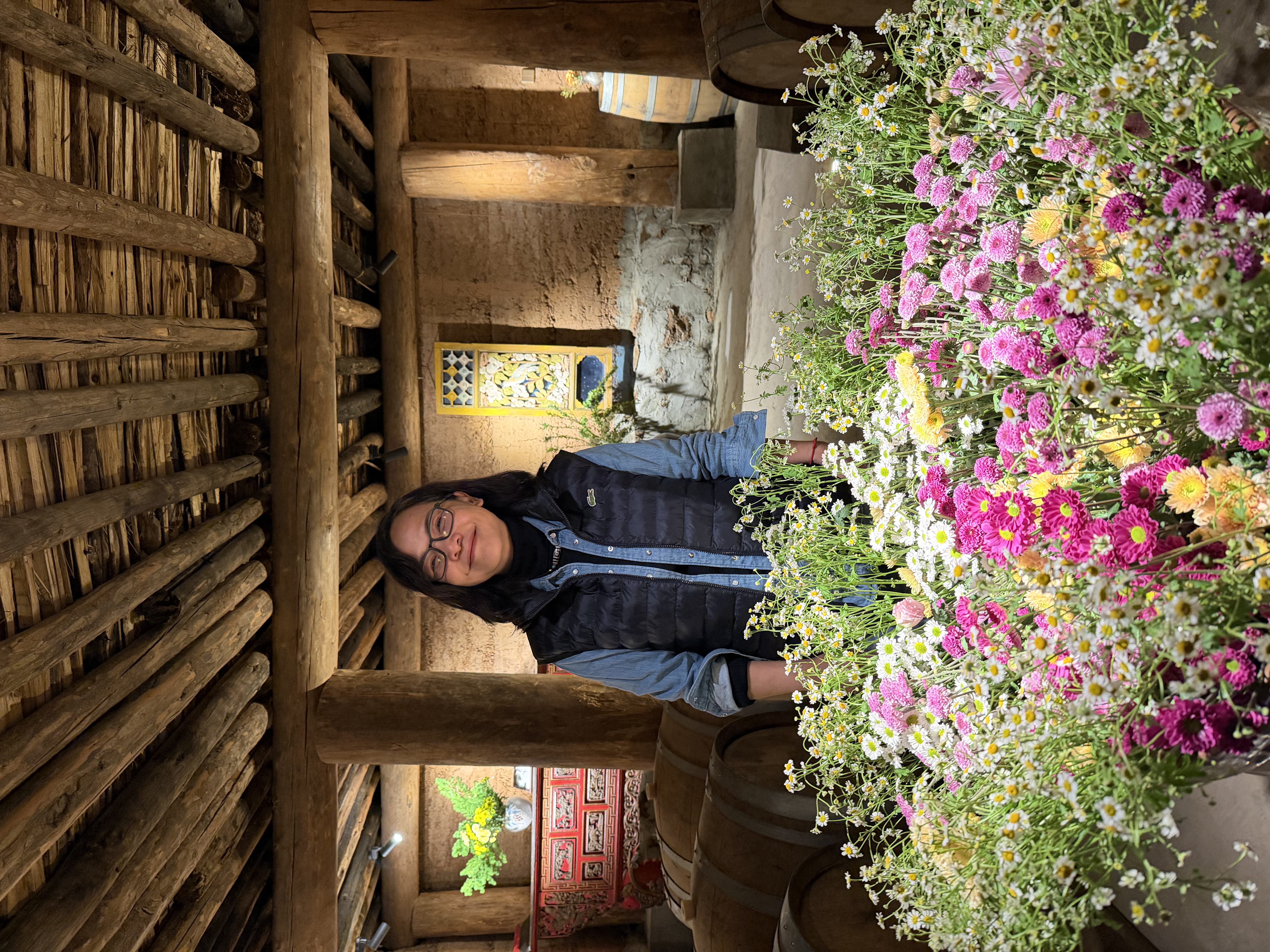
She told me the story of the original house owner. He was the first person in the Benzilan valley to carry mountain herbs long distances out to sell in external markets. In his time, this was something no one had done. People around him doubted him, laughed at him, said it would not work. It worked. He became one of the first in this valley to connect it to the outside world. Lily saw herself in him. I saw the same thing in Lily.
The timber in this ancient house is several hundred years old. What accumulates in old timber structures is not only time but microbiome. The surfaces of old stone and old wood have been documented to harbour unique fungal and bacterial communities absent from modern buildings — communities formed through generations of food production, fermentation, and storage. In a new winery built with modern materials, you start with a blank microbial slate and have to build from zero. In a several-hundred-year-old house, that environment is already there.
Lunch was cooked by Lily. Genuine Yunnan cuisine — not the imitation of Yunnan food made for outsiders, but the real thing, built around the seasonal ingredients of this place. After a week of Tibetan flavours, this meal felt like a recalibration.
Duomu cannot be found online. Reservations come only by word of mouth. Lily told me she has slowly begun to receive visitors from around the world who take wine seriously. She is not in a hurry. She said: this place needs visitors who know why they have come here.
The next morning, Lily and 次姆 took us up the mountain. She warned us beforehand: Asian black bears and wolves in the forest, pay attention. I asked if she was serious. She said yes, completely serious, but she knew the route and knew where to look for signs of animals — just stay close. This was the first time someone had led me into a forest with that kind of instruction.
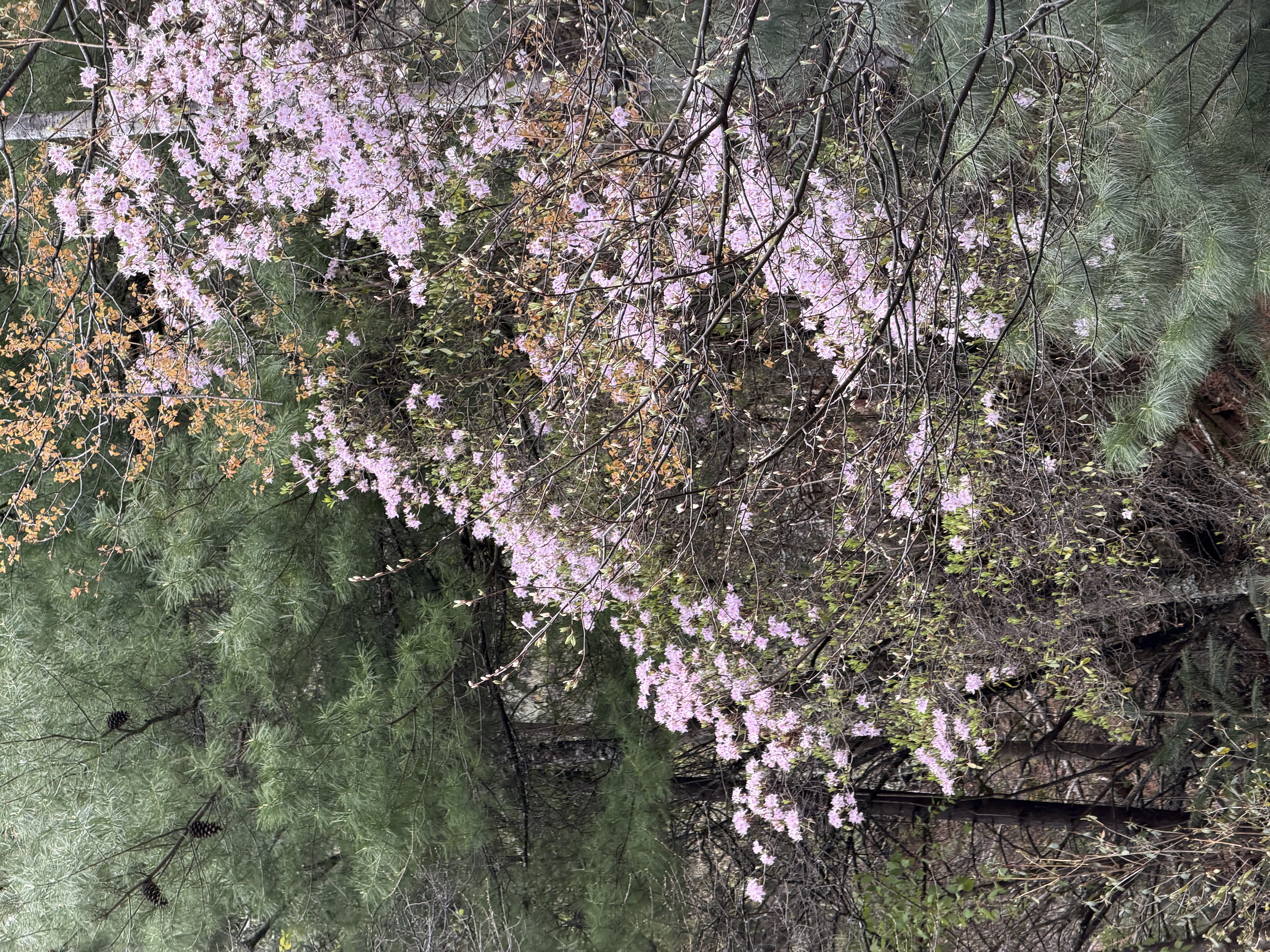
The flowers on the mountain were pink, blooming in wide patches among the pine trees. I asked Lily whether they were rhododendrons or wild cherry. She thought for a moment and said she was not certain — probably both. I decided not to investigate further and let them bloom.
High-altitude plants are the medicinal library of traditional Tibetan medicine. Many of them contain high concentrations of antioxidant and antimicrobial compounds that cannot form at lower altitudes — these are the protective mechanisms they build for survival under intense UV and extreme temperature. Human beings learned to harvest and use them over hundreds, if not thousands, of years. The wild herbs in the traditional Tibetan diet provide prebiotics and phytochemicals almost entirely absent from the modern diet, directly affecting gut microbiome diversity.
Coming down from the mountain, Lily brought us to a house that was being celebrated. A family in the village had just moved into their newly built house — an event of significance for everyone in the Benzilan valley, and surrounding villages had all come.
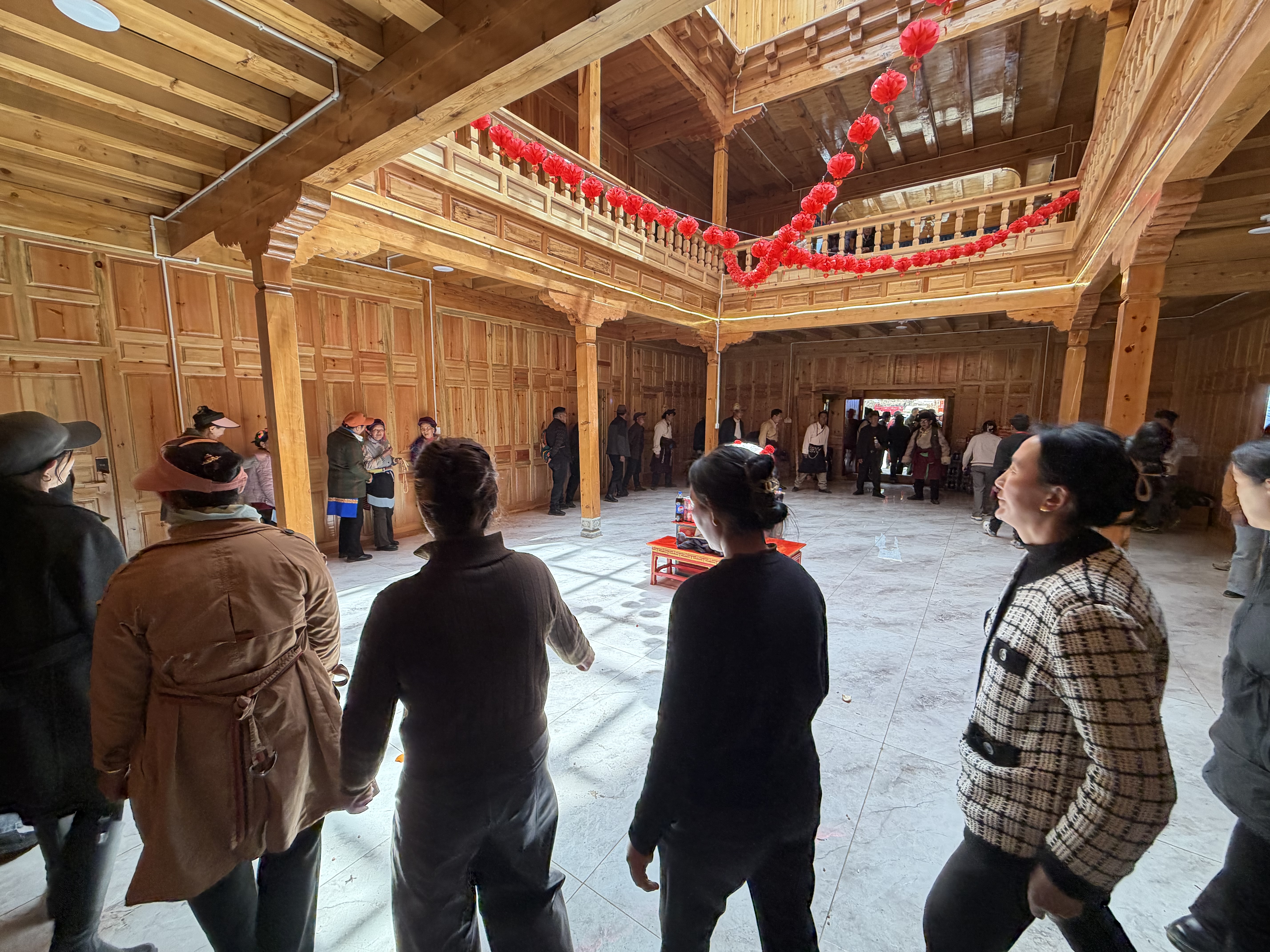
The interior of the house was beyond what I had expected. Red lanterns hung from the upper gallery. Fresh timber filled the air with the smell of pine resin. The carpentry throughout the building had a precision and care that made it less like an ordinary village house and more like a serious piece of work.
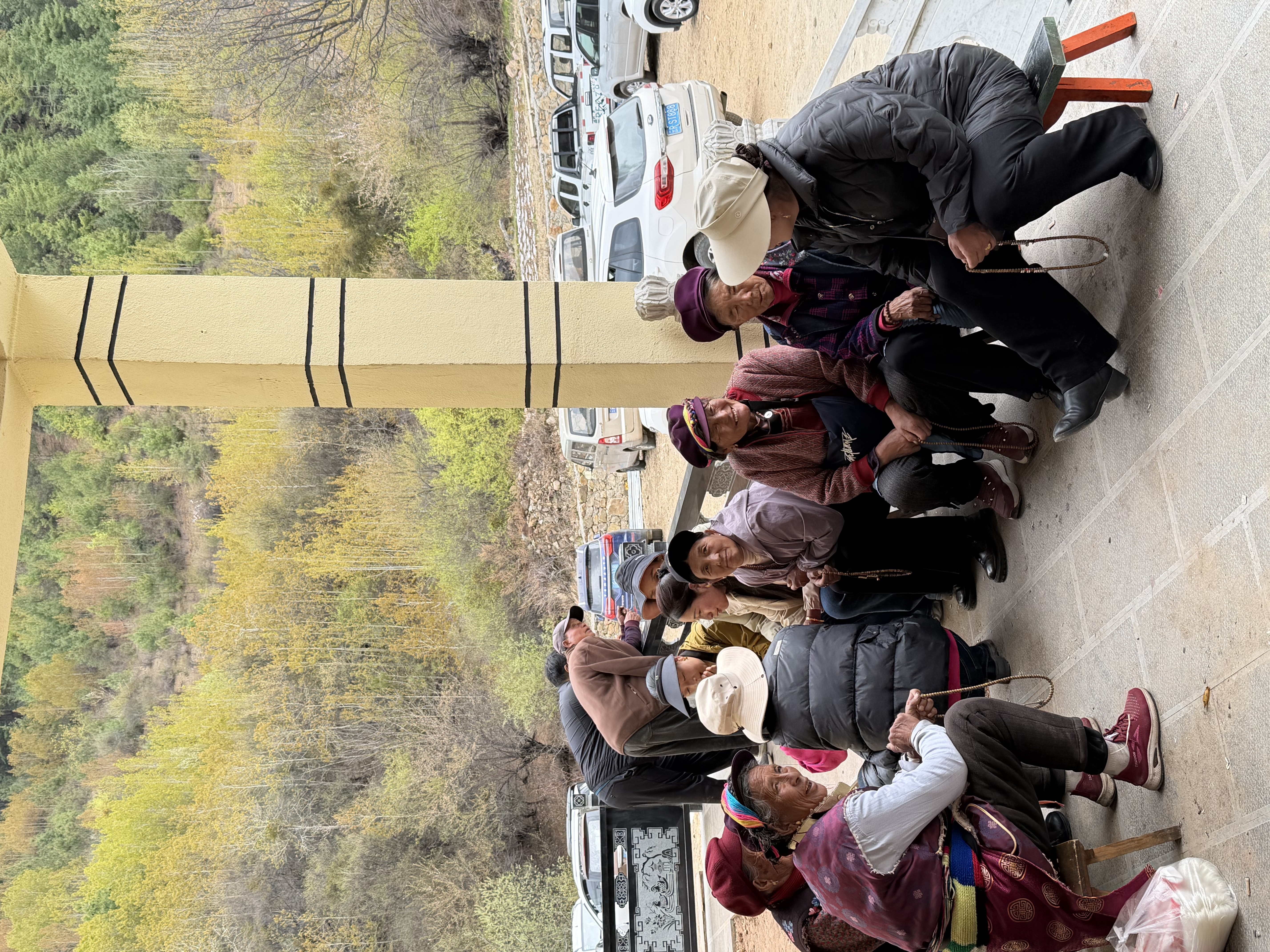
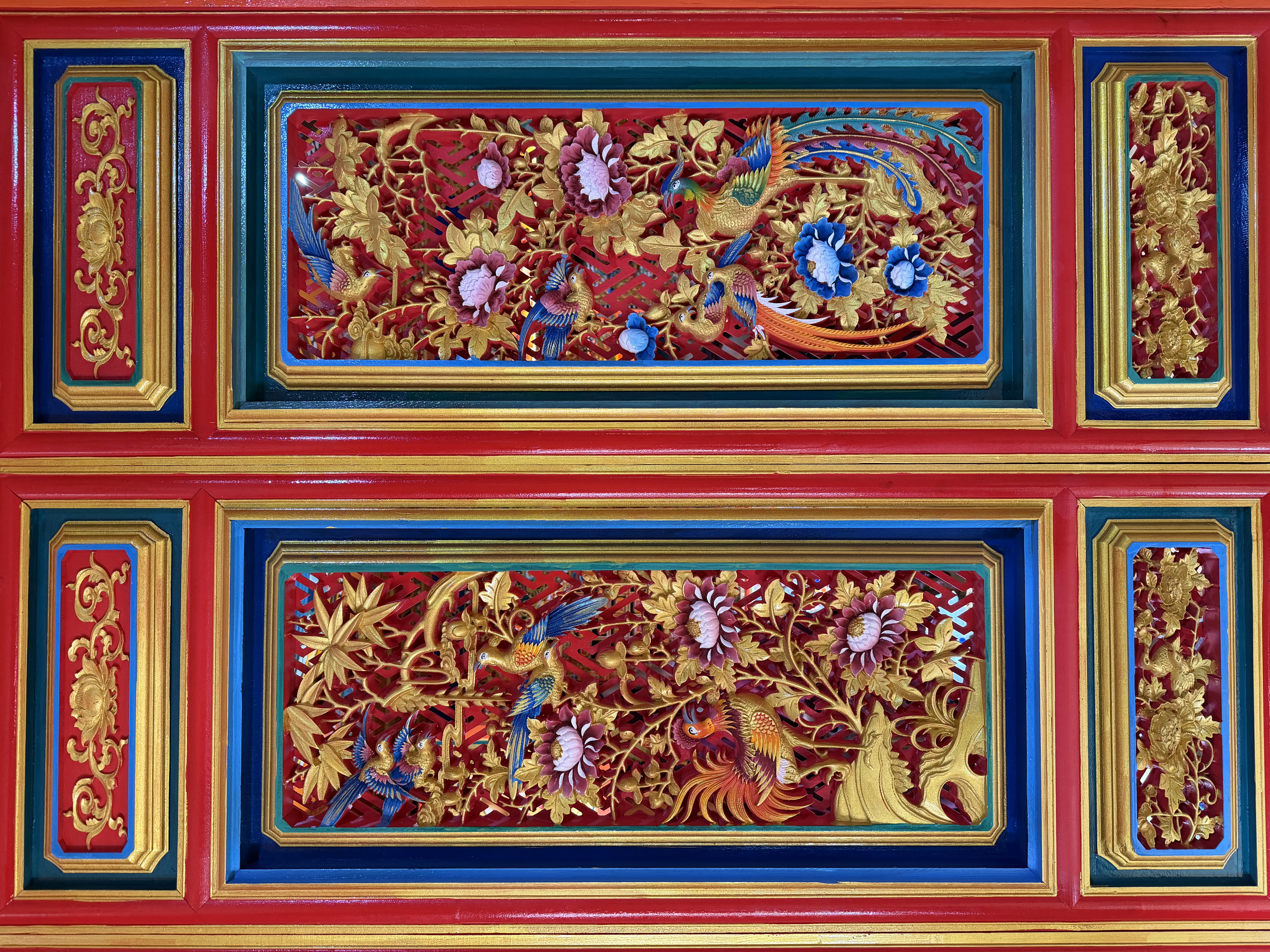
The altar panels in the 佛堂 were the most arresting part of the house. Deep red background, gold phoenixes and floral patterns, each stroke precise, confident, certain of itself. I have seen decorative craft in many places around the world, but this — appearing in a valley almost no outsider knows — produced a slight dizziness in me.
Lily is not trying to preserve this valley as a museum. She is building something economically viable rooted in the valley's own origins. The winery creates a reason for this village to stay rooted. When Duomu exists, Benzilan has a reason to keep doing what it has always done. This is the same thing GutCommon believes. To learn more about what GutCommon does, read our story.